
|
|||||||
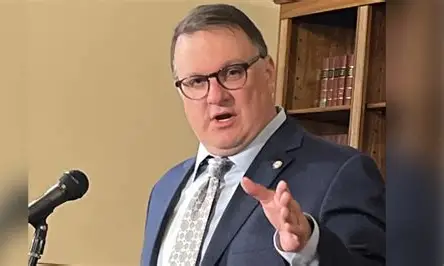
Budget Battle Brewing as Hall Signals Willingness to Delay Final Spending Plan With just weeks remaining before Michigan's July 1 budget deadline, House Speaker Matt Hall is signaling that lawmakers may once again miss the state's target for adopting a new spending plan, setting the stage for what could become another lengthy and contentious budget battle. Speaking to reporters last week, Hall suggested that House Republicans are prepared to pursue a continuing resolution that would maintain current-year funding levels rather than accept a budget agreement that fails to address key Republican priorities. The Speaker indicated he is willing to extend negotiations well beyond the start of the fiscal year and, if necessary, into 2027 when a new governor and potentially a new Senate majority take office. "I'm going to try to get a deal now with Governor Whitmer and Senate Majority Leader Winnie Brinks," Hall said. "But if we don't get a deal, then we'll do it with the next Senate leader and the new governor." The comments echo last year's budget impasse, when lawmakers failed to finalize a budget until October, creating uncertainty for school districts, local governments, and state agencies. Hall argued that Republicans are seeking meaningful reforms before agreeing to a final spending package, including efforts to reduce healthcare costs, eliminate unfilled state positions, address fraud within Medicaid and public assistance programs, lower utility bills, and enact property tax relief. House Republicans have also expressed opposition to utilizing funds from Michigan's Budget Stabilization Fund and have called for closer scrutiny of state information technology spending and agency budget requests. Senate Democrats quickly pushed back on the Speaker's remarks. A spokesperson for Senate Majority Leader Winnie Brinks stated that Senate Democrats remain committed to meeting the July 1 budget deadline and criticized the prospect of another prolonged budget standoff. Outside stakeholders also voiced concern. Education advocates warned that delayed budget decisions create planning challenges for school districts, particularly as administrators make staffing and program decisions for the upcoming academic year. Critics argue that uncertainty surrounding school funding can hinder hiring efforts, classroom planning, and student support services. The debate also highlights broader disagreements over Republican proposals to restructure Michigan's property tax system. While House Republicans recently advanced legislation aimed at eliminating certain property taxes, key components of the proposal—including a replacement revenue mechanism for schools and local governments—have yet to gain consensus among lawmakers. As negotiations continue, the divide between the Republican-controlled House, Democratic-controlled Senate, and Governor Whitmer remains significant. With competing priorities and little indication of a near-term compromise, Michigan appears poised for another summer of intense budget negotiations that could once again extend well beyond the traditional deadline.
A recent policy change announced by Michigan's largest health insurer is drawing significant concern from mental health providers and advocates who warn it could reduce access to counseling services for thousands of Michiganders. Beginning March 1, 2027, Blue Cross Blue Shield of Michigan will no longer reimburse private practices for services provided by limited-license mental health professionals under its longstanding "incident-to" billing policy. The change affects counselors, social workers, psychologists, and marriage and family therapists who are working under supervision while completing the requirements for full licensure. According to industry estimates, Michigan has approximately 13,000 limited-license behavioral health professionals, though the exact number of providers impacted remains unclear. Blue Cross officials maintain the change is intended to improve quality of care and align reimbursement policies with those already used by Blue Care Network and other facility-based settings. Under the new policy, limited-license professionals would continue to be eligible for reimbursement when practicing in accredited outpatient psychiatric centers, hospitals, or community mental health agencies, but not in most independent private practices. The insurer has emphasized that the decision was driven by quality and oversight considerations rather than cost savings. Mental health providers across the state strongly disagree, arguing that the policy could significantly disrupt access to care at a time when Michigan continues to face a shortage of behavioral health professionals. Many private practices rely heavily on limited-license clinicians to meet growing demand for services, particularly among children, adolescents, and individuals seeking outpatient counseling. Providers warn that some patients may be forced to change therapists, while others could face longer wait times or lose access to care altogether. The announcement also raises concerns about the future workforce pipeline for Michigan's behavioral health system. Limited-license professionals represent the next generation of fully licensed therapists, and many providers contend that restricting reimbursement opportunities in private practice settings could make it more difficult for new clinicians to obtain supervised experience and ultimately enter the profession. The policy change comes amid broader discussions about healthcare access and insurer-provider relationships in Michigan, including recent high-profile contract disputes involving Blue Cross and major healthcare systems. As implementation approaches, behavioral health advocates are expected to push for reconsideration of the policy and may seek legislative or regulatory intervention to preserve patient access and maintain the state's mental health workforce pipeline.
A renewed debate is emerging in Lansing over whether Michigan voters should continue electing governing board members for the state's three largest public universities or whether those appointments should instead be made by the governor. The discussion has gained momentum following ongoing governance challenges at the University of Michigan, Michigan State University, and Wayne State University, including the recent departure of Michigan State University President Kevin Guskiewicz after just two years. Guskiewicz cited concerns with certain board dynamics as one factor in his decision to accept the presidency at Clemson University. Currently, Michigan is one of only a handful of states that elect university governing board members, and the only state that elects them through statewide partisan elections. Supporters of changing the system argue that gubernatorial appointments would allow for a more deliberate selection process focused on qualifications, expertise, and institutional needs rather than partisan politics. Proponents contend that governors could build boards with a balanced mix of alumni, financial experts, business leaders, and individuals with higher education governance experience. The issue gained additional visibility during this year's Mackinac Policy Conference, where state leaders discussed concerns about leadership turnover at Michigan's major universities. Advocates for reform argue that repeated controversies and presidential departures signal that the current governance structure may not be producing the stability and accountability expected of institutions that collectively manage billions of dollars in assets and serve hundreds of thousands of students. However, opponents caution that shifting appointment authority to the governor could simply replace one form of politics with another. Critics point to examples in other states where gubernatorial appointments have resulted in boards becoming more closely aligned with the political priorities of the administration in power, sometimes leading to significant institutional upheaval. Higher education experts note that regardless of whether board members are elected or appointed, political influence can remain a persistent challenge. Political observers also acknowledge that partisan considerations are impossible to ignore. Democrats have generally maintained majorities on the governing boards of Michigan's three constitutionally autonomous universities for decades, while an appointment system could create opportunities for future governors to significantly reshape board composition. At the same time, polling and historical experience suggest voters are often reluctant to surrender their ability to directly elect public officials, making any constitutional amendment an uphill battle. Legislative efforts to place the issue before voters have already stalled once this year, despite support from Governor Gretchen Whitmer, former Governor John Engler, and former Governor Jim Blanchard. Nonetheless, lawmakers continue to explore potential proposals that could appear on a future statewide ballot. As the conversation continues, policymakers face a fundamental question: whether Michigan's university governance challenges stem from the method of selecting board members or from broader concerns about the role of politics in higher education governance itself. The answer could shape the future leadership and oversight of the state's flagship public universities for decades to come. DCD MUNICIPAL MINUTE  Spotlight: Michigan's Solar Boom Creates New Opportunities for Communities and Businesses Michigan's emergence as one of the nation's fastest-growing solar markets is creating new opportunities—and new considerations—for local governments and business owners across Southeast Michigan. A recent report from the Solar Energy Industries Association (SEIA) and Wood Mackenzie ranked Michigan seventh in the nation for new solar installations during the first quarter of 2026, with 165 megawatts of new generating capacity added statewide. While much of this growth is occurring through large utility-scale projects, the trend reflects a broader shift in Michigan's energy landscape that will increasingly impact municipalities, commercial property owners, and local economic development strategies. For communities throughout Oakland County and Southeast Michigan, the continued expansion of solar energy presents both economic and infrastructure implications. Michigan's solar industry now supports more than 6,800 jobs and has attracted nearly $6 billion in private investment, creating opportunities for construction firms, engineering consultants, electricians, manufacturers, and a variety of local service providers that support project development and maintenance. Municipal leaders may also find themselves evaluating how renewable energy projects fit within local master plans, zoning ordinances, and economic development objectives. As utilities work toward the state's clean energy requirements adopted in 2023, communities are likely to see increased interest in utility-scale solar developments, battery storage facilities, and distributed energy projects. Local governments that proactively establish clear zoning standards and development expectations may be better positioned to attract investment while balancing community priorities. For small businesses, rising energy demand and continued investment in renewable generation could present opportunities to reduce operating costs and enhance long-term energy resiliency. As utilities modernize the grid and expand renewable generation capacity, businesses may benefit from additional energy options, sustainability incentives, and emerging programs designed to help offset electricity expenses. The report also highlights a larger economic reality: Michigan is preparing for significant growth in electricity demand driven by advanced manufacturing, data centers, and other energy-intensive industries. Reliable and affordable energy infrastructure is increasingly becoming a key factor in business attraction and retention efforts, particularly in competitive regions like Southeast Michigan. While challenges remain—including transmission capacity constraints, evolving federal energy policies, and ongoing debates regarding land use—the state's strong solar growth demonstrates that renewable energy will continue to play a significant role in Michigan's economic future. For local governments and business owners alike, the takeaway is clear: energy policy is no longer simply an environmental issue. It is increasingly an economic development issue, a land-use issue, and a competitiveness issue that will shape investment decisions and community growth for years to come. JOIN US FOR SALUTE OUR WARRIORS
DCD IS A FULL-SERVICE, BI-PARTISAN, MULTI-CLIENT LOBBYING FIRM REMEMBER ALL OF DCD'S SERVICES: ARTICLES OF POLITICAL INTEREST:
Michigan lawmakers forge ahead on energy issues as frustrations with utilities remain Michigan House moves ‘halo’ law punishing interference with police, first responders House Speaker Matt Hall threatens budget stall over impasse with Senate Dems Attracting Michigan preschoolers, teachers with free housing, other innovations Could Mike Duggan Be the Fixer U-M or MSU Needs as President? PARTING WISDOM: 
Doing Things Differently DCD is rebranding, and our bottom line is your bottom line. We are striving to create and foster strong relationships with clients and lawmakers, deliver results with strong ethics and class, but above all else, out-hustle and out-smart our competition every day to be the very best. We’re making chess moves while others are playing checkers. Everything we do is with you in mind, we’re doing things we’ve never done before and aggressively pursuing opportunities. The time is now. DCD has taken our firm to the next level and your involvement and investment paired with our knowledge and expertise is going to launch the great state of Michigan forward. |
|||||||
|
|||||||
 Blue Cross Mental Health Coverage Change Raises Access Concerns Across Michigan
 Debate Renews Over How Michigan Selects University Governing Boards



Contact Us
Address
Phone
©2026 Dunaskiss Consulting and Development Inc. | Website by Finepoint Design