
|
|||||||
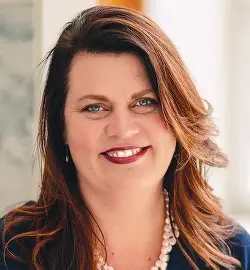
Huls to depart as Whitmer's chief of staff JoAnne Huls, an instrumental leader in the administration of Gov. Gretchen Whitmer as the governor's chief of staff for her entire tenure in the Executive Office, is leaving her post. Huls will conclude her role July 31 and move to a senior adviser to the administration. Deputy Chief of Staff Zack Pohl, a longtime Whitmer staffer, will become the new chief of staff. Huls is one of the longest-serving chiefs of staff in modern times. George Weeks served as chief of staff to Gov. William Milliken from 1975 until Milliken left office in 1983, and Sharon Rothwell was chief of staff to Gov. John Engler for more than eight years from 1994-2002. "For almost eight years, JoAnne has served the people of Michigan with strength, courage and professionalism," Whitmer said in a statement. "She was by my side through it all, acting as an effective and decisive leader and helping us make historic progress to fix the damn roads, create jobs and more. JoAnne is a dear friend, and I'm grateful she will continue to serve Michigan as my senior adviser. I'm excited to promote Zack Pohl to be my next chief of staff. He's been on the team since my 2018 campaign, and he's a clear strategic thinker who steps up every day for Michiganders. I'm looking forward to working with him as we run through the finish line." Whitmer named Huls her chief of staff shortly after winning her first term in November 2018. She was a known quantity in Lansing, having worked for then-state Sen. Debbie Stabenow and staying with Stabenow into the U.S. House and U.S. Senate. She left in 2004 to join the administration of Gov. Jennifer Granholm, where she worked in several roles, eventually becoming deputy chief of staff. She then had a run in the private sector with Chemical Bank and then the Sterling Group. The night Whitmer won the governorship in 2018, Huls was named chief operating officer for the governor's transition team. She was then hired as a chief of staff for the incoming Executive Office of the Governor about six weeks later. Whitmer, in a 2018 interview, said she got to know Huls when Huls offered to train her team early in the gubernatorial campaign and then became especially impressed with her efforts during the transition. "It's been a true honor to serve the people of Michigan for the last seven-and-a-half years alongside the best team in the country," Huls said in a statement. "I'm proud of everything we've accomplished to make Michigan a better place to live, work, and raise a family. I'm looking forward to continuing to help the governor deliver for Michiganders in this new role." Huls served with Whitmer through achievements and crises. There was the 2019 budget showdown with the Republican Legislature. Then in 2020, everything seemed to happen. The governor gained a new national profile and delivered the response to the State of the Union. COVID-19 hit, and Whitmer managed that crisis with a series of unprecedented executive orders. There was unrest in Grand Rapids and Lansing after the death of George Floyd in Minnesota. There was the flooding in Midland. There was the high-profile conflict with President Donald Trump. Whitmer was nearly named the Democratic vice presidential nominee. And then there was the revelation of the plot by a group of men, who were discussing killing the governor, to kidnap her. Then there was the governor's reelection, a flood of Democratic legislation in 2023 under the first Democratic trifecta in 40 years and in 2025, passage of the governor's long-sought road funding solution. Huls has worked more in the background. It was rare for her to speak publicly. She did so in 2019 as Whitmer issued nearly $1 billion in line-item vetoes. She spoke to Gongwer for a 2020 story about the cascade of historic events that year. In 2021, the governor was under criticism for flying to Florida on a private plane owned by several wealthy Michigan business executives. Huls issued a statement taking responsibility for the administration not answering questions about the governor's trip with greater clarity. When controversy erupted over a state grant eventually received by Fay Beydoun for her Global Link company, it was Huls, according to court documents, who met with the original intended recipients of those funds, the American Arab Chamber of Commerce, to apologize. Huls, like every chief of staff, had her critics. Chiefs of staff are always a vessel for any frustrations people have with the governor. But she also had a legion of fans, both inside the administration and out. "JoAnne is one of the best thinkers that I've met in this business in two decades. She's a three-dimensional thinker and a superior strategist," said Scott Breslin, a longtime lobbyist with Public Affairs Associates. "One of her superpowers is really putting not just good people around her but recognizing talent, and she did that with the governor's staff. They tackled some of the most historic issues in the history of the state. The other interesting piece to this is she is more well-known nationally by 15-plus governors than she is even on Michigan Avenue next to the Capitol in Lansing. Her relationships don't just stop at advising this governor, they expand across the country." Breslin said he once was walking with Huls in Washington, D.C. "You couldn't go a block without someone saying, 'JoAnne?'" he recalled. As to how Huls lasted nearly all eight years in a job that tends to grind people up, Breslin said trust and commitment. "The governor trusted her implicitly, and she made a commitment and stuck to it," he said. In 2025, Huls was asked by Crain's Detroit Business how she had been able to continue in the role. The key, Huls said, is not to try to do everything. Be really good at a couple of things and make sure the people you hire are outstanding at what they do, she said. "I'm really clear on what my job is, to be the chief of staff, and how I fit into the organization," she told Crain's. "Some people, when they get into this space, think they have to do it all. So you burn out." Pohl moves into the top job Pohl will become chief of staff Aug. 1. He started out in the administration as communications director before moving up to deputy chief of staff, overseeing the communications, federal affairs, legislative affairs, policy and scheduling divisions. He previously worked for former U.S. Rep. Mark Schauer, led the Progress Michigan group and also worked for the Senate Democratic Caucus on staff. "I'm incredibly grateful to have served alongside JoAnne over the last two terms, and her example will continue to guide our work here in the governor's office," he said. "It's an honor of a lifetime to serve as chief of staff." Schauer praised Pohl as a great choice. "Zack was with me every step of the way on my campaigns for Congress and governor, and he served as a close advisor on my congressional staff when we passed the auto rescue, the clean energy package, and the ACA," he said. "Zack knows how state government works, and he's been a key part of the governor's success for the past eight years." The governor's office announced several other changes. Maria Martinez was promoted to chief deputy to the governor from deputy chief of staff. Kara Cook was promoted to deputy chief of staff from director of legislative affairs. Emily Mellits was promoted to director of external affairs from director of the Office of Community Engagement. Carly Swanson was named deputy director of external affairs, moving up from executive assistant to Huls and Pohl. The governor also promoted Preston Weyland and Nathan Reynolds, to the positions of senior deputy director for federal affairs and deputy director of federal affairs, respectively.
Sen. Jim Runestad (R-White Lake) introduced a bill that he says is an essential step toward restoring public trust in government programs. Runestad’s SB 1088 would require the Michigan Department of Health and Human Services to share “key information” from the Supplemental Nutrition Assistance Program (SNAP) with the federal government. “This bill will help reel in fraud within public assistance programs,” Runestad said. “It is an easy and simple ask for the state to give information to the federal government, yet Gov. Gretchen WHITMER refuses to do so.” In June, Congress sent a letter to Whitmer seeking the state’s SNAP data, including documents and communications between or among Whitmer’s office and the MDHHS, who runs the state’s SNAP program. However, Michigan refused to comply, which led the Trump administration to file a lawsuit. The administration also filed similar lawsuits against several other Democratic-led states. The federal SNAP Act mandates that states share pertinent recipient information to help the federal government address fraud and transparency. However, the bill also has privacy provisions which limit the use and disclosure of SNAP applicant or recipient household information. Kevin Mulligan, chief of staff with Runestad’s office, said states cite those privacy provisions to justify withholding information from the federal government. Mulligan said SB 1088 would basically remove Michigan’s privacy argument by aligning state law with the federal law. The bill would require MDHHS to share benefit allotment and identifying data for SNAP recipients with the U.S. Department of Agriculture, the SNAP National Accuracy Clearinghouse and the White House Task Force to Eliminate Fraud. The bill also would require MDHHS to provide quarterly reports to the Legislature highlighting any duplicate SNAP accounts, the Social Security numbers of deceased people applying for the program, and the number of out-of-state transactions that were identified and blocked. Lynn Sutfin, a spokesperson for MDHHS, declined to comment on Runestad's bill, citing ongoing litigation. The bill has been referred to the Senate Committee on Housing and Human Services. “We have to take fraud seriously in our state,” Runestad said. “Simply talking about it isn’t enough. The budget keeps getting bigger, Lansing insiders’ pockets keep getting lined with cash, and criminals are scamming the very programs working people need to survive. We need action, and my bill is exactly that.”
David Meninga, lead of the community development programs at the Michigan Economic Development Corporation, said the need for the newly signed transformational brownfield program comes from a gap in financing and could see an application from Dan Gilbert as officials eye new plans for the current Renaissance Center site. As part of budget negotiations, legislation to reinstate the incentive for owners of companies making substantial renovations or new construction to house their employees on blighted sites saw long-sought passage by the Legislature earlier this month. The revised transformational brownfield program (SB 721, SB 722, and SB 723) allows the owners of the companies to keep the income tax withholdings of employees at the new job site instead of remitting them to the state. The old program expired a few budget cycles ago and there's been a push to revamp the program, including from Dan Gilbert's Bedrock LLC, looking to demolish portions of the Renaissance Center in Detroit. Meninga, appearing on MichMash, Gongwer News Service's podcast in partnership with WDET Detroit Public Radio, said the Renaissance Center has been on their radar.. Meninga, who noted he does not speak for the developers, said the application will still be evaluated in the same manner as all other projects. Here said there is a lot of interest in the new program. The post-construction cap on awards is at $3.2 billion in tax capture, up from $1.6 billion. The program is also scalable, Meninga said, with the Detroit-based transformational brownfields capturing $600 million, while other smaller programs are capturing around $30 million. Meninga said the most important change to the program was the cap increase. There are also investment requirements to receive benefits based on population level, with the most populated areas needing to put more upfront investment funds, with businesses in populations ranging from 600,000 and upward to invest $500 million but also expand to smaller communities. In the past, Meninga said, old population requirements restricted their "ability to spread out across the state in a comprehensive manner." Meninga said there is a gap in financing for all developers, saying they want to "support the level of risk that somebody puts into that project" so they can make money while also spotting potential benefit in their community. Evaluating economic strategy overall alongside the sunset of the Strategic Outreach and Attraction Reserve Fund last budget cycle, he said now they have new tools in their toolbox, with a bit of an overlap of transformational brownfields and SOAR. "The tools that we have and the limitations that we have with the budgets as they progress over the years, we continue to find solutions to serve those needs as they come up." Meninga said. He understands where people come from when critics say economic incentives do not bring jobs and developments that are not already going to happen, Meninga said. But, he said he thinks the reintroduction of rehabilitation will concentrate development in places that need it, benefiting communities. "As a community development philosophy, do we want money made on a green field, or do we want money made in downtown development that benefits a wider community? The greatest example I think is by far downtown Detroit compared to 15 years ago," Meninga said. "It is a wonderful place to go and have dinner and then walk from Greektown to go see a show at the Fox Theater or go to a baseball game and then walk back, and I think that that is a testament to what community development can do and so I would answer those criticisms with those examples." DCD SPOTLIGHT  State Budget Sets the Stage—Local Investment Drives Growth After months of negotiations, late-night legislative sessions, and a fair amount of political drama, Michigan lawmakers have approved the Fiscal Year 2027 state budget. While much of the attention has focused on education, healthcare, and statewide spending priorities, there are several important takeaways for local governments and the small business community. Perhaps the biggest story for municipalities is that, while the budget maintains core revenue sharing programs, many communities will continue to face fiscal pressures as they balance increasing costs for public safety, infrastructure, and municipal services. Revenue Sharing: Stability, But Not Significant Growth For cities, villages, and townships, the budget largely represents a "hold the line" approach to revenue sharing. Traditional statutory revenue sharing remains essentially flat, providing local governments with predictable—but not substantially increased—state support. At the same time, the Public Safety Revenue Sharing (PSRS) program continues with $50 million in annual funding, although the one-time supplemental dollars included in the previous fiscal year were not renewed. As a result, many communities will see modest reductions in those grant payments compared to last year. For many municipalities, this means the challenge remains unchanged: costs continue to rise faster than revenues. Inflation, higher labor costs, aging infrastructure, increased pension obligations, and growing demands for police, fire, and emergency services continue to strain local budgets. Communities hoping for significant new unrestricted state aid will likely need to continue relying on careful budgeting, capital planning, and outside funding opportunities. The Growing Importance of Economic Development If there is one clear lesson from this year's budget, it is that communities cannot rely solely on state revenue sharing to meet their long-term financial needs. Increasingly, the municipalities that are thriving are those that actively grow their tax base. Redevelopment projects, mixed-use developments, downtown revitalization, housing construction, industrial redevelopment, and commercial investment all create new taxable value that generates sustainable local revenue for years to come. Strategic use of Tax Increment Financing (TIF), Brownfield Redevelopment incentives, state appropriations, and public-private partnerships can help communities leverage private investment while minimizing the burden on local taxpayers. Simply put, economic development has become one of the most important fiscal tools available to local governments. Public Safety Continues to Receive Attention Although supplemental public safety funding was reduced from last year's levels, the continuation of the Public Safety Revenue Sharing program demonstrates that lawmakers continue to recognize the financial pressures facing local police and fire departments. Communities planning new or expanded public safety facilities should continue monitoring state and federal grant opportunities, as additional capital funding may become available outside of the annual appropriations process. What Small Businesses Should Know For Michigan's small business owners, the budget sends a mixed but generally positive signal. First, there are no major broad-based tax increases included in the final budget agreement, providing businesses with a measure of predictability as they plan for the coming year. Second, many of the investments included in the budget—particularly those supporting infrastructure, housing, community development, and local government—create indirect opportunities for private businesses. As communities pursue redevelopment projects, infrastructure improvements, and housing initiatives, demand grows for local contractors, engineers, architects, suppliers, professional service firms, restaurants, retailers, and other small businesses that support those investments. Business owners should also recognize that local government fiscal health directly affects the business climate. Well-funded police and fire services, maintained roads, reliable utilities, attractive downtowns, and efficient municipal services all contribute to creating communities where businesses can successfully invest and grow. Looking Ahead While the FY 2027 budget avoids many of the dramatic spending shifts seen in previous years, it also reinforces a broader trend in Michigan: local governments will increasingly need to generate their own economic momentum. State funding remains an important foundation, but it is no longer sufficient by itself to address growing infrastructure needs, housing shortages, public safety demands, and community development goals. For municipalities, the focus should be on leveraging every available funding source—from legislative appropriations and grants to TIF districts, redevelopment incentives, and public-private partnerships—to maximize local investment. For small businesses, the message is equally clear. Communities that continue investing in housing, infrastructure, placemaking, and redevelopment will create stronger local economies, attract new residents, increase consumer spending, and ultimately provide more opportunities for businesses to expand and succeed. In today's fiscal environment, economic development is no longer simply about attracting new investment—it is one of the primary tools communities have for ensuring long-term financial sustainability. DCD OUT & ABOUT
DCD IS A FULL-SERVICE, BI-PARTISAN, MULTI-CLIENT LOBBYING FIRM REMEMBER ALL OF DCD'S SERVICES: ARTICLES OF POLITICAL INTEREST:
Mike Cox drops out of Michigan governor race, endorses John James - Bridge Michigan New unemployment job-search rules take effect in Michigan. What to know - Bridge Michigan While others shrink, one southwest Michigan town found a way to boom - Bridge Michigan Michigan House Speaker talks Canadian wildfire response, data centers, elections, in TV interview Michigan's race for governor: Meet candidate Jocelyn Benson PARTING WISDOM: Remember to VOTE your absentee ballots if you have requested them and/or to vote in person in the upcoming Michigan primaries on Tuesday, August 4, 2026!! 
Doing Things Differently DCD is rebranding, and our bottom line is your bottom line. We are striving to create and foster strong relationships with clients and lawmakers, deliver results with strong ethics and class, but above all else, out-hustle and out-smart our competition every day to be the very best. We’re making chess moves while others are playing checkers. Everything we do is with you in mind, we’re doing things we’ve never done before and aggressively pursuing opportunities. The time is now. DCD has taken our firm to the next level and your involvement and investment paired with our knowledge and expertise is going to launch the great state of Michigan forward. |
|||||||
|
|||||||
 New Bill Would Force DHHS To Share SNAP Data with Feds
  MEDC official says Renaissance Center on radar for transformational brownfield program




Contact Us
Address
Phone
©2026 Dunaskiss Consulting and Development Inc. | Website by Finepoint Design