|
|||||||

Budget Negotiations Move into Final Phase as Lawmakers Set Department Spending Targets Michigan lawmakers took a major step toward completing the Fiscal Year 2027 budget this week after legislative leaders and the State Budget Office agreed on department-by-department spending targets. With those allocations now established, House and Senate appropriations subcommittees are working to finalize the budget before the Independence Day holiday, although the statutory July 1 deadline is expected to slip by a day or two. The budget framework continues to reflect legislative leaders' commitment to balancing the state's finances without raising taxes, tapping the Rainy Day Fund, or increasing overall spending above current-year levels. Instead, negotiators are focused on addressing the projected budget shortfall while determining where spending reductions will occur across state government. One issue still generating significant attention is the fate of legislatively directed spending items (LDSIs), commonly referred to as earmarks. More than $4.3 billion in project requests were submitted by House and Senate lawmakers this year, but recently enacted transparency requirements mandate that projects be publicly posted at least 45 days before final budget passage. As a result, several late-submitted requests may be ineligible for inclusion in the final budget. Why it matters: With broad budget targets now in place, negotiations are entering their final and most consequential stage. Municipalities, nonprofits, and organizations seeking state appropriations should closely monitor the final budget negotiations over the coming days, as funding decisions and the enforcement of the new transparency requirements could significantly impact which local projects ultimately receive state support.
Michigan's August 4 primary election is officially underway, with absentee ballots now being mailed to voters across the state. Registered voters have multiple options to cast their ballots, including voting by mail, participating in early in-person voting, or voting at their precinct on Election Day. Polls will be open from 7:00 a.m. to 8:00 p.m. on August 4. The primary ballot will determine each major party's nominees for statewide and legislative offices, including Governor, U.S. Senate, Congress, and the Michigan Legislature, along with numerous local offices and ballot proposals. Because Michigan has an open primary system, voters may choose either a Democratic or Republican ballot, but they must vote in only one party's partisan primary for those votes to count. Voters are encouraged to verify their registration status, polling location, and ballot information before Election Day. The deadline to register online or by mail is July 20, though eligible residents may still register in person at their local clerk's office through Election Day. Absentee ballots must be returned by 8:00 p.m. on August 4 to be counted. Why it matters: With several high-profile statewide races and numerous local contests on the ballot, the August primary will shape Michigan's November election. Municipal leaders, businesses, and advocacy organizations should pay close attention to both candidate outcomes and local ballot proposals that could influence policy, taxation, and community priorities over the next several years.
Michigan can attract significant investment by being a competitive location for data centers but will also need to weigh important policy decisions to regulate them to protect residents and the state's resources, a new report found. A report released Thursday by Public Sector Consultants found Michigan is growing in importance as a location for data centers, which are projected to be a multi- trillion-dollar industry nationally over the next five years as the demand for data processed by the facilities to maintain modern life grows. "Michigan has a once-in-a-generation opportunity to attract significant new investments into the state through data center development," the report states. "This investment could provide local governments with millions in new revenue, modernize Michigan's energy grid, and create thousands of new jobs. However, Michigan faces stiff competition for data centers from other states." The report was commissioned by the Michigan Chamber Foundation in cooperation with the Detroit Regional Chamber. Thursday's report comes as data centers have become a key issue in state politics. In the Legislature, House and Senate Democrats recently introduced bill packages looking to expand regulations over them. Other lawmakers have called for moratoriums on their development. Data centers, particularly hyperscale data centers that have been proposed in the state, have drawn backlash from residents over the past several months. Concerns raised include the effect they could have on the electric grid, the possibility of costs being passed on residential ratepayers and environmental issues such as large-scale water use. The study notes these concerns as well as public concerns over elected officials signing nondisclosure agreements involving data centers and whether the state is providing economic development incentives to attract projects to Michigan. "The good news is that many of these issues are being addressed within Michigan's current regulatory framework and companies have issued public pledges to operate in a way that mitigates these concerns," the report states. "Other public concerns are not insurmountable but will require updates to regulations and more engagement with the public." "The demand for data centers is being driven by the rapid digital transformation occurring across nearly every sector of the economy, and how people are living, working and doing business," Jim Holcomb, president and CEO of the Michigan Chamber, said in a statement. "That demand will only continue to grow. Michigan cannot afford to put its head in the sand while other states aggressively compete for the infrastructure powering the next generation of economic growth and opportunity. The question isn't whether this investment will happen, but where – and whether Michigan will have the policies and public support necessary to compete responsibly for it and benefit. This report helps show how to do just that." Included in the report are several policy recommendations. One recommendation was that if the state uses any economic development incentives for attracting data centers, it should make sure companies are enticed to invest in other high-tech jobs beyond the data center's operations, such as research lab jobs. The Public Service Commission should use best practices to protect utility ratepayers from being passed on the costs from providing electricity to data centers. The report also recommends having the PSC be transparent about the protections it puts in place, which would improve public confidence over data centers. Lawmakers should also codify ratepayer protections in statute, the report states. "Concerns that data centers raise electricity rates are causing public opposition," the report states. "Michigan's regulated utility market and the MPSC already have safeguards in place to prevent data center-related utility hikes, but more should be done to make the public aware of these protections – enshrining them in state law would provide an added level of confidence." Further regulations including requiring companies operating data centers to use low-water-usage cooling technologies if drawing groundwater were recommended, as were the creation of incentives to have data centers placed on former brownfield sites. It was also recommended that the state's enterprise data center sales tax exemption be amended to allow for using low-water-usage technologies in addition to municipal water as a way for qualify for the sales tax exemption. Transparency was a key area for improved regulations in the report. Expanding public engagement processes for data center projects was recommended, as was limiting nondisclosure agreement use by governments and public officials. A reduction in what information is allowed to be covered by a nondisclosure agreement was also suggested, as was having an expiration date on such agreements. The state should also consider exempting hyperscale data centers from property taxes and instead create a new tax specifically for such facilities or have local governments secure property tax guarantees with companies operating data centers to ensure certainty about tax payments, the report recommended. "Michigan has strong regulations to protect energy ratepayers, water resources, and ensure state incentives practice best practices in development," the report states. "By making a handful of policy changes, Michigan policymakers can address many of the public concerns driving this opposition and make the state more welcoming to these potentially transformational innovations." DCD SPOTLIGHT 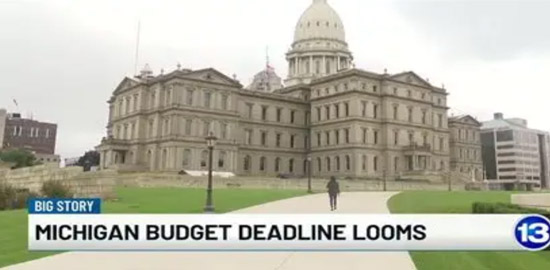 Budget Negotiations Enter Their Most Critical Phase Michigan lawmakers are entering the final days of negotiations on the Fiscal Year 2027 state budget after legislative leaders and the State Budget Office reached agreement on department-level spending targets, allowing appropriations subcommittees to begin finalizing individual budget bills. While the statutory deadline to complete the budget is July 1, legislative leaders are targeting passage before the Independence Day holiday, with staff working around the clock to draft the omnibus appropriations bills. The agreement signals that the broad fiscal framework has been settled. Leaders have committed to closing the state's projected budget shortfall without raising taxes, increasing overall spending above current-year levels, or drawing from the Budget Stabilization ("Rainy Day") Fund. The remaining negotiations are now focused on allocating reductions across state departments while preserving funding for high-priority programs, particularly Medicaid, behavioral health services, K-12 education, and other core government functions. For municipalities, one of the most closely watched items will be the final disposition of community enhancement grants and legislatively directed spending items (LDSIs). More than $4.3 billion in project requests were submitted by legislators this year, but recently enacted transparency requirements requiring requests to be publicly posted at least 45 days before budget passage could render many late-filed projects ineligible. Communities counting on state appropriations for infrastructure improvements, parks, public safety facilities, housing initiatives, and economic development projects should closely monitor the final budget language, as difficult fiscal decisions may significantly reduce the number of projects ultimately funded. Nonprofit organizations face similar uncertainty. Organizations providing behavioral health services, workforce development, housing assistance, food security, domestic violence intervention, crisis response, and other human services continue to compete for limited state resources as lawmakers prioritize mandatory spending obligations. While legislative leaders have consistently identified healthcare and public safety as priorities, discretionary grant programs and one-time appropriations remain particularly vulnerable during years with constrained revenue. Healthcare providers should pay especially close attention to the Department of Health and Human Services budget, which remains one of the largest and most complex pieces of the overall spending plan. Senate Appropriations Chair Sarah Anthony has publicly emphasized that protecting Medicaid and essential health services remains a priority as negotiations continue. Hospitals, community mental health agencies, federally qualified health centers, long-term care providers, and organizations delivering behavioral health and crisis services will be watching for reimbursement levels, provider investments, and continued funding for programs addressing mental health, substance use, and public health infrastructure. The budget process now moves from broad policy discussions to highly technical negotiations over boilerplate language, restricted funding, and program-specific appropriations. These final decisions often determine not only funding levels but also how agencies administer grant programs, eligibility requirements, reporting obligations, and future policy implementation. Why it matters: The final budget negotiations will shape state funding priorities for the coming fiscal year and directly impact local governments, nonprofit organizations, and healthcare providers across Michigan. For organizations pursuing state appropriations or relying on state-supported programs, the next several days represent the most consequential stage of the budget process. As final decisions are made behind closed doors, stakeholders should remain engaged with legislative leaders and appropriations committee members until the budget is sent to the Governor for signature. DCD: OUT AND ABOUT 
DCD has once again been working across Michigan, meeting with Flint Mayor Sheldon Neeley, supporting Michael Shostack in his campaign for the University of Michigan Board of Regents, and engaging with US Speaker Mike Johnson and Congressman Tom Barrett on issues important to our clients and communities. These meetings reflect DCD's commitment to maintaining strong relationships at every level of government and demonstrate the unparalleled access we provide our clients to the policymakers and decision-makers shaping Michigan's future. JOIN US FOR SALUTE OUR WARRIORS
DCD IS A FULL-SERVICE, BI-PARTISAN, MULTI-CLIENT LOBBYING FIRM REMEMBER ALL OF DCD'S SERVICES: ARTICLES OF POLITICAL INTEREST:
As health care costs rise, could Michigan offer its own insurance? - Bridge Michigan Michigan preps for an American birthday party muted by political divides - Bridge Michigan 3 Dems vie to face Republican in mid-Michigan swing district Absentee ballots mailed out for Michigan's August 4 primary election - CBS Detroit The Extremely Online Senate Race Testing Democrats’ Midterm Strategy - POLITICO HAPPY JULY FOURTH FROM DCD!! 
Doing Things Differently DCD is rebranding, and our bottom line is your bottom line. We are striving to create and foster strong relationships with clients and lawmakers, deliver results with strong ethics and class, but above all else, out-hustle and out-smart our competition every day to be the very best. We’re making chess moves while others are playing checkers. Everything we do is with you in mind, we’re doing things we’ve never done before and aggressively pursuing opportunities. The time is now. DCD has taken our firm to the next level and your involvement and investment paired with our knowledge and expertise is going to launch the great state of Michigan forward. |
|||||||
|
|||||||
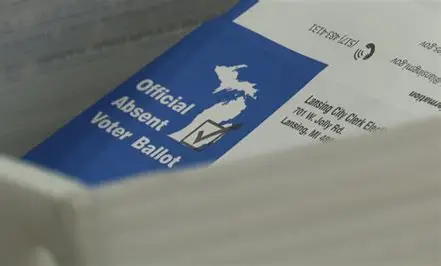 Absentee Ballots Mailed as Michigan's August Primary Approaches
 Report outlines economic impacts, policy recommendations for data centers



Contact Us
Address
Phone
©2026 Dunaskiss Consulting and Development Inc. | Website by Finepoint Design