
|
|||||||
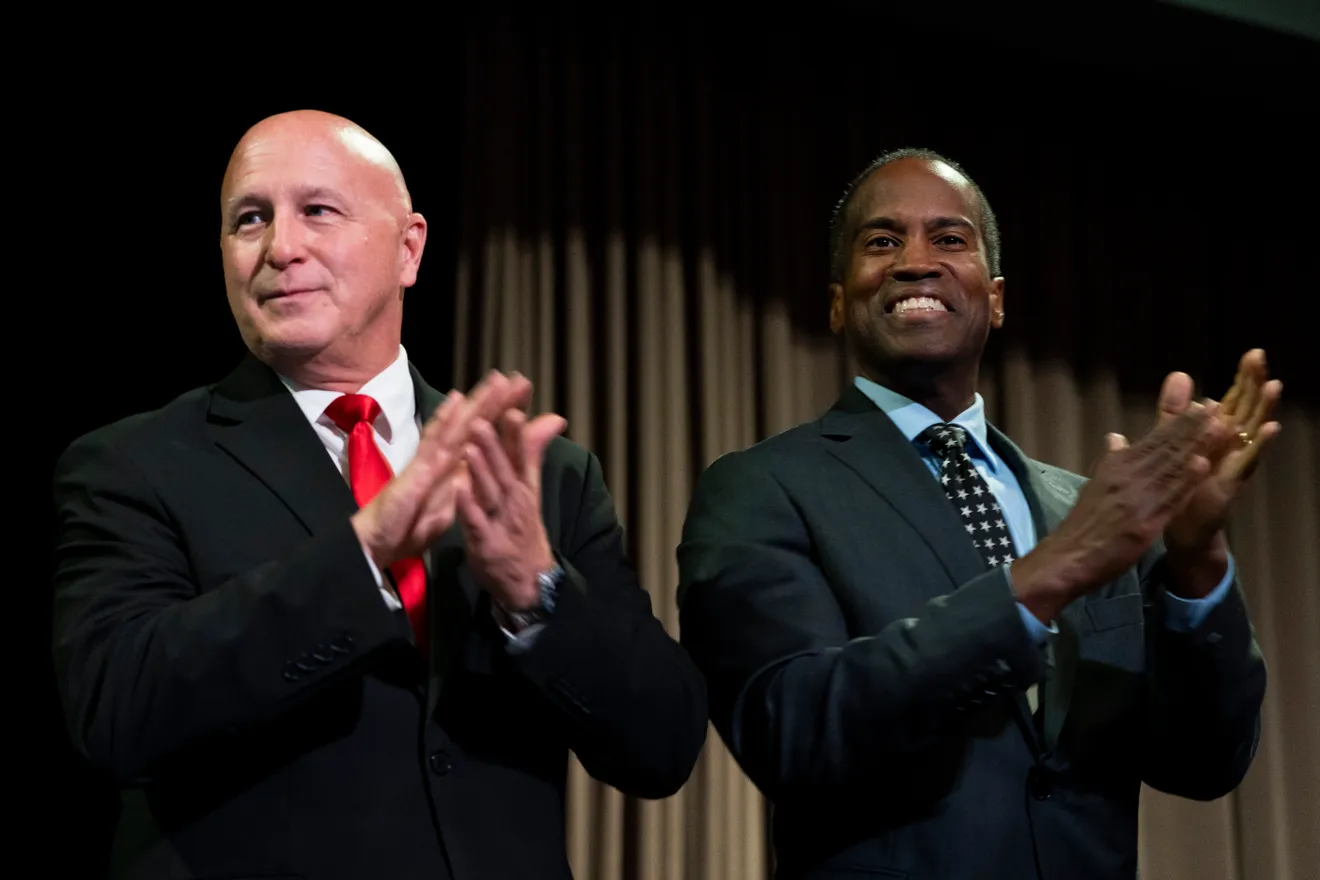
Michigan Republican Convention Sets 2026 Statewide Ticket Michigan Republicans formally nominated their statewide candidates at the party's convention in Mount Pleasant, advancing a ticket led by gubernatorial nominee John James, along with Jay DeBoyer for lieutenant governor, Doug Lloyd for attorney general and Anthony Forlini for secretary of state. James and DeBoyer used the convention to emphasize a message centered on government efficiency, infrastructure and fiscal restraint. DeBoyer said Republicans would focus government on core responsibilities such as roads, bridges, water and sewer infrastructure while seeking to “right-size” state government and eliminate inefficient practices. He also continued his criticism of Michigan's economic-development strategy and the Michigan Economic Development Corporation (MEDC), arguing that greater accountability is needed when taxpayer dollars are distributed. The convention also highlighted some of the internal dynamics within the Michigan Republican Party. While party leaders emphasized unity around the 2026 ticket, tensions remain among some factions, particularly involving state party Chair Jim Runestad and Oakland County Republican Party Chair Vance Patrick. Runestad nevertheless described the convention as a strong demonstration of party unity heading into the general election. The event comes as Republicans prepare for a competitive statewide campaign. The 10th Congressional District, which James currently represents, illustrates the challenge Republicans face in suburban Oakland County, where traditionally Republican voters have become more politically divided. Republican officials acknowledged the area's changing political dynamics following the Democratic U.S. Senate primary. On other issues, Lloyd said that, if elected attorney general, he would examine allegations of sexual abuse connected to the Interlochen Center for the Arts and determine which law-enforcement agency has jurisdiction to pursue any potential criminal cases. Forlini, meanwhile, defended his approach to election administration, saying he would work with the president and other levels of government when appropriate but would maintain authority over elections in Michigan and Macomb County. The convention also featured a political counter-message from Michigan Democrats, who deployed a mobile billboard criticizing James and DeBoyer over their handling of allegations involving Interlochen. For Michigan businesses and local governments, the Republican ticket's emphasis on infrastructure, government efficiency, economic-development accountability and limiting what candidates characterize as unnecessary government spending could become important themes during the fall campaign. These issues are likely to intersect with debates over state appropriations, economic development incentives and local infrastructure funding during the next legislative session.
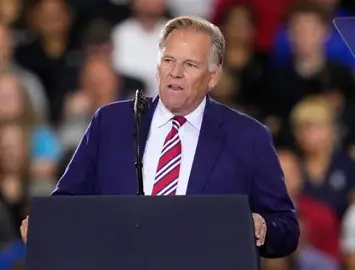
(DETROIT) – Republican U.S. Senate nominee Mike ROGERS is calling for a one-year moratorium on new data center developments. Rogers was asked about data centers by The Detroit News Thursday during a press conference on Detroit's west side, which showed off some Democratic voters who are now supporting him over Abdul EL-SAYED. As an immediate response, Rogers said, "I think we need to take a pause, probably." "While I don't support a federal ban, Michigan needs stronger guardrails to protect community control, prevent utility price hikes, protect our water and stop pay-to-play schemes. That is why I am calling for a one-year moratorium on new data centers until we establish a fair, transparent approval process that puts local communities first," Rogers said. Because of their contested primaries, Democratic U.S. Senate candidates put up their data center proposals earlier this year than Rogers, who was uncontested. El-Sayed has called for a policy under which data center costs cannot be passed onto ratepayers, penalties will be enforced if promised jobs are not created and community benefits agreements are set up, offering electrical grid, water system and other infrastructure upgrades. However, Rogers accused El-Sayed's proposal of giving power to the Michigan Public Service Commission, the governor-appointed panel that regulates utilities in the state. "Thanks to failed Democrat leadership in Lansing, Michigan has the highest utility rates in the Midwest. My opponent wants to give unelected bureaucrats at the Michigan Public Service Commission – the same individuals who have been jacking up utility costs for years – full authority to override local communities and silence Michiganders," Rogers said. During the primary, El-Sayed tied the growth of data centers to corporate influence in politics, specifically contributions linked to technology companies and utilities. El-Sayed targeted Rogers for accepting $14,000 in combined campaign donations from investor twins Cameron and Tyler WINKLEVOSS, who have invested in off-grid and gas-powered modular data centers. Rogers' campaign finance report also discloses an investment of between $100,001 and $250,000 in the Blackstone Real Estate Income Trust, which is involved in the large-scale data center project in Saline Township. When debating U.S. Rep. Haley Stevens (D-Birmingham) in the Democratic U.S. Senate primary, El-Sayed bashed DTE Energy for donating via political action committees to 93% of the state Legislature and most of Michigan's congressional members. "And that allows them to get away with things like building one of the largest hyperscale data centers in our state, in ex parte approval," El-Sayed said in July. "I still have yet to see a plan from DTE about how they're going to improve our reliability while doubling, more so, the amount of electricity they're expected to provide for a data center that nobody asked for." He saw his proposal as being serious about the "incoming threat that's going to make all of this so much worse." Unlike Rogers, U.S. House Speaker Mike Johnson of Louisiana called a “broad moratorium” on data centers “kind of a dangerous prospect right now,” while stumping for U.S. Rep. Tom Barrett (R-Charlotte) in Mid-Michigan's competitive 7th U.S. House district. Johnson stated that leaders must find a balance between national technology competitiveness against China and preserving local communities.
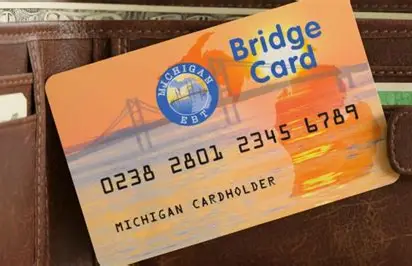
Federal changes to the Supplemental Nutrition Assistance Program have led to an 8% decrease in the number of people receiving benefits in Michigan. According to a new study from the Citizens Research Council of Michigan, the state has lost around $300 million in benefits annually due to changes in the federal budget bill, leaving a large food assistance gap due to program eligibility. Around 1.5 million Michigan residents received $3.1 billion in SNAP benefits in the 2025 fiscal year across 780,000 households. The average benefit per person is around $175 per month. The federal budget bill for SNAP provisions excluded refugees and asylum seekers from eligibility and applied work requirements to two groups previously excluded: people 55 or older and caregivers of children under 18, dropping the age to 14. Work requirements were also removed from homeless individuals, veterans, and those 24 and younger who aged out of foster care. The eligibility changes were effective immediately, but the impact started to hit states in November and December 2025. In June 2025, 42 million people across the country were receiving benefits, and by April 2026, it decreased to 37 million people. Michigan's SNAP population declined from 1,474,701 to 1,370,616 individuals. Although Michigan lost around 100,000 SNAP participants, the decline has been smaller than the average percentage of dropped individuals across the states. The national average is a 12% decrease, but Michigan is experiencing an 8% decrease. The decrease in enrollment, according to the study, could lead to increased health care spending on the state, less economic activity for grocery stores and a reduction in educational performance due to food insecurity. The state may have to fill the federal spending gaps with their own budget in Medicaid spending, the study said. Although the researchers said finding $300 million per year in the state budget under significant pressure is not feasible, the state could find more money for food assistance programs and food bank support. The Michigan Agricultural Surplus System received a $12 million appropriation in the 2027 fiscal year budget, but the researchers suggested more dollars be allocated to the program. The study also pushes Michigan to adopt dollar matching food assistance programs, like Double Up Food Bucks, where the money spent on produce at some retailers is matched, and buying power is increased. Other possible solutions include targeted tax relief, such as expanding the Earned Income Tax Credit. The study said it is not clear where the bottom is and noted that SNAP benefits were declining prior to the COVID-19 pandemic as well. Some of the changes' impacts are to be determined when it takes effect in the 2027 fiscal year. While the benefits are paid fully by federal dollars, the federal budget bill also changed the share of administrative costs for states in the next year, decreasing from half to 25% to be paid by the federal government, adding additional costs dependent on the state's error rate in reporting benefits, which the state has argued stems from hard-to-track beneficiaries. DCD Election Outlook: 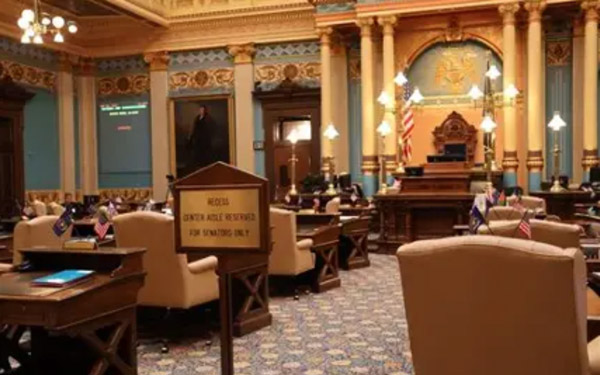 With Michigan's August 4 primaries now complete, the 2026 Senate map is beginning to take shape. While 20 Democrats and 18 Republicans currently hold Senate seats, the number of truly competitive races is surprisingly small. That is important for businesses, municipalities and organizations with interests before state government: control of the Senate in 2027 could ultimately hinge on two or three races, making candidate relationships and early engagement particularly important. Three races stand out SD 30 — Carol Glanville (D) vs. Mark Huizenga (R) SD 9 — Theresa Brooks (D) vs. Michael Webber (R) SD 13 — Ryan Berman (R) vs. Sean Carlson (D) Two races that could expand the battlefield SD 12 — Kevin Hertel (D) vs. John Goldwater (R) is worth watching, particularly because the district leans Republican and Hertel won by only 404 votes in 2022. However, Hertel has a major fundraising advantage and Republicans did not recruit the kind of top-tier challenger they would have wanted. SD 32 — Kim Cole (R) vs. Rebecca Amidon (D) is the Democrats' longer-shot opportunity. The western Michigan district leans Republican, and Cole brings significant name recognition as Mason County sheriff. A strong Democratic statewide performance could put the seat in play, but Republicans remain favored. What this means for the 2027 Legislature The Senate picture is considerably different from the House. Rather than a broad battlefield, there is a concentrated group of genuinely competitive districts. That makes the outcome of individual races—and the candidates who win them—particularly consequential. From a DCD perspective, Oakland County deserves particular attention. Two of the three most important Senate races—SD 9 and SD 13—run through Oakland County, while the broader political environment in the county continues to evolve. The 2026 U.S. Senate race and gubernatorial contest could also influence turnout and down-ballot performance. The larger question is whether Democrats can capitalize on what appears to be a favorable 2026 environment and convert competitive suburban districts, or whether Republicans can hold their vulnerable incumbents and pick up an open seat. Implications for DCD clients 1. Relationships with Senate candidates matter now. 2. Oakland County will be a particularly important political battleground. 3. Expect a potentially different Senate leadership structure. 4. Municipal and infrastructure issues could be particularly important. 5. The Senate could become more pragmatic—or more partisan. Bottom line Our current DCD read is that SD 30 is the most likely Democratic pickup, SD 13 is the Republicans' best pickup opportunity, and SD 9 is the true Senate toss-up to watch. SD 12 and SD 32 are the next tier. The bigger strategic takeaway is that there aren't many places to hide in the Michigan Senate this year. A handful of races will determine the chamber's direction, and the senators elected from those districts could become some of the most consequential legislators for Michigan's business, municipal and nonprofit communities over the next four years. Election Day is November 3, 2026. DCD OUT & ABOUT
As Michigan’s 2026 election cycle moves from the primaries into the general election, Jake German and Mat Dunaskiss have been active on the fundraising circuit, supporting many of the local and statewide candidates who will help shape Michigan’s future. Recent efforts have included events supporting Tom Kuhn and Mike Rogers, reflecting DCD’s continued commitment to building strong relationships with candidates and policymakers at every level of government. For DCD, political engagement is about more than supporting campaigns—it is about developing the relationships and access that allow us to effectively advocate for our clients as Michigan’s next legislative and governing teams take shape.
JOIN US IN SUPPORTING HONOR COMMUNITY HEALTH!
DCD IS A FULL-SERVICE, BI-PARTISAN, MULTI-CLIENT LOBBYING FIRM REMEMBER ALL OF DCD'S SERVICES: ARTICLES OF POLITICAL INTEREST:
Mike Rogers vs. Abdul El-Sayed: 7 issues defining Michigan’s US Senate race - Bridge Michigan Michigan GOP: Lots of talk about Dems, little about Trump, at convention - Bridge Michigan Latino turnout jumps in Michigan primary as community’s political power grows • Michigan Advance DeSantis, Cruz, and Youngkin just blew their first 2028 test in Michigan Blood test can find cancers, save Michigan lives. Is that worth $100B? - Bridge Michigan PARTING WISDOM: 
Doing Things Differently DCD is rebranding, and our bottom line is your bottom line. We are striving to create and foster strong relationships with clients and lawmakers, deliver results with strong ethics and class, but above all else, out-hustle and out-smart our competition every day to be the very best. We’re making chess moves while others are playing checkers. Everything we do is with you in mind, we’re doing things we’ve never done before and aggressively pursuing opportunities. The time is now. DCD has taken our firm to the next level and your involvement and investment paired with our knowledge and expertise is going to launch the great state of Michigan forward. |
|||||||
|
|||||||

 Rogers Calls For One-Year Moratorium On Data Centers
  SNAP beneficiaries Drop In Michigan After Federal Budget Bill Exclusions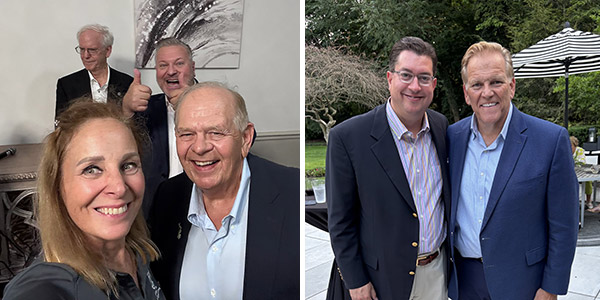




Contact Us
Address
Phone
©2026 Dunaskiss Consulting and Development Inc. | Website by Finepoint Design