
|
|||||||
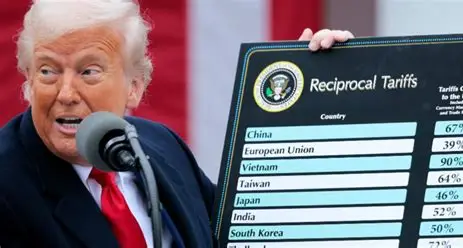
Michigan paying most nationally per household from Trump administration tariffs A recently released study says Michigan is paying the highest cost per household nationally for the tariffs instituted by President Donald Trump's administration since his return to office and the third-most nationally in overall estimated total money. The National Taxpayers Union Foundation, a Washington, D.C. nonprofit group that focuses on tax and governing spending policy, released a study showing that the cost of tariffs to the state of Michigan from January 2025 through Aug. 4, 2026, is about $23 billion. This averages out to about $5,619 per Michigan household, the highest of any state, with the largest hit coming from products related to the automobile industry and auto parts sector. At $23 billion in estimated costs due to tariffs, Michigan ranked third nationally in highest overall cost, behind California and Texas. The report said Michigan is being hit particularly hard given its large manufacturing sector, with about 64% of the overall impact coming from products related to the manufacturing sector. The Michigan Smart Trade Alliance, in a Thursday release highlighting the study, said the per-household metric is an estimate given that tariffs are paid by importers, not individual consumers. "The inconsistency of our current trade policies and escalating trade war between Washington and Ottawa is making life much more expensive for families across Michigan," Mark Fisk, a spokesperson for the Michigan Smart Trade Alliance, said in a statement. "The recent analysis by the National Taxpayers Union Foundation showing Michigan households are absorbing an additional $5,600 in added costs should be a wake-up call for elected leaders in Congress." In the study, it was estimated that about $10 billion of the cost of tariffs in Michigan was from trade involving cars and trucks, with another $5 billion coming from auto parts. Another $1.5 billion was estimated to have come from steel, aluminum and other metals, and $681 million from machinery and parts trade. "The cost of tariffs is having a chilling effect on Michigan families. The new numbers make it clearer than ever our elected leaders should speak out on behalf of their constituents to eliminate these tariffs and bring down costs," John Sellek, another Michigan Smart Trade Alliance spokesperson, said in a statement. "Ultimately, families and our entire economy need the same things: predictable prices and the ability to plan for the future." States surrounding Michigan were also being hit by multibillion-dollar effects from the tariffs, the report showed. Illinois had the next highest cost, at $17 billion, or $3,325 per household. This was followed by $11 billion in Ohio ($2,274 per household), $8.4 billion in Indiana ($3,042 per household), and $5.5 billion in Wisconsin ($2,179 per household). The report states that its figures are estimates based on tariffs paid on imports into Michigan, which is split between statutory tariffs and the executive tariffs enacted by the president.
Michigan's local government entities may not have written the tax incentive law that's drawing hyperscale data center developers to the state, but they're largely the ones tasked with evaluating, negotiating and deciding whether to let the massive projects move in. A report from the Citizens Research Council published Thursday urged municipalities to be proactive in planning for the possibility of data center development in their communities and laid out several factors that local leaders will likely face if they choose to allow hyperscale projects to progress. "Michigan's local governments did not ask to become the primary decision-makers on hyperscale data center development. State tax policy created the conditions that brought these proposals to Michigan," researchers said in the report. "Yet it is township boards, city councils and planning commissions who are now tasked with determining how individual developments are evaluated, negotiated and potentially approved." Although no hyperscale data centers are operational yet in Michigan, several projects are in the planning or construction phases. An absence of a blanket approach to regulating the developments at the local level coupled with immense public scrutiny and pushback has left municipal governments facing costly legal battles, fielding recall campaigns and, in some cases, greenlighting hyperscale data center construction against public sentiment and the votes of local governing boards. Researchers said although many parts of Michigan have hosted data centers for decades, the hyperscale varietal presents a new frontier that many local governments may not be prepared to immediately evaluate and approve. For several municipalities, that's already meant adopting zoning moratoriums for a period to allow local officials to further understand their options and rework regulations if needed. Michigan's Zoning Enabling Act, the report said, gives localities substantial control, but not absolute power to indefinitely hold off development. A moratorium on hyperscale data centers "done right," researchers said, would entail a "specific and narrowly targeted scope" so as not to needlessly discourage small benign investments supporting local data users; an explanation of the moratorium's method of addressing a threat to public health, safety and general welfare; and a specific ending date after "an appropriate amount of time to evaluate the identified threat in good faith and adopt revisions to local land use plans, zoning ordinances or other codes as necessary to address the threat." CRC advised local officials to consult an attorney experienced in Michigan municipal and land-use law before acting on any matter discussed in its report. The report said an initial step to prepare for data center proposals, hyperscale or otherwise, is "to review master plans and zoning codes to consider the unique attributes of data centers in a general way" and consider options against the MZEA. "Given their potential impacts and controversy, hyperscale centers may be best classified as special land uses rather than permitted by right, allowing closer review of potential impacts and tailored approval conditions," researchers said. "Rural townships unfamiliar with development at this scale may need to bring in extra support. Resource-constrained governments may lack capacity for a full review and should retain consultants when needed. The MZEA and related laws permit the governments to require developers to provide reasonable escrow fees to fund necessary evaluations." New zoning restrictions or moratoriums used will have to comply with the MZEA, which requires ordinances and decisions "not (to) have the effect of totally prohibiting the establishment of a land use within a local unit of government in the presence of a demonstrated need for that land use within either that local unit of government or the surrounding area within the state." Among the factors officials are advised to consider when confronted with a data center pitch, researchers said, are tax revenues and a change to local budgets, effect of a hyperscale facility on local utility rates, water and air pollution and excessive noise and light. "Data centers can substantially increase local property tax revenue … the amount of annual property tax revenue from data centers can be highly variable. Much of the taxable value is in the installed computer equipment, which is taxed as personal property. This equipment is subject to rapid depreciation and replacement schedules, imposing large swings in taxable value/revenue," the report said. "As these hyperscale sites have not yet become operational, it remains to be seen exactly how local communities will benefit from data center property tax revenue in Michigan. However, communities with long-established data centers have been able to generously fund government services while reducing residential property tax rates." Officials should be aware, though, of the risk that a budget could become over-reliant on a single property, one which could offer varying revenue year-to-year, or that property value assessments could lead to costly appeals and litigation. One potential preventative safeguard available to municipalities is negotiating binding property tax revenue commitments like a revenue floor. Given the uncertain nature of the artificial intelligence economy, researchers said it's wise for local governments to pursue guarantees that can ensure a community isn't left in the lurch if a hyperscale data center is proposed but ultimately not completed. Those can include requiring community benefit contributions up-front or based on construction milestones, establishing expiration dates for any negotiated development incentives, like property tax exemptions; requiring the developer to sufficiently maintain a paused construction site or requiring a surety bond or letter of credit to restore an abandoned site, binding successors and assignees of the site to established agreements. Researchers said state and federal processes for measuring power and water capacity are generally sufficient to allow local officials to focus on other parts of the data center evaluation process, but advised municipalities to consult with local utility providers regarding any concerns. An area where local officials have a singular role to play is in managing light and noise pollution, the report said: a detailed noise study "should be a central part" of any approval process, conducted by an acoustic engineer familiar with the unique issues specific to data centers. "Preventing noise pollution through both pre-construction design and post-construction monitoring will be essential to confirm that the local community is not adversely impacted," the report said. "Best practices in regulating data center noise pollution remain unsettled. But guidance now exists."
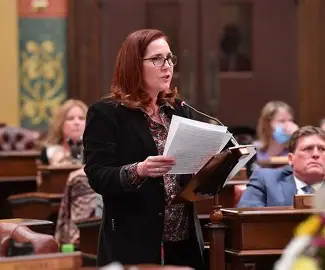
Pamela Hornberger is likely headed back to the House, as she was chosen Wednesday to succeed Rep. Jay DeBoyer, R-Clay, in the 63rd House District as the Republican nominee after he was selected as U.S. Rep. John James' running mate in the gubernatorial race. The vote total was six votes for Hornberger, four votes for Mike Grover and zero votes for Brian Pannebaker. Hornberger is a former state representative and speaker pro tempore. She left the House when she was term-limited after 2022 and was an art teacher before coming to Lansing. Hornberger told the committee that she is the only candidate who does not require on-the-job training or "needs to be brought up to speed." She said she was never strong-armed by special interest groups and crowned herself "one of the most conservative members to ever serve" in the House. Hornberger also told an anecdote about her experience in pushing back on House speaker at the time, Lee Chatfield, during the COVID-19 pandemic when her colleagues wanted to file a lawsuit due to the shutdown of the state, saying he wasn't listening to them because she knew he had political aspirations to run for governor. However, she said she was not going to sit aside while he was "going along to get along." "We worked together to push back on leadership that wasn't willing to push back on the governor, and sometimes you need those people in your caucus," Hornberger said. "You need people that are fighters and that are there to stand up for their constituents, no matter what the issue is." DeBoyer was one of the voting members, and after the vote, he said Hornberger would represent the district well, as her conservative credentials are "undeniable." The decision was made with 10 votes from the St. Clair County and Macomb County executive committees, only those members who reside in the 63rd House District, as ordered by the St. Clair Circuit Court on Wednesday in a dispute between one of the candidates, Mike Grover, and the Michigan Republican Party. The meeting was opened with thanks to all committee members as it had been a stressful week for everyone. While state law stipulates only members of the executive committees in the counties that live in the district have a say on the vote for the new selection, the state party argued all members of the Macomb County and St. Clair County Republican Party executive committees vote on the selection of a new nominee. That would mean a vote of 92 members. Grover sued the party for this move, saying the party needs to perform the process in compliance with the Michigan Election Law. A St. Clair Circuit judge issued a temporary restraining order on the case last week upholding the state law, and saying the certification of a new nominee would not be allowed unless election law was followed. The party had to choose a candidate by Friday when ballots must be finalized. On Wednesday, the court denied the motion from the Michigan Republican Party to dissolve the temporary restraining order. The state party contended that party bylaws supersede state law. Judge Cynthia Lane said the bylaws state "the county executive committee shall nominate candidates, but it says nothing about who will vote for them" and "if it meant to say, meant to establish who will vote for the candidates, it would say that." "It does not make sense for executive committee members who do not live in the district to vote on who that candidate is going to be. It doesn't matter how small that district is," Lane said. Hornberger said she already has a fundraiser next week, but with a safely Republican seat, they need to target Republicans that do not know there is a different name on the ballot as well as voters swinging away from Democrats. Hornberger told reporters after the vote that she is going to hit the ground running, already having a plan for mailers, and that while the district is Republicans, she's not going to "take anything for granted" and that no one should. Hornberger confirmed that it was not a secret that House Speaker Matt Hall, R-Richland Township, was working behind the scenes in this race. "We were seat mates for two years," Hornberger said. "We know each other very well. It's a little disappointing that this all had to happen over the course of two and a half, three weeks. But I think we'll be fine. I want to go back and work with my colleagues and see what we can get accomplished for our state, for our communities," Hornberger said. She said her first priority is making sure to maintain the majority, as it will be "an uphill battle" as they cannot control "the outside forces." "We can't control what Trump says," Hornberger said. "We can't control what lake he renames, we can't control any of that, and that really affects those center left, center right, and center voters that we need to be appealing to." She said, however, when it comes to policy, she wants to figure out what caucus priorities are Rep. Alicia St. Germaine, R-Harrison Township, was also in attendance at the meeting, and told reporters she was glad Hornberger was nominated, and that she already has the name recognition to make up for campaigning time lost. "When I woke up one morning and realized that 'Oh my gosh, we got to find a candidate,' she was the first person that popped into my head for obvious reasons," St. Germaine said. "I mean, she held the seat. She's got the experience, and she's a strong, independent woman. And I think that says a lot, and I welcome that. We need more strong, independent women up there in Lansing as our voice." There have been stirrings around this race, as well as in the face of an all-male ticket with James and DeBoyer, as to what place Republican women have, especially in the face of controversy with men making comments inside the caucus. St. Germaine also applauded that they stood by the state statute, and that she would be interested in seeing how the Legislature can make the statute less vague so there are not continuous issues in nomination processes. The court hearing The Michigan Republican Party argued in its motion to dissolve the temporary restraining order that following state law would mean violating federal and state constitution rights by freedom of association and that the party decides how it operates, not the government. Lane said in her argument that "if you accept the Michigan GOP's argument, then there is a potential for non-residents of that district to impose their will on that district" During the hearing, which took place about five hours before the vote to choose a new nominee, Lane first ruled that Pannebecker could not intervene on the side of the state party. Lane told Matthew DePerno, Pannebecker's lawyer, that Pannebecker did not have a vote, even if he has vested interest in the vote, and so does not have different enough reasons to join the lawsuit and should be represented by the party. Grover is a voting member of one of the St. Clair County Republican Party Executive Committee. Brandon Debus, attorney for the MIGOP, said this is "about forcing a process that Mr. Grover disagrees with, that the party has already decided on vis-à-vis its bylaws." Debus said there was not a specific deadline for handing over a name, even with a deadline of finalizing the ballot on Friday. Instead, he said Secretary of State Jocelyn Benson would know when they need to be printed. Ballots start to go out on Sept. 19. Kevin Kijewski, Grover's attorney, started his testimony with an email from the state party on Tuesday, stating that the court will decide the executive committee disagreement and, for now, people should plan on attending, with an addendum of "…sigh." This was not an argument about freedom of association, but an argument of what someone's address is, Kijewski said, and that they have planet of statutes on resident requirements. "What the Michigan Court of Appeals is saying is just because you're a political party, just because you espouse particular views, just because you want to do certain things in your own way does not sort of give you carte blanche or immunity from the law," Kijewski said. Kijewski told reporters after the ruling that the party's motion was an attempt at "voter dilution," and tried to "water down everyone's vote of the people that actually live within the 63rd House District." Chair Jim Runestad told Gongwer News Service after the ruling that the party's goal was to follow the rules all along, and that he really "couldn't care less which of those three win." "It's completely up to that area of Macomb County, the issue that we were dealing with is the courts have been very unclear as to the bylaws of a private organization," Runestad said. "Do they prevail, or if there's state statute in conflict, does that prevail? And so that we still don't know. I mean, there's not been a definitive decision on that." He said either of the parties were going to sue anyway whether they followed the statute or the bylaws, and that they knew that weeks ago, so all they wanted was clarification and "whatever they decided, however it went, (they were) totally fine with that." He said it was the attorney who decided to try to dissolve the restraining order under statute analysis. Hornberger said she believes the judge made the right decision today, but there needs to be clear clarification in the law. DCD Spotlight:  Automated license plate readers are spreading across Michigan—and candidates for Governor and U.S. Senate are now being forced to take a position. What began largely as a local-government decision about public safety is quickly becoming a statewide political issue. Automated license plate readers, most prominently those operated by Atlanta-based Flock Safety, have proliferated across Michigan in recent years. According to Bridge Michigan, at least 125 Michigan county and municipal law enforcement agencies now contract with Flock to install and maintain the cameras. The technology is designed to photograph vehicles as they pass, record license plate information and allow law enforcement to search the resulting database. Police agencies point to the technology's usefulness in locating stolen vehicles, finding missing people and assisting criminal investigations. But the rapid expansion of the technology has generated an equally rapid backlash over privacy, data retention and who ultimately has access to the information being collected. That debate has now moved squarely into Michigan's 2026 elections. A New Statewide Political Issue Democratic gubernatorial nominee Jocelyn Benson recently called for statewide rules governing the technology, arguing that Michigan residents should know when government is collecting information about them, where that information goes and who can access it. Her Republican opponent, John James, has taken a somewhat different approach, arguing that privacy rights must be balanced against legitimate public-safety needs. James has said he wants to protect Michiganders' privacy while ensuring law enforcement can continue using appropriate technology to enforce the law. The issue is also emerging in the U.S. Senate race. Democratic nominee Abdul El-Sayed has made opposition to what he calls the "mass proliferation" of Flock cameras a central part of his campaign messaging. Republican nominee Mike Rogers, meanwhile, has said he opposes the "unchecked" use of the technology and that security and liberty need to be protected together. The political significance is clear: Flock cameras have moved beyond a niche technology debate and into the broader conversation about privacy, government surveillance and public safety. Why Local Governments Should Be Paying Attention The controversy presents an interesting policy challenge for Michigan's cities, villages, townships and counties. Local governments have generally been the entities making the decisions about whether to purchase or contract for license plate reader systems. In many communities, the decision is driven by very practical questions: Can the technology help police solve crimes? Can it help recover stolen vehicles? Can it help locate missing or endangered people? The answer from many law enforcement agencies has been yes. But the technology also creates a significant amount of data about ordinary people who are not suspected of committing a crime. As a result, communities are increasingly asking:
Those questions become particularly important because a camera installed by one municipality can potentially generate information that is useful to law enforcement well beyond that municipality's boundaries. Lansing May Ultimately Set the Rules Michigan lawmakers are already considering statewide regulations. Bills pending in both the House and Senate would establish restrictions on how automated license plate reader data could be retained and used. Among the proposals is a 14-day data-retention limit, along with restrictions on the purposes for which the system could be used, including locating missing people, stolen vehicles and individuals with outstanding warrants, identifying uninsured or unregistered vehicles, parking and toll enforcement, and criminal investigations. Sen. Jim Runestad, a Republican sponsor of Senate legislation, has characterized the current environment as the "wild, wild west," arguing that Michigan needs greater consistency in how the technology and its data are managed. Law enforcement groups, however, have raised concerns about a strict 14-day limit. They argue that some criminal investigations and missing-person cases can take longer than two weeks, meaning that overly restrictive retention requirements could prevent police from accessing information that ultimately proves important to an investigation. That tension—privacy versus public safety—is likely to define the legislative debate. A Bigger Issue for Michigan Government The Flock debate is worth watching because it represents a broader question facing state and local government: How should government regulate rapidly evolving technology when the technology can simultaneously provide enormous public benefits and create legitimate privacy concerns? Automated license plate readers are only one example. Artificial intelligence, facial recognition, drones, predictive policing tools, data analytics and other technologies are increasingly becoming part of government operations. Policymakers are being asked to determine not only whether government should use these tools, but also what rules should govern the data they generate. Michigan currently has no comprehensive statewide framework governing automated license plate reader data. At least 16 states have adopted policies regulating the use and retention of such data, according to Bridge Michigan. That makes Michigan's debate particularly relevant for local governments. DCD Election Outlook From a political perspective, this is an issue that could continue gaining traction as the 2026 election moves into the fall. For candidates, Flock cameras provide an unusual political opportunity because the issue cuts across traditional partisan lines. Republicans can frame the debate around public safety, law enforcement and the need to give police effective tools to combat crime. Democrats can frame it around privacy, government surveillance, transparency and individual rights. But the positions being taken by candidates suggest the issue may not ultimately fall neatly along party lines. Both sides are acknowledging the need to balance public safety with privacy protections. For local officials, the most important takeaway may be that decisions being made today at the city, village, township and county level could eventually be governed by statewide rules. Communities considering new Flock contracts—or renewing existing agreements—would be well served to understand where the Legislature and the next administration may ultimately land on data retention, access and sharing. The technology isn't going away. The question now is who sets the rules for how it is used. For Michigan's local governments, law enforcement agencies and policymakers, that debate is only beginning. DCD OUT & ABOUT
DCD Access. DCD Relationships. DCD Results. DCD Partner Justin Dunaskiss has been out across the region building and strengthening relationships with key policymakers and political leaders—including time with GOP gubernatorial candidate John James in Lake Orion and a breakfast reception with Representatives Ron Robinson and Joe Aragona. These relationships are an important part of the access DCD brings to our clients, helping ensure their priorities have a seat at the table in Lansing and throughout Michigan.
JOIN US IN SUPPORTING HONOR COMMUNITY HEALTH!
DCD IS A FULL-SERVICE, BI-PARTISAN, MULTI-CLIENT LOBBYING FIRM REMEMBER ALL OF DCD'S SERVICES: ARTICLES OF POLITICAL INTEREST:
Jocelyn Benson outraises John James. See top donors in Michigan governor race - Bridge Michigan See how your local Michigan school district did in the 2026 M-STEP - Bridge Michigan Michigan voters will decide on utility political spending rules State blames vendor after 8,200 Michigan IDs were mailed with errors - mlive.com Michigan aims to test pay-per-mile road funding system in 2027 - mlive.com PARTING WISDOM:
Summer’s Lease As summer draws to a close, Shakespeare’s familiar words from Sonnet 18 seem particularly appropriate: “summer’s lease hath all too short a date.” Shakespeare uses the fleeting nature of summer as a reminder that beauty, power and time itself are temporary. Yet the sonnet ultimately offers a more enduring idea—that while seasons change, some things can outlast the moment. There is perhaps a lesson in that for politics as well. Political seasons are short. Campaigns come and go. Administrations change. Legislative majorities shift. A candidate who seems unstoppable today may be out of office tomorrow, while an issue that receives little attention this year can become the defining issue of the next election cycle. In Michigan, where 2026 has already produced a remarkably active political environment, the pace of change can make it easy to focus on the immediate moment rather than what comes next. But for those who work in and around government, the most valuable currency is rarely the moment itself. It is the relationship that survives the moment. Elected officials move on. Staff changes. Political control shifts from one party to another. Priorities evolve. Yet the relationships built through years of showing up, listening, providing value and understanding the people on the other side of the table can endure through all of it. That is particularly important in a state like Michigan, where public policy is shaped not only by elections but by the relationships between legislators, local governments, businesses, associations, advocates and state agencies. The political landscape will inevitably change. The question is whether the relationships built within that landscape can withstand the change. Perhaps that is the better lesson to take from Shakespeare as summer gives way to fall: don't confuse the season with what lasts beyond it. Summer has a short lease. So do political majorities, campaigns and individual moments of influence. But thoughtful relationships, a reputation for credibility and the trust earned over time can have a much longer life. For DCD, that is ultimately what our work is about—not simply navigating today's political environment, but building the relationships and positioning our clients for whatever comes next. Because the seasons will change. The relationships are what remain. Doing Things Differently DCD is rebranding, and our bottom line is your bottom line. We are striving to create and foster strong relationships with clients and lawmakers, deliver results with strong ethics and class, but above all else, out-hustle and out-smart our competition every day to be the very best. We’re making chess moves while others are playing checkers. Everything we do is with you in mind, we’re doing things we’ve never done before and aggressively pursuing opportunities. The time is now. DCD has taken our firm to the next level and your involvement and investment paired with our knowledge and expertise is going to launch the great state of Michigan forward. |
|||||||
|
|||||||
 Municipalities have options to prepare for data center development – or to head it off
  Hornberger chosen as 63rd House District Republican nominee





Contact Us
Address
Phone
©2026 Dunaskiss Consulting and Development Inc. | Website by Finepoint Design