
|
|||||||
Election Day Is Here: Get Out and Vote! Election Day is here—and this is an election Michigan voters should not sit out. Across the state and country, voters are heading to the polls to make decisions that will shape the direction of government at every level. From the race for Governor and a closely watched U.S. Senate seat to congressional, legislative, judicial and local races, there is a great deal at stake on this year's ballot. At Dunaskiss Consulting & Development, we spend every day working with elected officials, government agencies, communities and clients navigating the public policy process. We see firsthand that elections have consequences. The people elected today will make decisions affecting economic development, infrastructure, taxes, health care, public safety and countless other issues that directly impact Michigan residents and communities. That is why participation matters. Regardless of your political party, your preferred candidate or your position on the issues, Election Day is your opportunity to have a say in the future of your community, your state and your country. If you have not already voted, make a plan to get to the polls today. Michigan polling places are generally open from 7 a.m. to 8 p.m. local time, and voters should confirm their assigned polling location before heading out. Don't assume someone else will make the decision for you. Don't assume your vote doesn't matter. And don't let Election Day pass without making your voice heard. The campaigns are ending. The television ads will soon disappear. But the decisions made by voters today—and the leaders chosen to represent us—will have an impact long after the polls close. Get informed. Get involved. Get out and vote. For readers looking for their polling place or other voter information, the official Michigan Voter Information Center is the best place to start: Find your polling location and voter information 
Haley Stevens Endorses Mike Rogers for U.S. Senate Democratic U.S. Rep. Haley Stevens (D-Birmingham) on Sunday announced she is endorsing Republican Mike Rogers for the U.S. Senate, the latest twist in 48 hours of internal party turmoil sparked by an internet-based campaign ad that blamed high grocery prices on U.S. military aid to Israel. Stevens had asked Democratic nominee Abdul El-Sayed to condemn the ad sponsored by Rebellion PAC, which is led by Cenk Uygur, the uncle of streamer Hasan Piker. El-Sayed declined to do so and disinvited Stevens from a weekend campaign event. “Abdul said that I was no longer welcome in his campaign and I should stay away, and he's right,” Stevens said. “I don't belong in Abdul's campaign. I do not stand with Hasan Piker who gets trafficked to our college campuses.” The statement came as Stevens appeared at a Detroit church with Rogers. The two addressed the media together after the service. Today's events come nearly three months after Stevens narrowly lost to El-Sayed in the Democratic primary, a race that drew national attention to the rift between Stevens, who was heavily funded by the American Israel Public Affairs Committee (AIPAC), and El-Sayed, who has declined to say whether Iran or Israel poses a greater threat to U.S. interests. Stevens' decision to endorse Rogers came after her finacé, Jason Turkish, also said he was endorsing Rogers. Turkish described himself as a lifelong Democrat and praised El-Sayed’s intelligence and speaking ability, but said the nominee had failed to unequivocally condemn what Turkish considers antisemitic messaging. Democrats quickly attempted to circle the wagons around El-Sayed, now two days before Tuesday's General Election. “Michigan Democrats chose our nominee in August," said Michigan Democratic Party Chair Curtis Hertel. “Two days before the most important Senate race in the country, it appears as if Congresswoman Haley Stevens chose to spend Sunday morning in a Detroit church where the Republican candidate was making his pitch, rather than supporting the Democratic ticket.” Hertel deflected from the Israel issue at the heart of the rift by saying Rogers had a 33% lifetime rating with the NAACP and that's he's the hand-picked candidate of Republican President Donald Trump. Also issuing statements moments ago on the Democratic side were Michigan Democratic Party First Vice Chair Portia Roberson and Democratic National Committee (DNC) Black Caucus Chair Virgie Rollins. “We are dismayed that Congresswoman Haley Stevens has revealed herself to be a sellout who used Black Michiganders for a political stunt," Rollins said. "Congresswoman Stevens has lost her way, and Michiganders know that Mike Rogers is a shill for Trump and has failed Michigan. We are ready to elect Abdul on Tuesday.” On Friday, Stevens said Friday her decision to appear alongside El-Sayed this weekend rested on assurances he condemned a grocery-themed political ad she described as antisemitic, while her fiancé said the controversy has driven him to support Republican Mike Rogers. In a statement posted on X, Stevens said Democratic Party leaders and emissaries had conveyed that El-Sayed was formally condemning the Rebellion PAC advertisement. She cited those assurances as her reason for accepting U.S. Rep. Jim Clyburn’s invitation to attend a Detroit church service with El-Sayed on Sunday. “I urge voters and the press to confirm it with Abdul directly,” Stevens wrote. Her statement’s headline described El-Sayed’s condemnation as expected. It did not include a statement from El-Sayed himself. Stevens identified the ad’s producer as Uyger, Piker's uncle. She said the advertisement links Michigan families’ inability to afford groceries to money being spent on killing Palestinians and blames Israel for economic hardship. According to Stevens, El-Sayed had previously responded by saying his campaign was unaffiliated with the advertisement. “A disclaimer is not a condemnation,” she wrote. Stevens also called on El-Sayed to apologize for his own campaign statements linking aid to Israel with insufficient funding for domestic needs. She further urged him to remove a separate campaign advertisement featuring Tucker Carlson. However, El-Sayed did not condemn the ad. In a statement posted late Friday, El-Sayed accused Stevens of “relitigating a primary that ended three months ago” and urged Democrats to concentrate on defeating Rogers. He said his campaign remains focused on rising gas and grocery prices and access to healthcare. The statement did not condemn the Rebellion PAC advertisement or offer the apologies Stevens sought. El-Sayed also pointed to his primary victory despite what he described as $70 million in outside spending by corporations and AIPAC on Stevens’ behalf. He said Democrats should prioritize winning back the Senate, holding Trump accountable, reducing money’s influence in politics and passing Medicare for All. The dispute has already cost El-Sayed the vote of Stevens’ fiancé, attorney Jason Turkish, who told Michigan’s Big Show host Michael Patrick Shields he intends to cross party lines. “No, I’m going to vote for Mike Rogers,” Turkish said when asked whether he would support the Republican or leave the Senate race blank. Turkish described himself as a lifelong Democrat and praised El-Sayed’s intelligence and speaking ability, but said the nominee had failed to unequivocally condemn what Turkish considers antisemitic messaging. “You know, an ad that says that Jews are responsible for the price of bananas, the price of eggs. I mean, I can’t believe we’re actually having this conversation,” Turkish said. That was Turkish’s characterization of the advertisement shared on Facebook. Turkish said candidates should condemn both antisemitism and Islamophobia. He described his decision as the result of accumulating concerns rather than political calculation. “Democratic politics is how I met the love of my life,” he said. “I’m just not on board this one time.” Turkish said Stevens had made clear she intends to vote for El-Sayed. 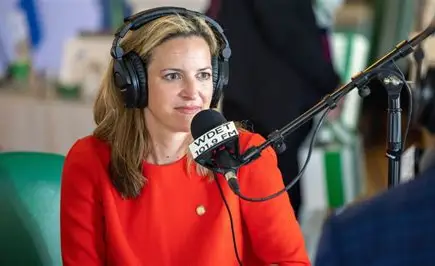
Benson Wants Her First Bill Signed to Create State Voting Rights Act If elected governor, Democratic nominee Jocelyn Benson says the first bill she plans to sign would be to create Michigan's own Voting Rights Act following federal changes. Benson, Michigan's Secretary of State, was in Saint Clair Shores today to rally with campaign door-knockers for Sen. Kevin Hertel, who's seeking reelection in the competitive 12th state Senate district along Lake Saint Clair. "I think there's going to be a flurry of bills, but the first bill I will sign is a Voting Rights Act for the state of Michigan to restore the protections that were gutted by the U.S. Supreme Court when they eliminated a lot of the strength of the national Voting Rights Act earlier this year," Benson said when asked what, if Democrats are successful this fall, will be the first bill introduced in the next legislature. In April, the U.S. Supreme Court's Louisiana v. Callais ruling struck down a Louisiana congressional map that had two Black-majority districts. The ruling altered the criteria for federal lawsuits against states' legislative and U.S. House maps, in a way that critics argue will make it much more difficult for civil rights groups to challenge maps they believe won't give representation to communities of color. According to an article published by Harvard University, around 140 U.S. House districts – or about one-third of congressional seats – are majority-minority seats. Senate Democrats have tried pushing to create a Michigan Voting Rights Act (MVRA) since 2023. Under this year's bills by Senate Democrats, residents could use the state's own legal system to challenge political lines they feel discriminate based on race, color or language. Also, a MVRA – based on recent proposals in Lansing – would create new standards for providing non-English election materials and practices to guarantee that disabled voters can have extra help at the polls. It would create new guidelines for legal action as well if voters feel their local government has made it harder for minorities to vote, like by relocating a voting site. Earlier this year, the Senate passed four bills that encompassed the Democratic caucus's Michigan Voting Rights Acts package. Furthermore, it would assign a research university in the state to create the "Michigan Voting and Elections Database and Institute.” However, in the last two years, the proposals have provoked concerns from local clerks, who worry they add new legal liabilities and responsibilities while their offices try to navigate funding shortfalls, having limited staff and new election obligations – like nine days of early in-person voting and no-reason absentee – created under ballot proposals approved in 2018 and 2022. DCD Election Special: Michigan Proposal 2: 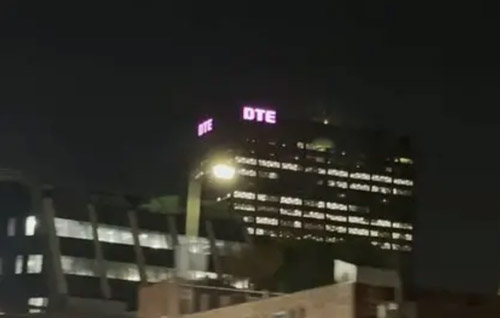 When Michigan voters head to the polls today, they will be asked to decide more than who will occupy elected office. Proposal 2 raises an important question about the relationship between money, politics and government. The proposal is intended to limit certain political contributions from regulated utilities and government contractors while expanding disclosure requirements for political communications. Supporters see it as an important step toward reducing potential conflicts of interest. Opponents worry it could go too far, creating new restrictions on political participation and public-policy advocacy. For Michigan voters—and for municipalities and organizations that regularly interact with government—the issue deserves a closer look. The Case for Proposal 2 Supporters begin with a straightforward argument: companies with significant financial interests before government should not be able to use campaign contributions to influence the people making decisions that affect them. That argument applies to regulated utilities and government contractors. Supporters believe clearer restrictions would help reduce the appearance of “pay-to-play” politics and strengthen public confidence in government. The proposal would also expand disclosure requirements for certain political communications, including communications made online. Supporters argue that voters deserve to know who is paying for efforts intended to influence public opinion about candidates and ballot questions. From this perspective, Proposal 2 is about two things: reducing potential political influence and increasing transparency. The Case Against Proposal 2 Opponents generally agree that corruption should be prevented. Their concern is whether Proposal 2 goes beyond that goal. The most significant questions surround the proposal's expanded treatment of political communications. Critics worry that organizations participating in legitimate public-policy debates—including businesses, trade associations and nonprofits—could face additional reporting requirements and compliance burdens. They also raise a broader free speech question: Where should Michigan draw the line between inappropriate political influence and legitimate advocacy? Businesses and organizations frequently participate in debates over taxes, regulations, infrastructure and other public policy issues that directly affect them. Opponents argue that having an interest in an issue should not prevent an organization from participating in the political process. What Could It Mean for Municipalities and DCD Clients? Proposal 2 would not change how municipalities award contracts or conduct their day-to-day business. But it could affect the broader relationship between government, private-sector contractors and political advocacy. Municipalities regularly partner with private companies on infrastructure, construction, planning, engineering and other public projects. Supporters believe greater separation between government contracts and campaign contributions would strengthen public trust in those relationships. Opponents worry that businesses doing significant work with government could face new restrictions or become more cautious about participating in political and public-policy discussions. For DCD clients, the broader takeaway is clear: organizations involved in government relations and public affairs should pay close attention to any changes affecting campaign finance, political communications and advocacy. The Choice for Michigan Voters At its core, Proposal 2 presents two competing principles:
Proposal 2 is about more than campaign contributions. It is a vote on where Michigan should draw the line between political influence and political participation. That distinction matters. Government does not operate in a vacuum. Municipalities rely on private-sector partners to build infrastructure and deliver services. Businesses and organizations have legitimate reasons to engage with elected officials and advocate for policies that affect their communities and industries. At the same time, voters expect public decisions to be made on the merits—not based on who has the greatest political access or financial influence. That is the tension Michigan voters are being asked to resolve. For DCD clients, municipalities and organizations that work at the intersection of government and the private sector, the outcome is worth watching closely. A vote either way will send a message about how Michigan views campaign finance, transparency and the role of advocacy in public policy. As with every ballot question, the most important step is to look beyond the headlines and the campaign slogans. Read the proposal. Understand the arguments on both sides. Consider the practical consequences. And then make your voice heard at the ballot box. Because while Proposal 2 may focus on the relationship between money and politics, the final decision belongs to Michigan voters. DCD IS A FULL-SERVICE, BI-PARTISAN, MULTI-CLIENT LOBBYING FIRM REMEMBER ALL OF DCD'S SERVICES: ARTICLES OF POLITICAL INTEREST:
Michigan elections: School districts seeking nearly $4 billion in bonds - Bridge Michigan Michigan township rejects data center pitch before talks even begin - Bridge Michigan Michigan wants to scrap rarely used special ed rule. Child advocates fear harm - Bridge Michigan ***How to find your polling place for the 2026 Michigan midterm election*** Before Election Day, Michigan gas prices down 30 cents from a week ago PARTING WISDOM:
Opinion: The Known and the Unknown: A Thought on Michigan's Election By Jake German “To be conservative, then, is to prefer the familiar to the unknown, to prefer the tried to the untried, fact to mystery, the actual to the possible, the limited to the unbounded, the near to the distant, the sufficient to the superabundant, the convenient to the perfect, present laughter to utopian bliss.” As Michigan voters head to the polls, I have found myself thinking about those words from the British philosopher Michael Oakeshott. They offer a useful way to look at this election—not simply as a contest between political parties or competing campaign slogans, but as a choice between two fundamentally different approaches to government. The most consequential race on Michigan's ballot may be the contest for the United States Senate. With Senator Gary Peters choosing not to seek another term, Michigan voters are deciding who will fill an open seat that has become one of the country's most closely watched Senate races. Republican Mike Rogers and Democrat Abdul El-Sayed offer voters two very different visions of public service and government. One candidate is known. Mike Rogers has spent years in public service. Michigan voters have had the opportunity to watch him govern, to agree or disagree with his votes, and to judge his record. He has served in Congress, worked on some of the nation's most consequential national security issues and operated within the institutions of government as they actually exist—not as we might wish them to exist. The other offers something different: a vision of what government could become if we were willing to discard much of what has come before. That kind of promise has an undeniable appeal. Politics has always had room for idealism. Every generation wants to believe it can build something better than the generation before it. There is nothing wrong with ambition, and there is certainly nothing wrong with demanding more from government and from those who lead it. But there is an important difference between pursuing improvement and promising perfection. That is where Oakeshott's observation becomes particularly relevant. Government is not a blank slate. It is a collection of institutions, laws, relationships and competing interests built over generations. It is imperfect because the people it serves—and the people who run it—are imperfect. Successful governing requires more than identifying what is wrong. It requires understanding what will happen when you try to fix it. That is why experience matters. It is easy to promise a better world. It is much harder to govern in the one we actually have. Michigan voters should be cautious whenever a political candidate suggests that our most complicated problems have simple solutions, or that a dramatic transformation of government will produce the kind of utopian results politicians have been promising for generations. The question is not whether we should want better health care, stronger communities, greater economic opportunity or a government that works for ordinary people. Of course we should. The question is whether the promises being made can survive contact with reality. In this election, voters have an opportunity to choose between a candidate with a long and established public record and a political vision that asks voters to place considerable faith in what might be possible. That does not mean the familiar is always right or that change is always wrong. History is filled with examples of institutions that needed reform and leaders who challenged conventional thinking for the better. But change, in and of itself, is not a governing philosophy. Nor is disruption a substitute for experience. As someone who works every day with local governments, elected officials, businesses and organizations trying to solve real problems, I have developed an appreciation for the difference between politics and governing. Politics can promise anything. Governing requires choices. It requires working with people who disagree with you. It requires understanding budgets and laws. It requires recognizing unintended consequences. And, perhaps most importantly, it requires knowing that the perfect solution is often the enemy of a good and workable one. That is what makes Oakeshott's distinction between “the actual to the possible” and “the convenient to the perfect” so relevant today. Michigan has no shortage of challenges. We need serious conversations about the economy, public safety, infrastructure, health care and the future of our communities. But those challenges will not be solved by slogans—or by promises of utopian bliss. They will be solved by people willing to do the difficult, often unglamorous work of governing. On Election Day, every voter will make his or her own decision. That is as it should be. But as we consider the choices before us, we would do well to remember that there is value in what has been tested. There is value in experience. And there is wisdom in being skeptical of anyone who promises that the complicated problems of public life can be solved simply by sweeping away what we know in favor of something we have yet to see. The choice before Michigan is not whether we should hope for something better. We should. The real question is whether we are willing to trade what is known and tested for a promise of something that may never materialize. That is a question worth considering—not just in this Senate race, but every time we enter the voting booth. Doing Things Differently DCD is rebranding, and our bottom line is your bottom line. We are striving to create and foster strong relationships with clients and lawmakers, deliver results with strong ethics and class, but above all else, out-hustle and out-smart our competition every day to be the very best. We’re making chess moves while others are playing checkers. Everything we do is with you in mind, we’re doing things we’ve never done before and aggressively pursuing opportunities. The time is now. DCD has taken our firm to the next level and your involvement and investment paired with our knowledge and expertise is going to launch the great state of Michigan forward. |
|||||||
|
|||||||






Contact Us
Address
Phone
©2026 Dunaskiss Consulting and Development Inc. | Website by Finepoint Design