|
|||||||
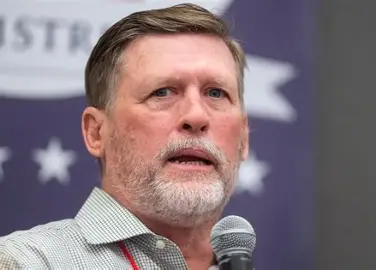
Hauck says Senate GOP backing him as caucus leader for next term Senator Roger Hauck said Senate Republicans have united behind him as their next leader in the chamber for the upcoming legislative term. Hauck, R-Mount Pleasant, announced he has the caucus's support for the position in a release posted to X, formerly Twitter, late Thursday afternoon. "I am grateful for the trust and confidence my colleagues have placed in me," Hauck said in a statement. "This team brings together experienced leaders and fresh perspectives from every corner of our state. Together, we are committed to building a united caucus that will deliver results for Michigan families, workers and small businesses." Hauck was first elected to the House in 2016 and served three terms before being elected to the Senate in 2022. He represents the strongly Republican 34th Senate District which consists of several counties in the central part of the Lower Peninsula and is expected to easily win reelection to his final term in the Senate in November. Hauck is co-chairing the Senate Republicans' recruitment operations this election cycle along with Senator Michael Webber, R-Rochester Hills. "Leader Nesbitt and the SRCC have built a strong foundation for success," Hauck said. "They have strengthened our caucus, recruited outstanding candidates, and positioned Republicans to compete for every seat possible. Our entire team is united and working together to restore a Republican majority in the Michigan Senate." Democrats told a 20-18 majority in the Senate. A handful of competitive seats up for election in November will determine control of the chamber. Senate Republicans also have a more than $2 million cash on hand advantage over Democrats going into the fall battle for the majority, although there is some momentum for Democrats nationally this election cycle. Webber in a statement said he looks forward to working with Hauck to ensure they return to the majority in 2027. "Roger and I are laser-focused on supporting candidates who will work hard for the people of Michigan, fight for Michigan families, help small businesses, create opportunities for future generations, and win back the Senate majority," he said. Democrats have not yet selected their next leader, but Sen. Darrin Camilleri, D-Trenton, is reportedly a strong contender for the role next term. He faces a competitive reelection fight for his seat in Southeast Michigan.
Michigan Democrats turned out in unusually large numbers for Tuesday's primary, posting their strongest gubernatorial primary turnout as a share of registered voters in more than four decades, according to a MIRS analysis. Nearly 1.5 million votes were cast in the Democratic gubernatorial primary, compared with approximately 929,000 Republican votes. Democratic voters accounted for 61.7% of the combined Democratic and Republican votes in the two parties' top-of-ticket contests. Overall, turnout in the two gubernatorial primaries represented nearly 33% of Michigan's registered voters, the highest combined percentage recorded in MIRS' review dating back to 1982. The unusually high Democratic turnout appears to reflect a combination of factors. The Democratic gubernatorial field generated significant interest, while the highly competitive U.S. Senate primary between Haley Stevens and Abdul El-Sayed also attracted considerable attention and national spending. El-Sayed's extensive statewide campaign schedule and populist message helped drive interest in the Democratic contest. By contrast, Republican turnout was considerably lower. Republican commentator Andrea Bitely suggested that the relatively predictable gubernatorial contest between John James and Perry Johnson, along with a limited number of competitive Republican congressional primaries, gave Republican voters fewer reasons to participate. The numbers have also prompted discussion about whether Republicans crossed over to vote in Democratic primaries. Michigan does not require voters to register by political party, allowing voters to choose either primary ballot. While some crossover voting almost certainly occurred, political observers quoted by MIRS believe it was not significant enough to explain the dramatic difference in turnout. What Does It Mean for November? The primary results should not necessarily be interpreted as a prediction of November turnout or the final outcome of the general election. Michigan's general election electorate will be substantially larger, and the political environment will change considerably between now and November. However, the numbers do provide an important early indicator: Michigan Democrats appear highly engaged heading into the general election, while Republicans will need to address a significant enthusiasm and turnout gap. For Republicans, the challenge will be converting the relatively low level of primary participation into strong general-election turnout. For Democrats, the challenge will be maintaining the energy demonstrated during the primary while expanding their coalition beyond the voters who participated Tuesday. With competitive races for Governor, U.S. Senate, Congress and the Michigan Legislature, turnout—and particularly which party is able to motivate its less frequent voters—could ultimately prove more important than the raw primary results. The bottom line: Tuesday's primary demonstrated a highly energized Democratic electorate and a comparatively less engaged Republican electorate. Both parties now have roughly three months to turn that primary environment into general-election momentum.
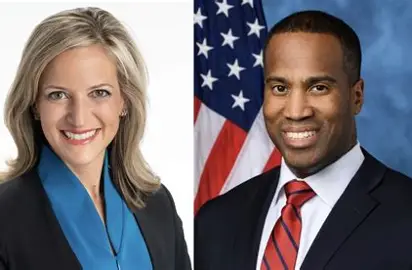
Democratic gubernatorial candidate Jocelyn Benson pledged Thursday to participate in two televised debates, to which Republican nominee John James did not immediately respond. Benson's campaign said it's in talks with two television networks, WOOD-TV in Grand Rapids and WDIV-TV in Detroit, to hold debates in October. Benson did not accept the invitation issued by the Michigan Debate Commission on Thursday, which proposed a Sept. 21 debate between Benson and James and a Sept. 15 debate between U.S. Senate hopefuls Abdul El-Sayed and Mike Rogers, instead making her own proposal. "Voters deserve to hear where the nominees stand on the issues. For the past year and a half, I have shared plans to lower costs on everything from the grocery store to the gas pump, the doctor's office to the housing market," Benson said in a statement. "John James owes voters an explanation for why he keeps voting to raise their costs and put Donald Trump's agenda ahead of Michigan. The least he can do is show up, stand on a debate stage and answer questions. I'll be there." Jackson Gross, campaign manager for Republican John James, said the campaign wants five debates. “Benson has already refused to debate John James," Gross said. "He proposes five debates, has already accepted three, to make sure voters know why the SPLC funded the KKK on her watch, how much her family is cashing in on the Saline data center, and why she opposes voter ID after letting 16 foreign nationals cast ballots.” DCD SPOTLIGHT  Michigan 2027 Legislative Outlook What to Expect Following the August Primary Elections With Michigan's August primary now behind us, attention quickly shifts to the November General Election and, perhaps more importantly for businesses, municipalities, and nonprofit organizations, what the next legislative session is likely to look like. While the outcome of November's elections will ultimately determine control of state government, several trends are already emerging that will shape legislative priorities over the next two years. Divided Government is Likely to Continue Michigan has experienced divided government for much of the past two years, and there remains a strong possibility that no single party will emerge from November with overwhelming control of state government. If that occurs, bipartisan negotiation will once again become the defining characteristic of the legislative process. Large ideological policy packages will face significant challenges, while targeted reforms, appropriations, infrastructure investments, and consensus legislation will have a greater opportunity to advance. For organizations seeking legislative success, relationship-building and coalition development will become even more valuable than partisan advocacy. Economic Competitiveness Will Dominate Regardless of election outcomes, Michigan's next Legislature will almost certainly focus on strengthening the state's economy. Key discussions are expected to include:
The debate will likely center less on whether government should invest in economic growth and more on how those investments should be structured. State Budget Pressures Continue Although Michigan remains in relatively strong fiscal condition, lawmakers continue to face long-term structural pressures. Among the issues likely to receive significant attention are:
Competition for limited discretionary dollars will continue to intensify, making legislative appropriations and strategic grant funding increasingly important for local governments and nonprofit organizations. Increased Focus on Artificial Intelligence One issue that has emerged rapidly over the past year is artificial intelligence. Expect increased legislative discussion regarding:
Rather than regulating AI broadly, lawmakers are likely to focus initially on responsible implementation within state and local government while encouraging innovation and improving government efficiency. Business Climate Remains a Priority Business organizations are expected to continue advocating for policies that improve Michigan's competitiveness. Potential topics include:
Some proposals introduced during the current Legislature—such as premises liability reforms and other business-related measures—could return next session if they do not reach the Governor's desk this year. Local Government Will Continue Playing a Larger Role Communities across Michigan are increasingly serving as laboratories for innovation. Economic development, housing, infrastructure, public safety, downtown redevelopment, and technology modernization are increasingly being driven through partnerships between local governments, the private sector, and nonprofit organizations. Organizations that engage at both the state and local levels will be well-positioned to capitalize on emerging funding opportunities. What This Means for Our Clients The next legislative session is unlikely to be defined by sweeping ideological change. Instead, success will likely come through targeted policy initiatives, strategic appropriations, and bipartisan collaboration. Organizations should begin preparing now by:
Final Thoughts The August primary marks the beginning—not the end—of Michigan's next legislative chapter. As new lawmakers prepare to take office and legislative leadership positions begin to take shape, organizations that engage early will be best positioned to influence policy and secure resources. At Dunaskiss Consulting & Development, we will continue monitoring election results, leadership changes, committee assignments, and legislative priorities throughout the remainder of the year while helping our clients identify opportunities to advance their objectives in Lansing. While November will determine the political makeup of state government, one thing is already clear: the next Legislature will operate in an environment where collaboration, fiscal discipline, economic competitiveness, and strategic partnerships will drive many of Michigan's most important policy discussions. JOIN US IN SUPPORTING HONOR COMMUNITY HEALTH!
DCD IS A FULL-SERVICE, BI-PARTISAN, MULTI-CLIENT LOBBYING FIRM REMEMBER ALL OF DCD'S SERVICES: ARTICLES OF POLITICAL INTEREST:
Rural Michigan in crisis: Too many governments that too few want to lead - Bridge Michigan As Michigan ages, are we overlooking a critical type of caregiver – the friend? - Bridge Michigan Donald Trump Targets Abdul El-Sayed’s Wife as Michigan Senate Race Heats Up Michigan primary election results and what they mean for midterms Fault lines for both parties emerge after Michigan’s primaries: From the politics desk PARTING WISDOM: In the wake of last Tuesday’s primary election, this quote from Margaret Thatcher seems most apropos. Congratulations to all the candidates who had the courage to run for public office! 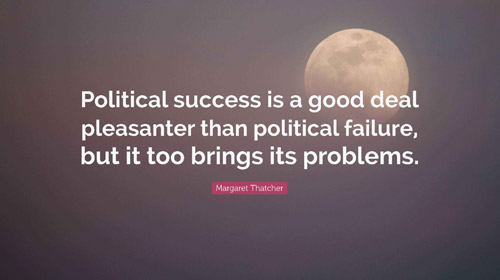
Doing Things Differently DCD is rebranding, and our bottom line is your bottom line. We are striving to create and foster strong relationships with clients and lawmakers, deliver results with strong ethics and class, but above all else, out-hustle and out-smart our competition every day to be the very best. We’re making chess moves while others are playing checkers. Everything we do is with you in mind, we’re doing things we’ve never done before and aggressively pursuing opportunities. The time is now. DCD has taken our firm to the next level and your involvement and investment paired with our knowledge and expertise is going to launch the great state of Michigan forward. |
|||||||
|
|||||||
 Michigan Democrats Show Strong Primary Turnout as November Election Takes Shape
  Benson says she'll do two debates in October; James wants five



Contact Us
Address
Phone
©2026 Dunaskiss Consulting and Development Inc. | Website by Finepoint Design