

|
|||||||
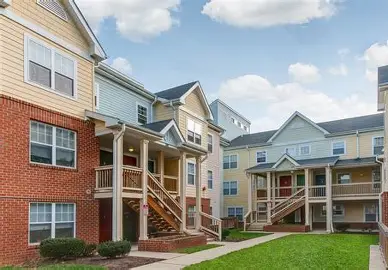
Whitmer Proposes New Affordable Housing Tax Credit, Supports Zoning Reform Gov. Gretchen Whitmer returned in her State of the State speech to the housing solution she has emphasized is simple: "Build, Baby, Build!" Whitmer stressed the housing affordability crisis for young people nationwide, in which the age of a first-time homebuyer is a record high at 40 and so is the average income of first-time buyers at $97,000. She also touted wins in the housing sector of the state so far including adding 86,000 homes to the market, on track to hit their target of 115,000 and closing the housing gap by 44%. As part of the ongoing solution, Whitmer proposed a new, state-level affordable housing tax credit aimed at building thousands more homes every year. This tax, she said, would work in tandem alongside federal affordable housing tax credits that incentivize the construction of housing for working class families. Michigan is the only state in the Midwest without a state tax credit to pull more money from the federal dollars. "We need to get this done because too many workers are being priced out of homeownership: fire fighters in Traverse City, nurses in Fraser and teachers in Chelsea," Whitmer said in her speech. Whitmer also called for banning "nonsensical" construction requirements and streamlining zoning laws. This would include making it easier to build in-law suites, modernizing lot sizes and parking requirements, which she said is a "lot of red tape that gets in the way of shovels hitting dirt." The proposal backs recently introduced legislation from Rep. Kristian Grant, D-Grand Rapids, and Rep. Joseph Aragona, R-Clinton Township, introduced what supporters are calling the Housing Readiness Package, HB 5529 , HB 5530 , HB 5531 and HB 5532 , to alter regulatory requirements in the housing space. The changes in the bill package would include changes to parking space requirements, lot and dwelling size requirements, creating uniform standards for local governments across the state when reviewing development requests and allowing duplexes in single-family residential zones and accessory dwelling units, among other things. But local governments on Tuesday banded together to oppose the bills, claiming they would strip local control of the zoning process. Whitmer said the legislation would safeguard the community character in places where young people want to live and that current laws have made it harder to build walkable downtowns and main streets. However, local governments say the bills would do the opposite, standardizing the zoning space. Whitmer also blamed tariffs as part of the reason housing is so expensive, relying on Canadian lumber and Mexican drywall to build houses, claiming tariffs have "raised the cost of a house by upwards of $17,000, further exacerbating our housing shortage." The new tax credit Alongside the zoning reform legislation, Aragona said he will also be sponsoring legislation on the new tax credit, which should be introduced in the next few weeks. He told Gongwer News Service through the proposal, the state credit would encourage developers to opt for the federal credit as well, saying developers are leaving dollars on the table by not having a state credit alongside it. He said the credit would be handed out at the end of the development once developers reach certain standards, qualifying after the fact for the next few years. "We're not writing a check just for funsies," Aragona said. He said the legislation will be modeled after other states that implemented this tax credit, with 32 states and the District of Columbia having programs to bolster the 4% to 9% federal credits. Lt. Gov. Garlin Gilchrist II said while they are still hammering out details on the credit, a state credit would make it possible to bring housing units online. "This tool exists in every other state in this region, Ohio, Indiana, Wisconsin, and the rest of the Midwest," Gilchrist said. "Michigan was left out of opportunity because we don't have this tool. We can fix that this year." Michigan Economic Development Corporation CEO Quentin Messer Jr. said while he has not had conversations with developers on the tax credit, he said this is just the beginning of the conversation to understand what the needs are for the private sector, local officials and state government. Wendy Block, senior vice president of business advocacy for the Michigan Chamber of Commerce, said while they are still waiting for details of the plan, any proposal that prioritizes for workforce housing is generally welcome. However, she said, the devil is in the details. Zoning reform When it comes to the issue of reform, and the clashing ideals between local government and Whitmer, Aragona doesn't agree the plan will strip local control or put the Zoning and Enabling Act in the shredder. "We need to have some sense of personal property rights and allow builders to build the housing that people want and allow the free market to kind of dictate this," Aragona said. He said municipalities will still have a zoning board to make decisions, but restrictions will be made on limits that have been set in stone. He said he looks forward to seeing what changes the municipalities may need to support the legislation. Local governments are instead proposing the MI Home Program introduced this past August by the Michigan Municipal League to provide $800 million over the next five years to boost statewide housing construction, or $160 million per year, which they say could spur the development of about 10,000 housing units over the next five years. Aragona argued the builders and contractors are getting on board with his plan and not getting on board with theirs that costs more. He said he doesn't think they need to spend more, but instead make "tweaks to the code." Grant, the other sponsor of the zoning reform legislation, said she was optimistic with the bipartisan support as well as the governor's backing that the reform bills could pass this year. She said another part of her optimism stems from Michiganders needing things to change in the housing space, or they are leaving. People want to stay or come back to Michigan, Grant said, but there has not been a place for them to build. "With that mindset of saying we're not growing, so why would we build more housing is just crazy talk," Grant said. "They say the zoning talk is crazy, but I think that's the actual crazy talk, because we need to build for the people who we want to come." In response to local pushback, Grant said local stakeholders have not come to the table to look at one line of policy or suggest changes. "They talk a lot about a carrot instead of a stick approach, but I'm going to be honest, the biggest carrot I can think of is making sure the people that we all serve have a roof over their head and a safe place to go to sleep that night," Grant said. Block also said local zoning ordinances are often an impediment to finding and seeing those successful projects through. However, Sen. Jeremy Moss, D-Bloomfield Township, said he understood why zoning was an issue for local governments, saying it's an important part of local master plans and developing to create "a sense of place in their home." He said there are opportunities with the legislation, though, that can bring them on board, but the legislators have to seek them out. Secretary of State Jocelyn Benson, who is also running for governor in the Democratic primary, said the state does have to collaborate with local governments because they all share the same goal of increasing access to affordable housing, but the state also has a role to play. "Talking with mayors in particular about the right types of investments we need to be making to drive down the cost of building homes is continuing to be a priority for me, but it's also not lost on me that we need to do more at the state level to ensure as the costs go up that we're driving down the cost of construction through eliminating unnecessary bureaucracy and red tape," Benson said. Gilchrist said this is the beginning of negotiation with the local governments, and what they want is for people to say yes to living in communities and bringing more housing units online through innovative projects that use smart zoning reform like single-family apartments. He said this legislation answers the affordability of rent by putting more units online. "More people who can afford homes can move out of apartments and buy homes they can afford, bringing those units back onto the rental market for more people to be able to rent them," Gilchrist said. "So, I think again, this all works together. We need solutions at every part of the spectrum, whether it's from the most expensive homes to the most affordable and everywhere in between, so that we can meet people's needs." To worry from local government that it will put developers in the front seat, Gilchrist said it instead puts families in the driver's seat. Amy Hovey, executive director of the Michigan State Housing Development Authority, said the authority is working with local governments to make them housing ready, trying to educate municipalities on attracting developers. However, she said policymakers have to talk about why communities are worried about development in the first place. "We all care about what's next to us and where we live and what our communities look like, but when you really sit down and talk to them and get at what the fears are, you work together and you really address those fears and people, I think, often come around," Hovey said. "But what we can't do is just say, 'Oh, you just don't want housing.'" Messer also said this is the beginning of a conversation with local officials, and Whitmer backing the legislation is just her saying it's time to be creative and "focus on being problem solvers and being innovative" in the housing space. The Michigan Environmental Council voiced their support for the zoning reform, saying the bill package is a "win-win for Michigan." "Allowing more housing units of all types to be built in our communities strengthens local economies, supports small businesses and improves neighborhood walkability and quality of life" Ross Gavin, urban land use and infrastructure policy director for the Michigan Environmental Council said in a statement. "And when we build homes near jobs, schools and transit, we create vibrant, resilient communities." Where was property tax? One current hot button issue among homeowners was missing from Whitmer's speech: property tax. Property tax cut proposals have been a hot topic around Lansing, with party leaders each having their own take on how to create more breaks for home buyers. Gov. Gretchen Whitmer previously proposed property tax relief to seniors, by expanding the Homestead Property Tax Credit. Senate Appropriations Committee Chair Sen. Sarah Anthony, D-Lansing, wrote a recent op-ed in The Detroit News in response to the proposal, reemphasizing her legislation with Sen. Michele Hoitenga, R-Manton, from last year, SB 344 and SB 345 . The bills would also expand the Homestead Property Tax Credit in reduction totaling about $300 million and enable about 500,000 people access to the credit. House Speaker Matt Hall, R-Richland Township, said neither of the proposals were enough, and he would like to see property tax cuts equating to $4 billion, eliminating the state education tax, personal property tax, the real estate transfer tax and the pop-up tax when a home is sold. He also proposed Monday night a 6% sales tax on certain services to backfill his cuts to property tax. Block said while they believe Hall's tax proposal as a whole is a step forward in reform, but they deviate from the idea that they need to come up with $5 billion in new taxes, raising concerns on impacting tourism and seasonal industries. Block also said Whitmer missed opportunities to talk about other economic areas where the state is lagging such as job growth, income levels and workforce participation. Gilchrist said all options for property tax reform are on the table in this "beginning of a season of negotiation to see what solutions we can get across the finish line and make housing more affordable and more available."
After Gov. Gretchen Whitmer's final State of the State address, in a rare moment of tranquility under divided government, it appeared lawmakers on either side of the aisle had found something they were willing to make a start on together: a series of health care reforms aimed at reducing the burden of medical debt the governor proposed in her remarks. In what was perhaps the meatiest section of her speech to a joint session of the Legislature on Wednesday evening, Whitmer discussed various actions she believes must be taken to "make sure being sick or getting hurt doesn't mean going broke," including calling upon Congress to extend the now-expired enhanced premium tax credits which lowered monthly payments for Affordable Care Act marketplace plan users. While the ACA subsidies are a topic to which reactions are generally split along party lines, the proposals Whitmer made for the state level netted a standing ovation from both sides of the House chamber. "Over half a million Michiganders got sick and couldn't afford to pay the bill. It's crushing," she said in the speech. "Last year, we wiped out medical debt for 210,000 people. That's a huge weight off their backs. I'm grateful to county governments statewide who have taken similar actions. But with more economic uncertainty and deeper cuts to health care on the horizon, we know that thousands more Michiganders will rack up medical debt this year." Whitmer's proposals: cap interest rates on medical debt, prevent medical debt from showing up on credit reports, require hospitals to set up financial assistance programs for their patients and ban liens and foreclosures on homes due to medical debt. The proposals were met with enthusiasm from Whitmer's Democratic colleagues, who said it's particularly important to consider individual medical debts at a time when federal cuts to Medicaid and other programs set to take effect in the coming fiscal year will create a budgetary issue for the state. "One doesn't exist without the other. In the appropriations committee last year, we heard testimony on the impact of the One Big, Beautiful Bill Act – Michigan stands to lose up to 13 rural hospitals, and no matter what we do on the state level, we can't make up for that loss," Sen. Mallory McMorrow, D-Royal Oak, said. "So that's going to be guiding our budget process, our policy process this year, I think we did a ton of great work in protecting state level Medicaid, but we can't make up that gap if we have thousands of residents who are now canceling their health care plans because their ACA premium has skyrocketed and their hospitals are closing." Department of Health and Human Services Director Elizabeth Hertel said the issue of high health care costs affects everyone: if someone goes off Medicaid or loses their coverage, costs rise elsewhere, whether in private insurance premiums or higher prices for providers. "When it comes to health care, somebody always pays," she said. House Speaker Matt Hall, R-Richland Township, and House Appropriations Committee Chair Ann Bollin, R-Brighton, voiced similar sentiments to reporters following Whitmer's speech acknowledging the wide-reaching nature of medical debt and their willingness to work with the governor on the proposals she suggested. "I'm looking forward to working with her on this; getting rid of medical debts. I think it's a really serious issue, these hospitals are out of control with the medical debt, the methods they use (in) charging people," Hall said. "For many people, we're hearing 25% of all debt is medical debt. That's a serious issue. When you have that medical debt, it'll change your life. It could put you out of your home as well. I'm looking forward to working to solve that problem for many people." Bollin said she's open to the reforms Whitmer proposed but hopes to also see the Legislature get further into the root causes of high health care prices this year and work to address the issue from that angle as well. "I do think that we can find some common ground on medical debt, but I also think that we're going to dig way deep and try to find out: why are medical costs so high?" Bollin said. "How do we reduce costs, increase access and make sure that people get quality health care?" Rep. Steve Frisbie, R-Battle Creek, said he could support a policy like capping interest rates or the others Whitmer proposed with modifications to ensure lawmakers don't unintentionally remove the factors which make sure people repay their debts. Discussion would have to be had, Frisbie said, to make sure medical providers wouldn't be left to shoulder the burden of unpaid debt in the event that patients no longer felt they had any incentive to pay it down. "I think you have to be really careful with that. (Unpaid debt) really negatively impacts the hospitals and other health care providers like EMS already. I think we need some really good parameters around it," he said. "It is a true thing that medical debt is a bad thing across the country, and a leading cause of being in debt. But how do you do it so that's fair to the provider?" Reactions from health care groups were largely positive on Wednesday night – organizations representing the state's hospital networks and private health plans had yet to weigh in. "Michigan's health centers wholeheartedly support efforts to ease the burden of medical debt, improve the affordability of health coverage and ensure the stability of Michigan's Medicaid program for the 2.5 million Michigan residents who get their health insurance through Medicaid," Michigan Primary Care Association CEO Phillip Bergquist said in a statement. "Addressing financial barriers is a critical part of ensuring the patients we serve and Michiganders across the state have access to the healthcare they need." Michigan League for Public Policy President and CEO Monique Stanton said she was pleased to see clear signals in the governor's remarks that Whitmer "understands the dire need to mitigate the harm caused by reckless federal cuts to programs like Medicaid." "We applaud her leadership in making sure the 2.5 million residents who rely on Medicaid have access to the care they need. We're also glad to see the governor working to address the burden of medical debt," Stanton said in a statement. "So many families are struggling right now, making crucial spending decisions like whether to buy groceries or pay their medical bills, and the governor's plan to ease that financial pressure is a promising one. We look forward to learning more about this strategy to protect the health and well-being of Michiganders." Rep. Alabas Farhat, D-Dearborn, said he hopes to see his colleagues in the Legislature pursue the policy changes without the partisan squabbles typical of divided government. "There's assistance out there, but Michiganders don't know how to find it, and the idea of bringing navigators to hospitals to ensure that people that need financial assistance can get it, is a great one," Farhat said. "I think these are initiatives we can work together (on). They're common sense, and they shouldn't be partisan. They shouldn't be ones where we are finger-pointing at each other, especially when people across our state are screaming at these outrageous health care costs." On literacy, eagerness to keep momentum up – but caution about consistency A significant chunk of the governor's speech was dedicated to education, putting a particular focus on literacy. Although it didn't make any policy proposals that hadn't already been unveiled during the presentation of the executive budget recommendation earlier this month, the literacy section was still much discussed by lawmakers and stakeholders Wednesday.Superintendent of Public Instruction Glenn Maleyko, attending his first State of the State in his new role, said he was invigorated by the prevalence of literacy and education topics in Whitmer's remarks. The work now, he said, lies in not only passing a budget which includes historic investments in literacy interventions, but in being consistent and committed to policies that must outlast a governor whose term ends in 10 months. "This is what we need to do. It's going to be a marathon. We need to stick with it. That's what other high achieving states do," he said. "I feel very optimistic about what I heard today, and very pleased that we're going to invest in curriculum materials and things that are going to put students first." McMorrow gave a similar take, referencing a line in Whitmer's speech about "so-called 'miracles' have been taking place in red, blue and purple states who are climbing the ranks or maintaining their already strong positions" but which the governor said "weren't miracles, they were marathons – the result of years of hard work and commitment to the plan." "We hear stories about the Mississippi miracle as if it happened overnight and it didn't. The stats are there, the success rate is there, but it took years of policymakers coming together to decide to do something different," McMorrow said. "We are starting to see that Michigan's direction is changing in a positive direction. So we have to stay the course, and I hope that's what we take away from what we're seeing in other states, is we are starting to see positive momentum." Michigan Education Association President Chandra Madafferi praised the programs Whitmer recommended putting into this year's budget but said it will be especially important to make sure they continue beyond the fiscal year. "Exceptional educators equipped with the right training and tools will make a big difference for student literacy – so long as we stay committed over time to a consistent, rigorous approach to this critical work," Madafferi said in a statement. "Whether a student is already an excellent reader or needs additional support, it's imperative to improve reading skills for all students, no matter where they live." Hall said he liked the literacy section of the speech – he and other Republicans stood and applauded alongside Democrats during it – but hopes to go further with accountability measures to ensure the investments being made are paying off. "I think we can work together on literacy and helping people to read. I'm looking forward to hopefully speeding up that phonics law and also working with her on accountability," he said. "It's not just the early spending; it's not just the training. We agree on that, but also, you've got to have some way of measuring the results, and Michigan has not had that for years. So I'm hoping we can make a great deal on education."
Legislation intended to help bottle distributors fund bottle collections passed the House on Thursday. House Bill 5517 would amend the Income Tax Act to create individual and corporate income tax credits for distributors that originate deposits on beverage containers. Under the bill, beginning in 2026, distributors would be able to claim a refundable credit equal to a half-cent per returnable container sold during that tax year. The amount would be adjusted annually for inflation beginning in the 2027 tax year. The legislation would cost $20 million annually, the House Fiscal Agency said. The bill is intended to create a funding source for bottle distributors to invest in their bottle return infrastructure and perform the tasks required under the bottle law. The bill is nearly identical to HB 4825, sponsored by Rep. Angela Witwer, D-Delta Township. That bill was reported but not voted on by the full House. HB 5517 passed 94-12. Rep. Noah Arbit, D-West Bloomfield; Rep. Erin Byrnes, D-Dearborn; Rep. Steve Carra, R-Three Rivers; Rep. Betsy Coffia, D-Traverse City; Rep. Emily Dievendorf, D-Lansing; Rep. Kara Hope, D-Holt; Rep. Sharon MacDonell, D-Troy; Rep Matt Maddock, R-Milford; Rep. Brad Paquette, R-Niles; Rep. Josh Schriver, R-Oxford; Rep. Dylan Wegela, D-Garden City; and Rep. Regina Weiss, D-Oak Park, voted against the bill. The Michigan Beverage Association celebrated the legislation in a statement on Thursday. "Michigan's beverage makers and distributors have invested significantly in deposit return program infrastructure," Derek Bajema, president of the association, said in a statement. "This legislation ensures we can continue to make the investments needed to carry out the costly state-imposed system of bottle deposit returns." The House also passed HB 4593 and HB 4594 on Thursday. The bills would make it clear who is allowed to present themselves as a dental specialist. "You can't call yourself a specialist when that is a clear classification within your profession without being a specialist," the bill sponsor, Rep. Matt Bierlein, R-Vassar, said. "Maybe as a primary care physician, you see a lot of heart patients, but that doesn't make you a cardiologist, right?" Both bills passed 108-1. Carra voted no. The House also voted to eliminate the dental specialty task force from the Public Health Code, passing HB 5102 105-0. The task force has long been dormant, and eliminating it was one of the recommendations from the Department of Licensing and Regulatory Affairs. The House also passed HB 4909,which would remove a provision that currently requires a cosmetology school or apprenticeship program to send its daily student or apprentice attendance records to LARA on a monthly basis. The bill passed 105-1. Wegela voted against it Finally, the House passed HB 4346 and HB 4347 , which would remove the cap on how much money would be allowed to go toward harness racing at county fairs. Both bills passed 88-18. DCD MUNICIPAL MINUTE: MICHIGAN HOUSING & ZONING REFORM  📬 Michigan Housing & Zoning Reform: What’s on the Table — and What It Means for Local Governments In late February 2026, a bipartisan group of Michigan lawmakers — led in the House by Republican Joe Aragona (R-Clinton Township) alongside Democratic counterparts — introduced a comprehensive legislative package aimed at addressing a long-standing housing affordability and supply challenge. The nine-bill suite seeks to modernize zoning laws, reduce regulatory barriers, facilitate a broader range of housing types, and streamline municipal approval processes. Across municipalities large and small — from Detroit to rural townships — the proposed reforms signal one of the most consequential state interventions in local land-use authority in recent memory. Here’s a detailed assessment of the pros and cons, especially as they relate to municipal planning, governance, and community character. 🏡 The Core Legislative Reforms The package includes amendments to the Michigan Zoning Enabling Act and related statutes. Key components include: • Broader Use Permissions
• Lot Size and Physical Requirements
• Process & Regulation Reforms
✅ Pros: Why This Matters for Municipalities 1. Addresses Housing Shortages Systemically Michigan continues to lag in housing production — with single-family permits down sharply compared to two decades ago. Streamlined rules could boost supply in places where demand is highest, alleviating upward pressure on prices. 2. Diversifies Housing Types By allowing duplexes, ADUs, and smaller units statewide, the reforms give localities tools to expand missing middle housing — a segment critical for workforce and entry-level buyers. 3. Clarifies and Streamlines Approvals Predictable, statewide standards — especially around lot size and parking — can reduce planning uncertainty and costs, making municipalities more attractive to developers and investment. This can mean faster project timelines and more taxable property added to community rolls. 4. Shifts Some Decision Burdens Away from Local Variance Processes Provisions limiting protest petitions and study requirements aim to reduce procedural delays that often bog down municipal review boards, enabling leaner permitting workflows. ❗ Cons: Challenges and Concerns for Local Governments 1. Erosion of Local Control A central criticism from city and township leaders is that the reforms pre-empt long-established zoning authority, undermining locally adopted comprehensive plans. Officials from communities such as Orion Township and Livonia argue that “one-size-fits-all” statewide standards fail to respect local character and planning priorities. 2. Strain on Infrastructure Planning While lot size caps encourage density, many municipalities worry these changes could strain infrastructure — such as water, sewer, and roads — if growth outpaces investment and upgrades. 3. Community Character and Neighborhood Integrity Historic neighborhoods, established single-family areas, and rural districts may see pressure to accommodate new housing types. Local leaders argue that blanket statewide rules could disrupt carefully calibrated local zoning schemes that reflect community values and market conditions. 4. Administrative and Implementation Costs Adjusting zoning codes to comply with new rules will require staff time, public engagement, and legal review. Smaller municipalities, in particular, may lack the resources needed to respond quickly without added state support. 📊 Municipal Calculus: Balancing Autonomy and Affordability For Michigan’s cities and townships, this legislative package represents a trade-off between preserving local autonomy and unlocking broader housing opportunities. Local officials sympathetic to addressing affordability often express willingness to reform existing zoning frameworks — but advocate for collaborative, locally tailored approaches rather than state mandates. Supporters counter that inaction has perpetuated scarcity and cost inflation, and argue for uniform standards as a means to eliminate patchwork barriers that deter development. 📅 What’s Next The bills are currently in committee and expected to advance through legislative hearings. Local governments, developers, housing advocates, and citizens are actively weighing in. Gov. Gretchen Whitmer is likely to address housing reform in her upcoming policy agenda, signaling this issue will remain a legislative priority through 2026. ✉️ Takeaway for Municipal Leaders
DCD OUT & ABOUT
DCD IS A FULL-SERVICE, BI-PARTISAN, MULTI-CLIENT LOBBYING FIRM REMEMBER ALL OF DCD'S SERVICES: ARTICLES OF POLITICAL INTEREST:
Can Michigan block new ICE facilities? How officials are fighting back - Bridge Michigan Gretchen Whitmer wants to boost literacy in Michigan. Here’s what to know - Bridge Michigan GOP leader proposes $4.7B Michigan service tax to pay for property tax cuts - Bridge Michigan The Michigan governor’s race is a toss-up. These three things could decide the outcome. - mlive.com PARTING WISDOM: 
Doing Things Differently DCD is rebranding, and our bottom line is your bottom line. We are striving to create and foster strong relationships with clients and lawmakers, deliver results with strong ethics and class, but above all else, out-hustle and out-smart our competition every day to be the very best. We’re making chess moves while others are playing checkers. Everything we do is with you in mind, we’re doing things we’ve never done before and aggressively pursuing opportunities. The time is now. DCD has taken our firm to the next level and your involvement and investment paired with our knowledge and expertise is going to launch the great state of Michigan forward. |
|||||||
|
|||||||

 Health Care Debt-Reduction Proposals in State of the State Met With Praise from Dems, Openness from Republicans
 $20M Tax Credit for Can, Bottle Distributors Clears House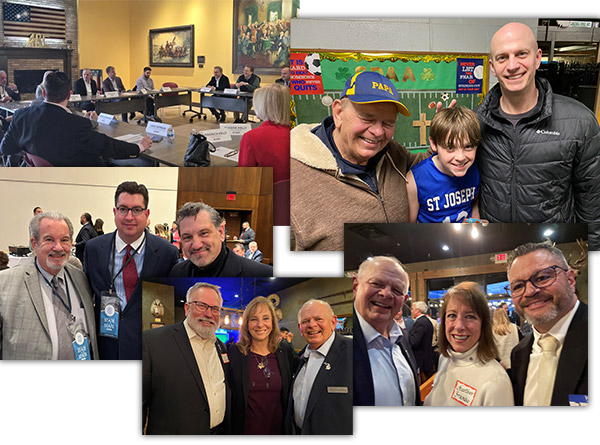




Contact Us
Address
Phone
Copyright © Dunaskiss Consulting and Development Inc.


