|
|||||||
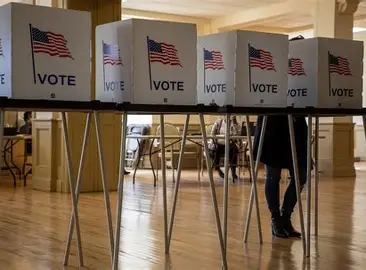
Michigan’s Legislative Battle Comes Down to a Handful of Competitive Races Control of the Legislature remains in play as economic concerns, national politics, and shifting voter sentiment shape the final stretch of the 2026 campaign. With Election Day approaching, Michigan’s legislative races are entering a decisive stretch, and both parties see a path to strengthening their position in Lansing. Democrats are encouraged by the political environment and believe they could make significant gains, while Republicans are emphasizing their legislative records, candidate quality, and voter outreach efforts to preserve their House majority. The stakes are substantial. Democrats currently hold a 20–18 majority in the Michigan Senate, while Republicans control the House by a 58–52 margin. Although the Senate map presents fewer opportunities for a major shift in control, the House has several closely contested races that could determine which party sets the legislative agenda. Affordability and National Politics Shape the Race Democrats believe dissatisfaction with the national political environment, including President Donald Trump’s approval ratings, could benefit their candidates down the ballot. Republicans, meanwhile, argue that their legislative accomplishments and direct voter engagement will help their candidates withstand the headwinds. The outcome will depend not only on statewide sentiment but also on the strength of individual candidates, local campaign organizations, turnout, and the ability to persuade voters in closely divided districts. Oakland County Is a Key Battleground State House District 54: Sarah Pounds vs. Roman Gaskey The race illustrates the importance of local organizing and candidate outreach in districts where neither party can assume victory. With both candidates seeking to establish their profiles with voters, turnout and grassroots engagement could prove decisive. State Senate District 9: Mike Webber vs. Theresa Brooks The race is significant beyond the candidates themselves. Its outcome could signal whether Democrats are continuing to gain ground in Oakland County and whether the broader political environment is strong enough to overcome the advantages of incumbency. State Senate District 13: Ryan Berman vs. Sean Carlson State House District 55: Mark Tisdel vs. Alex Hawkins The race will test the strength of incumbency against a challenging political environment and continued Democratic investment in competitive Oakland County districts. What the Results Could Mean for Michigan A change in House control could alter committee leadership, legislative priorities, and the path for bills and appropriations. Even without a change in majorities, closely divided chambers are likely to make individual legislators and competitive-district relationships especially important. For local governments, the implications extend to infrastructure, community development, housing, public safety, and strategic state funding. Health care organizations will also be watching how the election affects Medicaid policy, provider reimbursement, workforce development, and access to care. DCD’s Perspective: Relationships Matter Regardless of the Outcome The most competitive districts may produce legislators who enter office with a strong incentive to demonstrate results for their communities. Municipalities, businesses, and nonprofit organizations that can clearly articulate their priorities—and connect those priorities to local needs and statewide objectives—will be better positioned to engage with new and returning lawmakers. DCD will continue monitoring the races that could reshape Lansing and evaluating what the results mean for our clients. Regardless of which party controls the Legislature, effective advocacy will depend on preparation, credible relationships, and a clear understanding of how to advance priorities through the legislative and appropriations processes. The bottom line: Michigan’s 2026 legislative elections could reshape the balance of power in Lansing, but the practical work of government will continue after Election Day. Organizations that prepare early, understand the changing political landscape, and build relationships across the aisle will be best positioned to pursue their goals in 2027. 
Schools Seek Nearly $4B In Bonds On November Ballot Michigan school districts are asking voters to approve nearly $4 billion in borrowing Nov. 3, accounting for 94% of the money sought through local bond proposals statewide, according to a MIRS review. Schools account for 42 of the 52 bond questions on the ballot. Eight other proposals would finance municipal buildings or facilities, while two would fund road projects. The bond requests are among 454 local property-tax and borrowing questions tracked in the MIRS Local Ballot Proposal spreadsheet. School districts account for 28% of those questions, including requests to renew, increase or restore millages. Bond proposals authorize borrowing that is repaid over time. Millages levy property taxes to support services, facilities and other expenses. A renewal generally continues an existing tax, while an increase seeks additional taxing authority. Renewals are the largest category this November, accounting for 202 questions, or about 45% of the total. Those proposals would maintain an estimated $352.5 million in revenue. Forty renewals would support roads. Schools and fire departments account for 32 renewal questions apiece, with school renewals representing nearly $123.4 million of the revenue. Another 128 proposals seek millage increases. Roads account for 24 of those requests, followed by fire departments with 23 and schools with 16. Two museum proposals in Oakland and Wayne counties together account for nearly $30 million — about 29% of the estimated revenue sought through millage increases. Voters will also consider 47 millage restorations, which would allow local governments and schools to recover taxing authority reduced under the state’s Headlee Amendment. Those proposals represent more than $146.6 million in estimated revenue. Schools account for 13 restoration questions and nearly $117 million of that amount. Macomb, Oakland and Wayne counties also have proposals to restore millage funding for the Detroit Zoo. Some communities are asking voters to shift existing taxes toward different priorities. In Manistee County’s Maple Grove Township, voters will consider reducing a cemetery millage and increasing another township millage by the same amount to help build a community center. In Oakland County, Beverly Hills proposes redirecting 0.75 mills from general operations to roads. The change would shift how the money is spent without increasing the overall tax rate. Other requests would finance specific projects or purchases. Harrison Township in Macomb County seeks a millage increase estimated to raise about $400,000 for matching funds needed to obtain a grant. Northport seeks nearly $104,000 to replace and reconstruct a dam. Doyle Township in Schoolcraft County seeks about $60,000 for a fire department brush truck. Two ballot questions did not specify how much revenue they would raise. 
Fairbairn: Legislative ‘Body Armor,’ Crossover Voters Can Keep House Republican House Republicans are counting on incumbents’ legislative accomplishments and appeals to voters who dislike President Donald TRUMP to preserve their majority Nov. 3, according to their campaign chair, Rep. Parker Fairbairn (R-Harbor Springs). During an appearance on Off the Record, Fairbairn said Republicans have spent the term building records their candidates can defend while tailoring campaign messages to reach beyond the party’s base. “Our job is to make sure that we capture as many of those votes as possible,” Fairbairn said of voters who support Trump and those who don’t. He said the approach combines retaining Trump supporters with winning moderate Democrats, independents and swing voters. As an example, Fairbairn pointed to advertising for Rep. Steve Frisbie (R-Battle Creek) featuring lifelong Democrats explaining why they support the Republican. “We’ve really tried to make an emotional connection with the voters,” Fairbairn said. Republicans have also sought to give vulnerable incumbents what Fairbairn called “body armor” through votes and legislation signed into law. He cited Rep. Karl Bohnak (R-Negaunee), whose legislation restricting corporate purchases of homes gives him an accomplishment to promote in the Upper Peninsula. “Up in the U.P., that polls very well with folks,” Fairbairn said. “It’s something they want to hear.” Fairbairn predicted Republicans would retain control of the House, citing internal polling without providing district-level results or a final seat projection. He disputed suggestions that Democrats have an enthusiasm advantage, arguing that Republicans are not responding to polls and will turn out on Election Day. Asked about Democrats’ effort to defeat Speaker Matt Hall (R-Richland Township), Fairbairn said Republicans have maintained a targeted spending strategy while Democrats are spreading their money too broadly. “You’re seeing them pare back money in Speaker Hall’s seat,” he said. “But good for them for wasting money in some of these areas.” On policy, Fairbairn said voters at the doors are focused on living costs rather than the details of state budgets. He pointed to House-passed property-tax proposals, including relief aimed at seniors who could face higher property taxes after downsizing. Pressed on whether Republicans had actually delivered property-tax relief, Fairbairn acknowledged the legislation had not cleared the Senate. “What we’re taking credit for is we have the plan,” he said. “The plan passed the House in a bipartisan fashion. It’s in the Senate.” Fairbairn said he would welcome a property-tax agreement before the end of the year. He also left open the possibility of a House vote on suspending the state gas tax when the chamber returns next week but stopped short of saying one was planned. “I think there’s a real opportunity. We could do that,” Fairbairn said. “But I’m not in the room on the discussions with the Senate and with House leadership on that.” Asked whether he would schedule the proposal if he were speaker, Fairbairn said he would like to see a vote. Fairbairn also said he would “absolutely” welcome Trump to his northern Michigan district and predicted U.S. Rep. Jack Bergman would win reelection. He dismissed the potential appeal of U.S. Rep. Alexandria Ocasio-Cortez campaigning in the Upper Peninsula. “The Yoopers do not want a socialist,” he said. DCD Election Special: 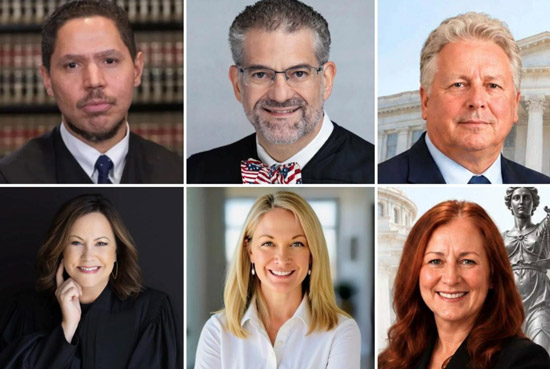 Six candidates are competing for two seats on Michigan’s highest court, with the outcome carrying significant implications for the state’s legal and political landscape. As Michigan heads toward the November 3 general election, two seats on the Michigan Supreme Court are emerging as an important part of the 2026 political landscape. While judicial races often receive less attention than contests for governor, Congress and the Legislature, the Supreme Court has the authority to make decisions that shape state policy, determine the constitutionality of legislation and influence how Michigan law is interpreted for years to come. Six candidates are competing for the two eight-year terms. Chief Justice Megan Cavanagh and Justice Noah Hood, the Democratic Party’s nominees, are seeking reelection. Republicans have nominated Oakland County Circuit Court Judge Michael D. Warren Jr. and Judge Casandra Morse-Bills. The U.S. Taxpayers Party has nominated Thomas Howe and Jody White. Although candidates appear on Michigan’s November ballot without party labels, political parties nominate judicial candidates at their conventions. The election therefore has a clear partisan dimension, even as the court’s central responsibility remains interpreting and applying the law. A Court With a 6–1 Democratic Majority The candidates also bring different judicial backgrounds and perspectives to the race. Cavanagh, first elected in 2018 and selected as chief justice in 2025, is seeking another full term. Hood joined the court in 2025 following his appointment by Gov. Gretchen Whitmer and is running for his first full elected term. Warren has served as an Oakland County Circuit Court judge for more than two decades, while Morse-Bills has served as a circuit court judge and previously worked as a county prosecutor. Both Republican nominees have emphasized judicial restraint and applying the law as written. Howe and White, nominated by the U.S. Taxpayers Party, are also on the ballot. However, neither meets Michigan’s requirements for assuming a seat on the Supreme Court, including the requirement that a justice be licensed to practice law in the state and have at least five years of admission to the bar. Their candidacies add an unusual element to an already consequential race. Why the Supreme Court Matters Beyond the Courtroom The court determines how state laws and constitutional provisions are interpreted. Its rulings can affect the limits of legislative authority, regulatory enforcement, civil liability, criminal justice, property rights and the legal framework within which public agencies operate. Recent decisions illustrate the court’s reach. The court has addressed the constitutionality of retroactive application of Michigan’s sex offender registry law, mandatory life-without-parole sentences and the interpretation of the state’s Consumer Protection Act. Its actions also extend to court administration and the rules governing proceedings in state and local courthouses. For local governments and economic development stakeholders, these issues are not merely theoretical. The interpretation of statutes, the scope of governmental authority and the resolution of constitutional disputes can influence how public policies are implemented and challenged. A Growing Political Investment in Judicial Elections That investment reflects a broader national trend: state supreme court elections are increasingly viewed as consequential political contests, particularly when the court’s ideological balance is at stake. For Michigan political observers, the Supreme Court race should be evaluated alongside the contests for governor, the Legislature and other statewide offices. Judicial elections may not generate the same level of public attention, but their consequences can extend well beyond a single legislative session or election cycle. The Bottom Line For DCD clients and stakeholders, the takeaway is straightforward: understanding Michigan’s political landscape requires looking beyond the candidates who write legislation to the judges who ultimately interpret it. The Supreme Court is a critical part of that equation, and this year's election deserves a place on the broader 2026 Election Outlook. Sources: Bridge Michigan, “Who’s running for Michigan Supreme Court? 6 candidates compete for 2 seats,” September 30, 2026; Ballotpedia News, October 13, 2026; Brennan Center for Justice, “Buying Time 2026 – Michigan,” updated October 13, 2026. DCD OUT & ABOUT
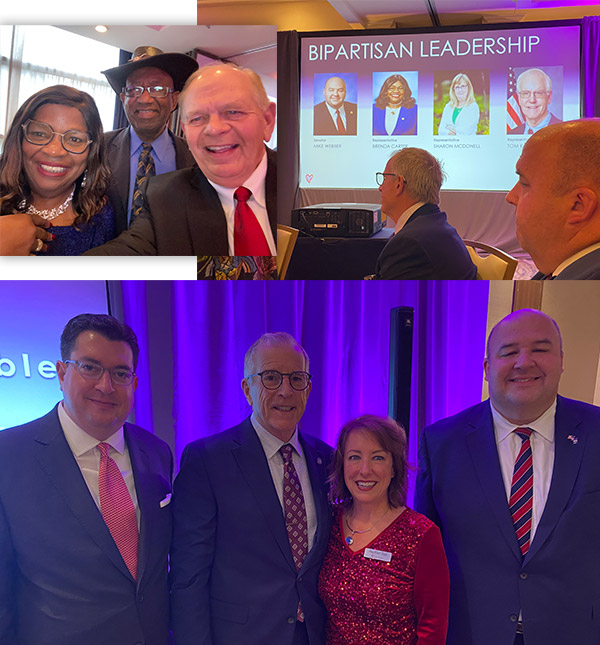
Senator Mat Dunaskiss and Jake German attended Common Ground’s annual Celebration of Hope Gala last Friday at the Detroit Marriott in Troy, joining nearly 300 community leaders, supporters, and legislators from both sides of the aisle, including Senator Michael Webber and State Representatives Brenda Carter and Mark Tisdel. Together, attendees raised more than $178,000 to support Common Ground’s vital mission of moving people from crisis to hope and providing critical resources to individuals and families when they need them most. DCD is proud to support the organizations and community partnerships making a lasting impact across Michigan. To learn more about Common Ground and support their work visit: Common Ground | Helping People Move from Crisis to Hope DCD IS A FULL-SERVICE, BI-PARTISAN, MULTI-CLIENT LOBBYING FIRM REMEMBER ALL OF DCD'S SERVICES: ARTICLES OF POLITICAL INTEREST:
Abdul El-Sayed sets Michigan fundraising record. See who's contributing - Bridge Michigan Fact check: John James, Jocelyn Benson trade claims in Michigan governor debate - Bridge Michigan Fact check: What’s true and what’s not in Michigan’s data center debate - Bridge Michigan Democrats: Embrace Incivility! | The New Republic PARTING WISDOM:
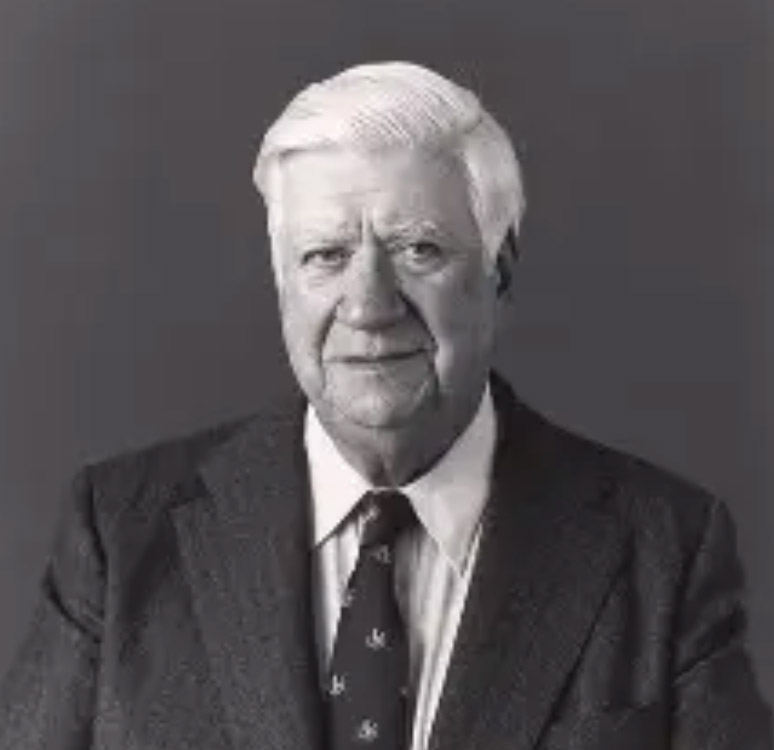
Former Speaker Tip O’Neill (1977-1987) famously said, “All politics is local.” But increasingly, Americans are bringing Washington’s political battles into their school board meetings, city council chambers and neighborhood disputes. DCD Opinion: When National Politics Takes Over City Hall The phrase “all politics is local” has long been part of the American political lexicon. Although most famously associated with former House Speaker Tip O’Neill, the sentiment predates him. Its enduring wisdom is straightforward: voters care most about the issues that affect their daily lives. For generations, successful local officials understood this principle. Property taxes, public safety, school quality, roads, parks and responsible spending formed the foundation of local government. Residents might disagree about national politics, but they could still agree on the importance of a well-run community. Today, that distinction is becoming harder to maintain. National political divisions are increasingly filtering into school board elections, city council races and township meetings, transforming local contests into battlegrounds for issues that often originate far beyond the communities involved. The question is no longer simply whether all politics is local. It is whether local politics is becoming nationalized.
From Washington to the School Board These are legitimate subjects for public discussion. Parents have every right to scrutinize their children's education, and school boards must remain accountable to their communities. The concern is that national political identities can overshadow the specific needs and performance of a local district. A candidate's position on a national controversy can become more important than their understanding of school finances, academic outcomes or long-term facility needs. National advocacy organizations and social media can amplify these disputes, drawing attention away from the practical responsibilities school boards were elected to manage. When that happens, the community risks choosing its school leadership based on political symbolism rather than the demands of the job. City Hall Is Not Immune Yet municipal debates are increasingly filtered through national political narratives. A zoning proposal can become a proxy for a broader ideological argument. Public safety discussions can be reduced to partisan slogans. Spending decisions can be judged by attitudes toward Washington rather than the merits of the expenditure itself. Consider a development proposal intended to expand the tax base, create jobs and redevelop underutilized property. The merits should be evaluated through its fiscal impact, infrastructure requirements, compatibility with surrounding neighborhoods and long-term benefits. Instead, the discussion can become consumed by broader ideological disagreements about government, developers or growth. Those concerns may deserve consideration, but the details of the actual proposal should not disappear beneath the national political debate. Municipalities must balance resident concerns with fiscal sustainability, infrastructure demands and economic realities. That task becomes considerably harder when every disagreement is treated as a referendum on national politics. Why Is This Happening? Political identity increasingly shapes how Americans interpret public life. National party affiliation can influence how people evaluate institutions, policies and information. Pew Research Center's 2023 research found that 86% of Americans considered it a good description of politics that Republicans and Democrats are more focused on fighting each other than solving problems. When national politics is viewed as an existential struggle over the country's direction, local elections can become another front in that conflict. Social media has erased many boundaries between local and national controversies. A school board meeting that once attracted a few dozen residents can become a national story. A brief video from a city council meeting can circulate without context, attracting commentary from people unfamiliar with the underlying issue. Social media can expose legitimate problems, but confrontational moments often receive more attention than the deliberation that preceded them. National political organizations have recognized the importance of local institutions. School boards, municipal governments and county commissions make consequential decisions about education, land use and public spending. Organizations on both sides of the political spectrum have incentives to recruit candidates and mobilize voters around broader agendas. Civic participation is healthy; the challenge is ensuring local elections remain responsive to local needs rather than becoming vehicles for national political objectives. Frustration with national institutions can also redirect political energy locally. When Washington appears dysfunctional, residents may turn to local government as a place where their voices can make a difference. Yet they can inadvertently import the same partisan divisions that made national politics frustrating in the first place. The Consequences for Communities Local government already requires substantial time, preparation and difficult judgment, often for modest compensation. When elected service also brings personal attacks, online harassment and national political scrutiny, qualified residents may decide it is not worth the cost. Nationalization can also make governing more difficult. Infrastructure projects take years, redevelopment requires cooperation among public and private partners, and municipal budgets demand difficult trade-offs. When every decision becomes a test of political loyalty, compromise becomes harder and routine business becomes more contentious. Meanwhile, communities risk losing sight of priorities central to their long-term prosperity: maintaining roads and utilities, attracting employers, expanding housing opportunities, redeveloping vacant properties and sustaining a healthy tax base. These priorities do not become less important simply because national political controversies dominate public attention. National Issues Can Be Local Issues The distinction is between understanding how national issues affect a community and allowing national political conflict to dictate every local conversation. School boards should be accountable for educational outcomes. City councils should explain their decisions on public safety, housing and development. Township officials should justify spending and demonstrate results. Each should be judged primarily on the responsibilities it holds and the decisions it can reasonably influence. The goal is not to make local government apolitical. It is to preserve its ability to solve problems across political differences. Restoring the Meaning of Local Politics Preserving that value begins with asking practical questions: What problem is a proposal intended to solve? What will it cost? What are the alternatives? Does it fall within the authority of the body considering it? And what will it mean for the community five or ten years from now? These questions do not eliminate ideological differences. They give people with different perspectives a common basis for evaluating decisions. The danger is not that Americans care too much about national affairs. It is that they may begin to view every local issue exclusively through a national political lens. “All politics is local” remains a useful principle, but its meaning is being tested. A debate over the school budget need not become a proxy war over national ideology. A discussion about development need not define someone's place in the broader political universe. Communities will always have political disagreements, and they should. But a healthy local political culture is measured not by whether everyone shares the same worldview, but by whether people with different perspectives can still work together to improve their community. In the end, some of the most consequential political decisions Americans face are still made closest to home. The challenge is ensuring that local government remains focused on the people, priorities and practical problems that make it local in the first place. Doing Things Differently DCD is rebranding, and our bottom line is your bottom line. We are striving to create and foster strong relationships with clients and lawmakers, deliver results with strong ethics and class, but above all else, out-hustle and out-smart our competition every day to be the very best. We’re making chess moves while others are playing checkers. Everything we do is with you in mind, we’re doing things we’ve never done before and aggressively pursuing opportunities. The time is now. DCD has taken our firm to the next level and your involvement and investment paired with our knowledge and expertise is going to launch the great state of Michigan forward. |
|||||||
|
|||||||



Contact Us
Address
Phone
©2026 Dunaskiss Consulting and Development Inc. | Website by Finepoint Design