|
|||||||

Michigan Gas Tax Holiday Debate Puts Road Funding Under Pressure With Michigan gas prices hovering around $4.50 per gallon, pressure is mounting on state lawmakers to temporarily suspend Michigan’s 52.4-cent-per-gallon fuel tax. The proposal has attracted bipartisan support as lawmakers face growing constituent frustration over rising costs at the pump. Gov. Gretchen Whitmer has endorsed a federal gas tax holiday, but has so far declined to support a suspension of Michigan’s state tax. The issue stalled in Lansing last week when the Democratic-controlled Senate declined to vote on a gas tax holiday. House Speaker Matt Hall has indicated that the House would take up the issue if the Senate sends over legislation. The central obstacle is how to replace the lost transportation revenue. Michigan's gas tax was substantially increased beginning in 2026 as part of a broader road-funding package, making a temporary suspension potentially costly for the Michigan Transportation Fund. The debate also has significant implications for Michigan's roads and infrastructure. Transportation groups are warning that even a three-month suspension could cost the state hundreds of millions of dollars, potentially affecting road projects and transportation-related employment. Meanwhile, with the 2026 election approaching, candidates on both sides are likely to continue using gas prices—and the question of whether Lansing should provide immediate relief—as a campaign issue. The gas tax debate illustrates the difficult balancing act facing Lansing: providing immediate relief to households and businesses while protecting the dedicated revenue needed for Michigan's long-term infrastructure needs. With Republicans pushing for action and Democrats divided between federal responsibility and state-level relief, this issue could remain a significant political flashpoint through the remainder of the 2026 campaign. 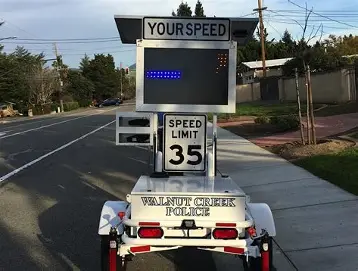
Communities Wrestle With License Plate Reader Technology As communities in Michigan consider automated license plate reader technology, law enforcement officials and Flock Safety are advocating for measures to provide privacy protections without compromising the technology. Flock Safety cameras record the image of vehicles and their license plate as they drive past. The database can be used by police during an investigation, and automatic alerts can notify officers when a vehicle matches a license plate or vehicle description associated with a crime. Flock Safety, based in Georgia, is the country’s largest manufacturer of license plate readers. However, the technology has come under greater scrutiny from people worried about how long data is retained, who can have access to it and whether the cameras could be used to track vehicles’ movement. The privacy debate has been unfolding in Michigan as local governments decide whether to keep using the technology. The Michigan Association of Chiefs of Police backs legislation that would set guidelines for the automated license plate readers (ALPR), such as Flock cameras, said Ron Wiles, its executive director. “We believe in reasonable guidelines for ALPR technology,” Wiles said. “There should be guidelines for ALPR use and other technology use, not just in law enforcement, but in everything.” The association backs a 30-day retention period for ALPR data, along with audits of searches and training for officers using the technology, Wiles said. The technology can be beneficial when investigating a crime, but officers shouldn’t use an ALPR hit as the only reason for making a stop or arrest, Wiles said. “A Flock camera will never replace the investigative ability of a person doing an investigation. They are a tool,” Wiles said. Officers still have to confirm information that comes from the cameras as part of a more comprehensive investigation, he said. “We want to make sure they take that Flock information or ALPR information for what it is, but follow up on that using other resources as well to make sure it was accurate before they go arrest somebody or take somebody’s rights away from them,” Wiles said. Flock Safety also says protections are needed to ensure that the technology is not misused. Courtney Terlecki, a Flock Safety media relations representative, said customers, including law enforcement agencies, are the ones in control of data gathered by cameras. “Customers own and control the data generated by their cameras, and data sharing is not enabled by default,” Terlecki said. Terlecki said Flock has added technology to identify potentially improper searches. Such concerns involve instances in which officers have used ALPR technology to monitor their own current or former partners and private citizens, according to reporting by The Conversation. “Flock has had audit logs in place, but earlier this year the company introduced Audit Assistance, which detects abnormal activity and flags it for administrator review,” Terlecki said. The company is looking to implement the Audit Assistance feature for all law enforcement customers before the end of 2026, Terlecki said. In addition, users are required to record the purpose of searches, Terlecki said. Each law enforcement agency determines which users are authorized to access the system, and Flock is broadening the requirements for law enforcement searches, she said. Wiles also said it’s important to record searches so departments can figure out what their officers were looking at when accessing the system. “It has to be for legitimate law enforcement purposes,” Wiles said. Terlecki said Flock cameras do not follow people around in real time or use facial recognition to identify vehicle occupants. “Flock cameras capture separate, point-in-time images of vehicles visible in public, along with the license plate and limited vehicle characteristics such as make, color and distinguishing features,” Terlecki said. Those can be things such as roof racks, window stickers, toolboxes and any damage or modifications to the vehicle, according to Flock. Flock has shortened the amount of time data from its cameras is stored for new customers to one week. “Flock has updated its recommendation and default retention period for new customers to seven days,” Terlecki said but noted that some investigations require information to be retained longer, so the company is introducing an Evidence Mode to preserve specific data connected to active investigations. Recently, Grand Rapids brought its automated license plate reader system under the city’s surveillance technology policy, adding additional oversight to technology the city has used for years, according to its website. The policy calls for extra approvals from the city’s Public Safety Committee and City Commission for future surveillance technology purchases, renewals or expansions. In Lansing, the City Council voted to ask the mayor and police department to terminate the city’s contract with Flock Safety. Bridge Michigan reported that Bay City and Ferndale have canceled their Flock contracts, while the Lapeer County Sheriff’s office recently dropped its request for license plate readers. Residents have also voiced concerns on social media about the technology. For example, in a Sept. 9 post in the St. Clair Shores “What’s Going On” Facebook group, John Parkinson wrote, “They are a double-edged tool. Good for some things but the mass surveillance has got to stop.” In a Sept. 17 post in the Shelby Township & Utica Michigan Residents Group, Alex Portell called for the cameras to be removed, writing, “I want only one outcome. I want these cameras gone.” Bills to regulate license plate readers statewide are pending in the House Judiciary Committee and Senate Civil Rights, Judiciary and Public Safety Committee. Lead sponsors are Sen. Jim Runestad and Rep. Douglas Wozniak. “At the end of the day, the decision on whether you have ALPR technology in your community or not is a local decision. It’s not the [Association of Chiefs of Police’s] decision," Wiles said. "It’s not the Legislature’s decision.” “Communities and elected officials have the authority to evaluate this technology based on their laws, policies and priorities, and Flock respects those decisions,” Terlecki said. 
House GOP Chairs Renew Push For Kratom Ban House Oversight Committee Chair Jay Deboyer and Regulatory Reform Committee Chair Joe Aragona are renewing calls for action on kratom as legislation banning the substance remains stalled in the Senate. DeBoyer said lawmakers need to examine where kratom products are coming from, how they are being manufactured and what existing laws could be used to address potential health risks. “This is an issue we need to get our hands around,” DeBoyer said. Aragona similarly pointed to concerns about young people and families, saying lawmakers should have oversight and regulations in place before problems involving kratom and other synthetic intoxicating substances grow. The House voted March 18 to approve HB 5537 , sponsored by Rep. Cam Cavitt, which would ban both natural kratom and synthetic variants of the plant. The legislation exempts kratom approved by the Food and Drug Administration as a drug product, dietary supplement or food additive. The bill has not been taken up by the Senate and remains in the Senate Government Operations Committee, chaired by Senate Majority Leader Winnie Brinks. “We’re talking about months. How many young people have potentially gotten hooked on this stuff since then?” DeBoyer said. “The Senate needs to take up this ban and send it to the governor.” House Republicans have focused in particular on kratom products sold as candies, gummies and flavored drinks in gas stations, convenience stores and vape shops, pointing to the "gas station heroine" nickname. In announcing the renewed scrutiny, DeBoyer and Aragona pointed to concerns surrounding chemically enhanced kratom products and cited national increases in reported exposures and poisonings. Kratom advocates have argued lawmakers are failing to distinguish between natural kratom leaf and concentrated products containing high levels of 7-hydroxymitragynine. Some of the advocates who spoke with MIRS agree there are issues, but pointed to certain regulations like age restrictions, labeling requirements and limits on high-potency products, as opposed to a blanket prohibition on natural kratom. Brinks’ office previously told MIRS that the Senate sees this as a “serious issue, not just a political talking point" and are giving it “serious attention.” DCD Election Special:  Michigan voters will face an unusual—and potentially consequential—question on the November 3 ballot: Should Michigan convene a constitutional convention to draft a general revision of the state Constitution? Proposal 2026-01 would not immediately rewrite the Constitution. Instead, a “yes” vote would trigger a process to elect 148 constitutional convention delegates—one from each of Michigan’s 110 House districts and 38 Senate districts. The convention would begin in Lansing in October 2027, and any proposed new Constitution would ultimately have to be approved by Michigan voters. The question is required to appear on the ballot every 16 years. The last time voters considered it was in 2010, when they rejected a convention by roughly a two-to-one margin. If voters reject the proposal again this year, the question would not return until 2042. What Could a Convention Change? The significance of Proposal 1 is its breadth. Unlike a traditional constitutional amendment, which addresses a specific provision, a convention could examine the Constitution as a whole. That potentially puts major areas of state government on the table, including taxation and revenue, education, elections, term limits, executive and legislative powers, the judiciary, and the relationship between state and local governments. The current Constitution dates largely to the 1961-62 convention, which lasted nearly 10 months and produced the document Michigan operates under today. A new convention could similarly result in a comprehensive restructuring—or could ultimately produce relatively limited changes. The outcome would depend heavily on the delegates elected and the priorities they establish. Importantly, a convention would not have the final word. Any proposed new Constitution would have to go back to Michigan voters for approval. The Case for a Convention Supporters argue that Michigan's governmental structure has not received a comprehensive review in more than six decades. They contend that issues such as term limits, Lansing gridlock, taxation, government efficiency and the balance of power between state and local governments deserve a broader examination than the normal legislative process allows. A convention would give citizens an opportunity to reconsider the fundamental rules under which Michigan government operates rather than continuing to make changes one constitutional amendment at a time. The Case Against a Convention Opponents argue that the breadth of the process creates unnecessary uncertainty. Michigan already has mechanisms for changing its Constitution through legislative and citizen-initiated amendments, and critics worry that a convention could reopen provisions voters have deliberately approved in recent years. The process could also attract significant political spending and influence from organized labor, business interests, advocacy organizations and other groups seeking to shape the eventual document. The partisan nature of the delegate elections is another consideration. Because delegates would be elected from House and Senate districts, control of the convention could quickly become an extension of the broader political battle over control of Lansing. Why Local Governments Should Pay Attention For Michigan's cities, villages, townships and counties, Proposal 1 could have particularly important implications. The Constitution establishes key parameters for local government authority, taxation, revenue and the relationship between Lansing and local communities. A convention could potentially give municipalities greater flexibility—or impose new restrictions. That means the issue could ultimately affect areas directly relevant to local government and economic development, including revenue sharing, infrastructure investment, taxation, redevelopment incentives, public-private partnerships and local decision-making authority. For municipalities that regularly work with state government on appropriations, grants, economic development and infrastructure funding, changes to the underlying state-local relationship could have long-term consequences. The Political Implications Proposal 1 could effectively create a second major political cycle immediately following the 2026 election. If voters approve the convention, attention will quickly shift to the 2027 elections for 148 delegates. Those races could attract substantial interest from political parties, unions, business organizations, local-government groups and advocacy organizations. The delegate elections would determine who sits at the table and, potentially, which issues receive priority. Organizations that have a stake in Michigan's tax structure, local authority, infrastructure funding, economic development, education or regulatory framework will have a significant interest in those races. DCD Take Proposal 1 is different from a typical ballot question because voters are not being asked to approve or reject a specific policy. They are being asked whether they are willing to reopen the foundational document governing Michigan government. There are legitimate arguments on both sides. Michigan's Constitution has not undergone a comprehensive review since the early 1960s, and supporters have a reasonable argument that some governmental structures may warrant reconsideration. At the same time, the breadth of a convention creates substantial uncertainty about what ultimately could emerge. For DCD clients, the most important consideration may be the potential redistribution of governmental authority. A convention could affect how Lansing operates, how state and local governments interact, how revenue is raised and distributed, and how communities approach economic development and public investment. If Proposal 1 passes, the November vote will not be the end of the conversation—it could be the beginning of one of Michigan's most consequential political processes in generations. DCD OUT & ABOUT
Jake German and Senator Mat Dunaskiss were honored to attend Honor Community Health’s 2nd Annual Lights, Camera, Action Gala last Saturday at the Lafayette Grand in Pontiac. Congratulations to State Representatives Brenda Carter and Donni Steele, who were recognized as Honor Community Health’s Legislative Champions of the Year for their commitment to advancing access to quality health care in the community. It was also great to see Pontiac Mayor Mike McGuinness, along with many other colleagues, clients, and friends who joined us for a wonderful evening celebrating Honor Community Health and its important work throughout the region. Congratulations to the entire Honor Community Health team on another successful event! We’re proud to support the organization and its continued commitment to the communities it serves. JOIN US IN SUPPORTING COMMON GROUND!
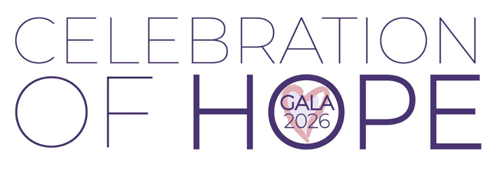
Join Common Ground for their annual Celebration of Hope gala on Friday, October 16 at the Troy Marriott, presented by UWM. The Celebration of Hope Gala is not simply a fundraiser. It is a premier gathering of Michigan’s business, civic, and philanthropic leaders – an opportunity to celebrate 55 years of impact while investing in the future of mental health crisis care. Guests will enjoy an elevated experience featuring dinner, curated entertainment, a silent auction, and the presentation of distinguished legacy awards – all in the company of those driving meaningful change across our community. Tickets are $175 and include dinner, silent auction, complimentary beer/wine, live entertainment, prize raffles, games, legacy awards, networking, and more; corporate sponsorships and table purchases are available. This is where leadership, influence, and purpose intersect. Be there! Buy your tickets or reserve a table(opens in a new tab)! Make A Donation to Celebration of Hope(opens in a new tab) Event Details: Date: October 16, 2026 Time: 6pm – 10pm (additional details upon registration) Location: Detroit Marriott Troy (view map and directions(opens in a new tab)) Thank you to our sponsors: UWM, Bank of Ann Arbor, First Independence Bank, ITC, Maddin Hauser, Warner Norcross & Judd, Kemp Klein Law Firm, Kay White, T&P, Plante Moran, MMA, and Kapnick Insurance. For more information about sponsoring Celebration of Hope, download the Celebration of Hope Sponsorship Packet (PDF) or contact Anne Bradley, Director of Development, at Development@CommonGroundHelps.org. DCD IS A FULL-SERVICE, BI-PARTISAN, MULTI-CLIENT LOBBYING FIRM REMEMBER ALL OF DCD'S SERVICES: ARTICLES OF POLITICAL INTEREST:
Just 1 in 4 Michigan juniors are 'college ready,' SAT scores indicate - Bridge Michigan Who's running for Michigan Supreme Court? 6 candidates compete for 2 seats - Bridge Michigan Election security takes center stage in Michigan secretary of state race Michigan’s Senate Race Is a Testing Ground Youth vote skews heavily to Democrats in Michigan, swing states; economic issues stay top concerns PARTING WISDOM:
What the British Monarchy Can Teach Us About the 2026 Midterms Spencer’s account revisits the dysfunction surrounding Diana, King Charles, the royal household and the aftermath of Diana’s death. The monarchy has since endured additional controversies involving Prince Harry and Prince Andrew, yet the institution remains remarkably resilient. The Palace itself has also adapted, with lessons from the 1997 Diana crisis influencing how the royal family handles controversy and the media today. The numbers are striking. As of July 2026, 64% of Britons still favor retaining the monarchy, while only 23% would prefer an elected head of state. Even King Charles, despite years of criticism and the baggage of the Diana era, has a 62% favorable rating, with 68% saying he is doing a good job as king. The lesson for American politics is not that our political system should resemble the British monarchy. It is that institutions can develop staying power when they become larger than the personalities associated with them. That is worth considering as Americans head toward the 2026 midterm elections. The 2026 midterms are shaping up, as many midterms do, as a referendum on the party in power—and increasingly on President Donald Trump himself. Democrats are seeking to turn dissatisfaction with the administration into congressional gains, while Republicans are working to maintain the coalition and political energy that carried them into power. But the larger question for both parties is whether their institutions can outlast their personalities. The British monarchy has a built-in advantage: it is designed to be permanent. American democracy is designed differently, but our political parties, Congress, courts and other institutions are also supposed to endure beyond any particular president, governor or political movement. Increasingly, however, American politics appears to operate in reverse. Political institutions are often judged through the personalities controlling them. Congressional candidates become identified with the president at the top of the ticket. Legislative debates become extensions of presidential politics. Even congressional elections are frequently framed as a referendum on whoever occupies the White House. That makes the 2026 midterms particularly important. A strong Republican or Democratic performance will inevitably be interpreted through the lens of Trump. But the more consequential question may be what happens after the election cycle ends. Can Republicans maintain a durable governing coalition beyond Trump? Can Democrats build a compelling identity beyond simply opposing him? Can Congress reassert itself as an institution rather than functioning primarily as an extension of presidential politics? The monarchy provides an interesting case study because its survival has depended on something larger than the popularity of any individual royal. The institution has had to absorb unpopular figures, adapt to changing public expectations and continually demonstrate its relevance. American political parties face a similar challenge. Political movements built around a single personality can be extraordinarily powerful—but they can also be vulnerable when that personality leaves the stage. Durable parties require organizations, ideas, relationships and institutions that can survive changes in leadership and political fortunes. The lesson for 2026 is not about monarchy versus democracy. It is about institutional staying power. The midterms will provide a snapshot of the current political environment and a referendum, to some degree, on the Trump administration. But the more important measure of political strength may be whether Republicans and Democrats are building organizations, governing philosophies and coalitions capable of surviving the next political personality who comes along. The British experience offers a useful reminder: political personalities come and go. Institutions that maintain public confidence can endure for generations. In an era of personality-driven politics, institutional staying power may be the most overlooked measure of political strength. Doing Things Differently DCD is rebranding, and our bottom line is your bottom line. We are striving to create and foster strong relationships with clients and lawmakers, deliver results with strong ethics and class, but above all else, out-hustle and out-smart our competition every day to be the very best. We’re making chess moves while others are playing checkers. Everything we do is with you in mind, we’re doing things we’ve never done before and aggressively pursuing opportunities. The time is now. DCD has taken our firm to the next level and your involvement and investment paired with our knowledge and expertise is going to launch the great state of Michigan forward. |
|||||||
|
|||||||
Newsletter
Early October 2026 Newsletter





Contact Us
Address
Phone
©2026 Dunaskiss Consulting and Development Inc. | Website by Finepoint Design