
|
|||||||

Environmental coalition calls on legislative leaders to release data center tax break information, Senate working on transparency legislation A group of environmental advocates are urging Gov. Gretchen Whitmer and leaders of the Legislature to disclose how much the tax incentives for data centers are worth. The data center sales and use tax exemption, passed in 2024, is not open to public disclosure on many of the details within the contracts signed with applicants. MLive reported the Michigan Economic Development Corporation would not identify the tech firms seeking tax breaks, or how much those breaks are worth. MLive has also reported there have been gaps in information from the deals made with the 2025 tax exemptions. The group is calling for the disclosure policy to change before more projects move forward. The letter argues that without disclosure to the public cannot determine if companies are meeting the requirements to receive the exemptions, such as ratepayer protections and clean energy provisions. "Transparency and public input is a necessary part of the process to ensure the decisions on data center development align with our state's laws, but also what it means for our energy system, natural resources, and communities," Charlotte Jameson, chief policy officer for the Michigan Environmental Council, said in a statement. "The protections lawmakers put into the law only work if the public can see whether companies are actually meeting them." The letter claims the MEDC is misinterpreting the statute, and that the law outlines a public process of certification and deliberation, and that "a process in which the public cannot know which companies are seeking these exemptions, how much those exemptions are worth, or whether the applicants have demonstrated compliance with the law is at odds with fundamental principles of transparency and accountability in government." Danielle Emerson, MEDC spokesperson, said in a statement that the "MEDC operates within the statute as it was written by the Legislature, which prohibits MSF or MEDC from disclosing 'any information that is not aggregated, or any information that could be used to identify a specific person or data center.'" The group said that the state is estimated to lose tens of millions to hundreds of millions in tax exemptions, and that other states discovered only after they were losing billions. The groups warned that with the pace in which data centers have to replace their equipment, "Michigan will find itself in a similar boat." The group also repeated claims that the MEDC had already misinterpreted the clean energy provisions, and that if this new policy was implemented, it could allow data centers to access tax exemptions companies are not eligible for. Additionally, the group also demanded the Strategic Fund Board be required to vote on sales tax exemptions, documentation on compliance be open to the public and a sales and use tax exemption annual report to be created as well as annual compliance reports. Some of the groups as part of the coalition include the Natural Resources Defense Council, the Sierra Club Michigan, the Michigan Climate Action Network and the Michigan League of Conservation Voters. Now, the Senate Democrats say they are working on legislation to change the statute. Rosie Jones, spokesperson for the Senate Democrats, said "corporate tax exemptions for any industry should be public record, period," and that the Senate Democrats are actively working on legislation to address the issue. Neither Whitmer nor Hall's offices responded to requests for comment on the letter at the time of publication.
Michigan leaders have multiple options it could weigh on how it might approach regulation of prediction market platforms pending the outcome of an ongoing lawsuit, the Senate Fiscal Agency said. The Senate Fiscal Agency in its Summer 2026 Topics of Legislative Interest took up the explosion of money being wagered on prediction markets. Key regulatory concerns, SFA said, include manipulating outcomes of items on which bets are placed including elections as well as the insider trading. Michigan lawmakers, SFA said, should consider tax revenue effects related to prediction markets. It was noted that winnings on prediction markets are taxable income in the state, but winnings below a certain threshold do not require issuance of Form 1099 for tax purposes. It was noted that Kalshi reports income if above the threshold, while Polymarket does not report the winnings. "If winnings are not reported to the state, it is difficult for this income to be tracked and the incentive to report is lessened, which ultimately reduces revenue," SFA said. Another concern is the tax revenue paid by companies that operate in prediction markets. Companies that operate outside of Michigan may not have to claim a tax nexus in the state, SFA said. Attorney General Dana Nessel in March filed a lawsuit against KalsheEX, LLC, alleging the company has been violating the state's Lawful Sports Betting Act by illegally offering online sports wagers to Michigan residents. The federal government has stated that under the Commodity Exchange Act that the bets are classified as swaps. This would mean that since it is not classified as gambling that companies have reduced tax obligations to states. In June, a federal judge declined to issue a preliminary injunction against the company in the case. It was pointed out that while Michigan does not have exclusive gaming compacts with tribal nations in the state, lawsuits like those in other states over could arise from tribes concerned over the regulation of gambling as well as prediction markets. SFA said there are three approaches the state could take, presuming that state regulation of prediction markets and their platforms is not preempted. If the state were to concede that prediction markets are swaps and not gambling it could allow them to continue operating in its current form. The state would be able to collect Corporate Income Tax revenue but not the higher gaming taxes. The 4.25% individual income tax would also still apply but possibly without Form 1099 reporting. It was stated that if preemption were upheld in federal court, this would be the most likely outcome. Another approach, outside of banning prediction markets in the state, would be for the state to set up its own prediction market similar to the state lottery. The third option would be for the existing casinos and other online operators to partner with the state of offer prediction markets in the state. "As prediction markets continue to climb in popularity and activity in those markets increases in volume, Michigan is at a crossroads with how to approach the regulation and operation of prediction markets," SFA said. "While various states are involved in lawsuits, currently, no states have publicly endorsed prediction markets. As this is an emerging area, states are proceeding cautiously toward the new markets."
U.S. Rep. John James (R-Shelby Township), Republican nominee for governor, told the Detroit Economic Club that he's dropping a bill in a few days to use federal tariff revenue to help manufacturers absorb tariff-related costs and prevent layoffs and jobs from moving overseas. Democratic nominee Secretary of State Jocelyn Benson, on the other hand, said she would pursue agreements between Michigan and Canada intended to blunt the tariffs’ effects — and go to court if President Donald Trump tried to interfere with them. The competing proposals emerged as James and Benson separately addressed the Detroit Economic Club, with tariffs and Michigan’s economic competitiveness dominating both appearances. “I’m not going to wait until I become governor to begin to represent, advocate and put my state first,” James said. His legislation, he said, would use tariff revenue to reduce production costs, prevent layoffs and offshoring and limit costs passed along to consumers. James did not provide the amount of tariff revenue that would be available, which employers could qualify or how the relief would be distributed. On Aug. 22, the United States imposed 50% tariffs on about $20 billion worth of Canadian goods after negotiations between the two countries collapsed. On Sept. 8, the Canadian government hit the U.S. with retaliatory tariffs ranging from 15% to 50% on $27.6 billion worth of American products. James said he'd directly told Trump's administration that Michigan would not be a pawn or collateral in negotiations with Canada, and that his Canadian friends and trade partners who, "Frankly, most recently, walked away from the table." Meanwhile, Benson said the tariffs have cost Michigan households $5,600 more than those in any other state. With gas price increases and higher costs for small business owners, Benson said Michigan needs a government unafraid to stand up to the president. Benson proposed negotiating “subnational agreements” with Canadian officials and neighboring governors, although she did not detail what such agreements would contain or how they would avoid federal control over international trade. “I've already begun having conversations with folks in Canada about how we can carve out a subnational agreement to protect our jobs, protect our costs and, if this escalates further, protect our electricity,” she said. As for healthcare, Benson said the subject was her campaign's "defining issue." She wants the state's health department reformed in hopes of making it more "seamless" for residents to access welfare programs and a prescription drug affordability board (PDAB) to regulate drug prices in the state. Additionally, she proposed launching "mobile healthcare centers" to transport physicians and nurses to areas in "healthcare deserts." James said he'll be focused on reforming the insurance industry and increasing price transparency for healthcare services. He also wants to work with Michigan farmers to expand access to cleaner foods, as well as to focus on maternal health so that women's pregnancy-related worries are being responded to by providers. As for education and taxes, Benson said she wants to replace today's funding model for public schools with an "equitable, weighted model that will meet the unique needs of each school district." If such a model were created, Benson hopes local districts would be enabled to lower their property taxes in exchange for their schools receiving appropriations designed to better fit their needs. "In order to reduce property taxes, which is necessary, I believe, (for) housing affordability, we actually have to redo and remodel how we are investing in our schools," Benson said. Attempts to reduce property taxes have often been tied to creating new taxes. For example, Republican Gov. John Engler was able to cut local school operating property taxes by raising the state's sales tax from 4% to 6% in the '90s. James wants Michigan to opt into the Education Freedom Tax Credit program that Trump signed into law in summer 2025, offering households tax credits in exchange for contributing to scholarship accounts that can go toward tutoring and non-public school tuition. As for taxes, James detailed his "PIG" proposal to reduce personal income taxes. "P" would stand for eliminating "pet projects" sponsored by legislators in state budgets. "I" would represent efforts to suspend improper payments and fraud in government grants and programs, and "G" would refer to tapping into unspent General Fund dollars. He believes moving Michigan's personal income taxes from a 4.25% rate to 3% would make the state more competitive with states like Ohio and Indiana. Benson and James agreed with viewing Indiana and Ohio as competition for Michigan. For example, Benson said that Ohio and Indiana are "eating our lunch" when it comes to how they use their economic development agencies compared to the Michigan Economic Development Corporation (MEDC). "We need to diversify our economy so that we're building our defense, aviation, clean energy and clean climate tech industries," Benson said. "I'll also build out a separate area for small business and micro-business growth because I do believe the way to diversify our economy is to invest in the ingenuity of Michiganders, create and invest in more small business growth." Meanwhile, James referenced that Michigan needs to compete with Ohio and Indiana over their lower taxes and energy costs. On other economic issues, Benson proposed restructuring school funding, creating a prescription drug affordability board and deploying mobile health clinics to underserved areas. James promoted health care price transparency, participation in the federal Education Freedom Tax Credit and his “PIG” plan to finance an income-tax reduction by eliminating legislative projects, suspending improper payments and using unspent General Fund revenue. Outside of today's meeting, James was endorsed by the Michigan Cannabis Industry Association, which trusts James' vow to either repeal or sharply reduce the 24% wholesale tax on marijuana. The tax passed last year in Lansing to create a funding stream for roads and bridges without negatively impacting revenue sharing with local governments or public schools. DCD Spotlight:  Michigan's long-running debate over how to fund its trial courts is heading into a critical fall stretch, with a December 31, 2026 sunset looming over the current authority for courts to impose certain operational costs on criminal defendants. The House has acted, but the issue now moves to the Senate, where lawmakers will have to decide whether to extend the existing system or begin addressing the larger structural questions surrounding trial-court funding. HB 5452: The Immediate Question House Bill 5452, sponsored by Rep. Sarah Lightner, passed the House 84-14 on August 26. The House-passed version would extend the current authority for courts to impose costs reasonably related to actual trial-court operations through December 31, 2028. Those costs can include court personnel, necessary technology, and operation and maintenance of court facilities. The bill was transmitted to the Senate and referred on September 9 to the Senate Committee on Civil Rights, Judiciary, and Public Safety. The Senate has not yet acted on the legislation. For counties, the financial implications are significant. The Michigan Association of Counties estimates that allowing the authority to expire could result in approximately $50 million in lost funding statewide. MAC supports the extension and has identified continued trial-court funding authority as a legislative priority. The Bigger Question: What Happens After 2028? While HB 5452 addresses the immediate sunset, it does not resolve Michigan's broader trial-court funding debate. The current sunset is itself the product of years of legislative action following the Michigan Supreme Court's People v. Cunningham decision. The Legislature has extended the sunset multiple times while policymakers have worked toward a more permanent funding structure. Public Act 47 of 2024 directed the State Court Administrative Office to develop a comprehensive implementation plan for an alternative funding model. SCAO's resulting plan proposes a substantially different approach, including:
That distinction is important. HB 5452 provides funding continuity; it does not implement the alternative funding model. The Senate Will Be the Key Battleground The Senate's handling of HB 5452 will determine whether Michigan enters 2027 with the existing funding authority intact. The first question is whether the Senate Judiciary Committee moves the legislation quickly enough to allow time for Senate floor consideration and action by the Governor before the December 31 deadline. The second question is whether the Senate seeks changes to the House-passed legislation. The alternative-funding discussion creates potential areas for negotiation around collections, indigency determinations, reporting requirements and the state's long-term role in funding trial courts. SCAO has specifically identified centralized collections and a uniform statutory approach to indigency determinations as areas where legislative action could begin implementing pieces of its alternative-funding recommendations. Key Stakeholders Michigan Association of Counties (MAC) remains focused on protecting county resources and avoiding a funding gap. Counties provide substantial funding for Michigan's trial courts, making the sunset a direct local-budget issue. MAC supports HB 5452. The State Court Administrative Office and Michigan Judicial Council are central to the longer-term conversation. Their alternative-funding recommendations seek a more predictable funding structure and reduced reliance on revenue generated through court assessments. The Michigan Supreme Court and trial courts have an interest in maintaining adequate and predictable operational funding while addressing concerns about courts relying on revenue generated from individuals appearing before them. Counties and other local funding units are watching the issue closely because any reduction in court-generated revenue could increase pressure on local budgets. Access-to-justice and indigent-defense stakeholders are also likely to remain involved as lawmakers consider how a future system should account for an individual's ability to pay court assessments. The State Bar of Michigan has taken a different position from MAC, opposing HB 5452 and legislation that would extend the current authority for more than one year. That difference illustrates the broader policy debate surrounding the legislation. What DCD Is Watching As the Legislature returns to the issue this fall, DCD is watching five developments: 1. Senate committee action. 2. Potential Senate amendments. 3. Local-government pressure. 4. The relationship between HB 5452 and permanent reform. 5. Timing. DCD Perspective For municipal and county leaders, the most important distinction is between funding continuity and funding reform. HB 5452 is primarily about continuity—preserving the existing authority through 2028 and avoiding an immediate funding disruption. The SCAO alternative-funding plan is about structural reform—creating a new funding architecture involving state appropriations, local maintenance of effort, uniform assessments and centralized collections. Those two conversations are now converging in the Senate. DCD will continue monitoring HB 5452, Senate committee activity and negotiations surrounding Michigan's longer-term trial-court funding structure as the December 31 deadline approaches. Client Impact Takeaway For county and municipal clients, the immediate priority is to prepare for both scenarios. Passage of HB 5452 would provide short-term funding certainty through 2028, while failure to act by December 31 could create additional pressure on local budgets. At the same time, the Senate debate could shape a longer-term funding model that changes how court costs, state appropriations and local contributions are handled. Local governments should remain engaged now—not only to protect near-term funding, but to have a voice in the structure that ultimately replaces the current system. DCD OUT & ABOUT
Government relations is about being in the room, building relationships, and maintaining access to the people making decisions that impact our communities and clients.
Senator Mat Dunaskiss recently joined State Representative Brenda Carter for her fundraiser and connected with Pontiac Mayor Mike McGuinness—continuing DCD’s work to build relationships across state and local government.
From the Capitol to City Hall, DCD brings clients to the table and keeps their priorities connected to the decision-makers who can help move them forward.
Relationships. Access. Advocacy. Results.
JOIN US IN SUPPORTING HONOR COMMUNITY HEALTH!
DCD IS A FULL-SERVICE, BI-PARTISAN, MULTI-CLIENT LOBBYING FIRM REMEMBER ALL OF DCD'S SERVICES: ARTICLES OF POLITICAL INTEREST:
As Michigan forges forward on literacy, many ask: What about math? - Bridge Michigan Audit finds fault in Michigan job training program, claims $59M misspent - Bridge Michigan The ballot is set for Michigan's Nov. 3 election. Here's what's on it - Bridge Michigan Some Michigan Republicans see a 'huge struggle' ahead in fall election Tracking biggest donors, spending in Michigan's US Senate race PARTING WISDOM:
(Thomas Mann in his Pacific Palisades home, where books covered floor-to-ceiling shelves.) “Everything is politics.” — Thomas Mann There is something fitting about the political calendar turning toward its next season at the same time as the natural world does. Today marks the first day of fall. The days grow shorter, the leaves begin to change, and Michigan settles into a different rhythm. In Lansing, Washington and communities across the state, another kind of season is beginning: the long road toward the 2026 midterm elections. A quote from Thomas Mann (1875–1955) –the celebrated German novelist, essayist, and social critic who won the 1929 Nobel Prize in Literature; and whose work is known for its symbolism, irony, and deep exploration of the psychology of artists and intellectuals, as well as his critiques of German and European society—was the inspiration for this musing. His observation that “everything is politics” is perhaps less a statement about campaigns than it is about public life. Decisions about roads, schools, housing, economic development, public safety, health care, taxes and infrastructure are ultimately decisions about priorities—and priorities are shaped through the political process. For those of us who work in government relations, that means politics is not simply what happens on Election Day. It is the relationships built before a vote, the conversations happening in committee rooms, the priorities discussed around a conference table, and the connections between local communities and state and federal decision-makers. The coming months will bring plenty of campaign activity, fundraising, endorsements and political headlines. But beneath all of that is something more consequential: who will shape the decisions that affect Michigan communities, businesses and institutions for the next several years? As we enter the fall season, DCD will continue doing what we do every day—building relationships, staying close to the issues, understanding the political landscape and making sure our clients have a seat at the table. The seasons change. Political priorities change. Leadership changes. But one thing remains constant: relationships matter, access matters, and understanding how government works matters. Welcome to fall—and to the next season of Michigan politics. Doing Things Differently DCD is rebranding, and our bottom line is your bottom line. We are striving to create and foster strong relationships with clients and lawmakers, deliver results with strong ethics and class, but above all else, out-hustle and out-smart our competition every day to be the very best. We’re making chess moves while others are playing checkers. Everything we do is with you in mind, we’re doing things we’ve never done before and aggressively pursuing opportunities. The time is now. DCD has taken our firm to the next level and your involvement and investment paired with our knowledge and expertise is going to launch the great state of Michigan forward. |
|||||||
|
|||||||

 SFA paper outlines possible legislative options to govern prediction market companies
 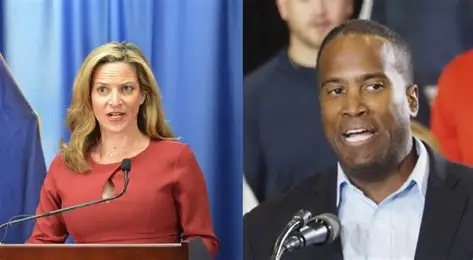 James & Benson Detail Differences On Canada, Healthcare, Taxes In Front Of DEC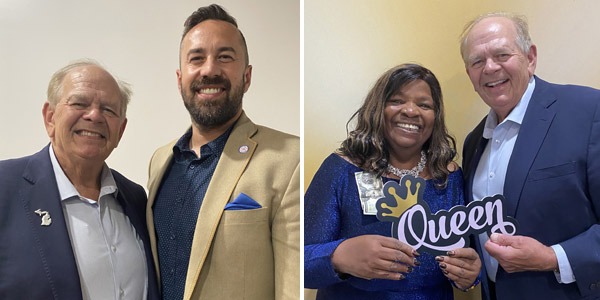





Contact Us
Address
Phone
©2026 Dunaskiss Consulting and Development Inc. | Website by Finepoint Design