|
|||||||
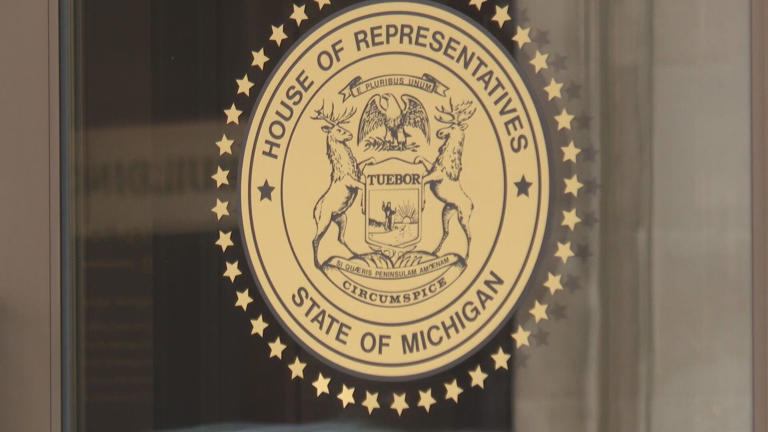
House Republicans Move Full Budget Proposal Early, Including Earmarks More than 14 hours after the House Appropriations Committee gaveled in on Wednesday morning, the full House passed its $75.8 billion budget proposal to fund the state's various departments, K-12 education, higher education and community colleges. HB 5916, the omnibus budget for state departments and agencies, passed 56-51, and HB 5630, the omnibus education budget, passed 56-495, with Rep. Jim DeSana, R-Carleton, and Rep. Steve Carra, R-Three Rivers, voting no. "You saw the votes, Republicans are on board," House Appropriations Chair Ann Bollin, R-Brighton, said. "We believe this is a solid budget to get started with. … I'm confident that we have presented a responsible, responsive, understandable, basic budget. It's based on real dollars that will produce real results." Despite Bollin describing Republican caucus members as "on board," it took hours for the bills to be put up for a vote, while sources said a handful of Republican caucus members had to be moved to a yes. The budget proposal, House Republicans said, cuts the state's overall budget by $106 million and General Fund spending by nearly $600 million. Although House Republicans cited the $75.8 billion figure, there is more than $9 billion from Medicaid provider taxes that would be placed into a contingency fund and, as is the case this year, almost surely spent in full. That would make the eventual budget $84.8 billion – though that is still well below Gov. Gretchen Whitmer's proposed $88 billion. House Democrats, however, said both budgets failed to meet the needs of the state. "Right now, Michigan families are looking for relief. They're not looking for political fanfare and these political process votes," Rep. Alabas Farhat, D-Dearborn, the former minority vice chair of the House Appropriations Committee said. "We should really be focused on addressing the quality of life crisis we're in right now. You have a housing crisis in the state. You have people who can't afford their groceries and afford to make ends meet at the end of each week." The House wasted time on Wednesday pushing through the budget, Farhat said. "We should be working together in this chamber in a bipartisan way," he said. "The entire caucus on the Democratic side is ready to get a budget deal done for the working families of our state, but instead we're opting to have the political showmanship." Republicans adopted 10 amendments to HB 5916 , the general omnibus bill, which Bollin said were mostly to clean up loose ends in the budget. Among the amendments was a substitute to pull $300 million out of the lapsed Strategic Outreach and Attraction Reserve Fund to make a deposit in the Budget Stabilization Fund. "As you know, we ended SOAR last year, and the money that was left, reappropriating it where it could be spent wisely," Bollin said. "It was there in the hands of the MEDC and large corporate handouts, and you see a lot of investments for small business supports. I don't think it is a rainy day, so the deposit is wise, and other investment to our locals, public safety and education." Other amendments added the House's $150 million in earmarks, or Legislatively Directed Spending Items, which are earmarks steered toward projects in members' districts. Originally, the House had a little more than $145 million dedicated for earmarks. "The LDSI process. … I am very proud of that effort," Bollin said. "This was the first year that was formalized, even though the House did follow it last year, and I think it went very well. … Members really identified projects that made sense, there were more one times, not programmatic or operational, but also the project descriptions and the merits of the project." The projects, Bollin said, primarily focus on infrastructure, water, wastewater, bridges, roads, firetrucks and emergency services. Bollin said she anticipated productive negotiations with the Senate and the governor's office. "This year, we see that there seems to be a very common interest to address education, the failing schools, and really have robust investments in literacy and some accountability with that," Bollin said. Senate Appropriations Committee Chair Sen. Sarah Anthony, D-Lansing, told reporters Wednesday she was encouraged by the pace at which the House was moving budgets compared to last year's process. "This is like night and day from last year," Anthony said. "We saw really unserious negotiations at this juncture last year. We are now seeing full proposals, and those proposals are, while concerning, at least gives us something to negotiate." Anthony added that while the House appears to be wanting to cut its way to a balanced budget, she believed a mix of investments and strategic cuts is the best approach. She added that what the Democrats have in mind would become clear Wednesday and Thursday as the final Senate budgets are moved through subcommittees and that the full Senate Appropriations Committee would likely begin its work on reporting budgets on Thursday. Health care, child care and other spending items Senate Democrats focused on during last session when in control of the Legislature will be among their top priorities to maintain funding, she said. When asked about the long-term weighted school funding plan that was introduced on Tuesday, Anthony said she was supportive of the proposal. Having consistency in funding is critical, she said, and should not be subject to major shifts depending on which party is in power or who is governor. "I think that having a long-term road map for education funding is exactly what we need to be talking about," Anthony said. House Minority Leader Ranjeev Puri, D-Canton Township, also said he was hopeful that maybe House Republicans learned from last year's budget, as evidenced by the fact the chamber was moving its budget bills now, some four months earlier than last year. "Maybe that's a sign they learned that their approach wasn't working and that the rookie mistake of trying to single handedly force through a bad budget doesn't work in split government," he said. "But again, we're going to start with the partisan games here. Have a party-line budget in which they struggled to even get their own members. There's no reason why a budget that they concocted, that they didn't have to negotiate with anyone but themselves, still took them into late hours of the night to get done." House Democrats acknowledged that there were real problems that would have to be solved through the budget process due to federal cuts to Medicaid. "The process is going to play out in a way where you're going to see Chair Anthony, who's been a very strong fighter and a champion for the working families of our state, continue to negotiate a fair deal alongside our minority vice chair and our leader, and we have Governor Whitmer, who's been able to prove, time and again, her ability to bring the speaker to the table," Farhat said. It was too early in the budget process to say what the solution to those budget shortfalls would be, though, Farhat said. "You've seen us open to a number of ideas that are long-term, durable solutions, and not just one-time fixes," he said. Newly appointed House Appropriations Minority Vice Chair Rep. Joe Tate, D-Detroit, acknowledged that the Legislature would have some difficult decisions ahead of it. "There are going to be some things that are likely going to be non-negotiable, especially when you're looking at feeding people, when you're looking at health care," he said. "Really focusing on making sure that we are taking care of health care for individuals, make sure that we're putting food on the table, those are going to be top priorities. But make no mistake, we have to be able to make some tough decisions." House Democrats were incensed about the K-12 budget and the higher education budget. They specifically drew attention to the 62% cut in operational funding for the University of Michigan and Michigan State University, which Bollin argued represented about a 2% cut in funding because of the size of the schools' endowments The universities have said endowment funds, which typically come from donors, are generally for items like student scholarships, athletics and research facilities. Operational state aid serves a different purpose. "This is a 62% cut to our flagship universities," Rep. Jason Morgan, D-Ann Arbor, said. "There's no way to gaslight your way out of it. The employees and student of those institutions and so many people who are impacted by those cuts would absolutely feel a 62% cut." Bollin said cuts to the universities were necessary because of recent scandals at U-M and MSU. "We see these two major universities have a lot of problems. They continue to have scandals and (are) not releasing information," she said. "And really not understanding why the state taxpayers don't want their money going to that. …They have endowments. All the money that is going to the athletic departments. I think that should pause all of us to look at what are these universities for? Strong athletic departments and teams? Or to educate our kids?" Ideally, Bollin said, state funding would follow Michigan high school graduates rather than going to public universities. Rep. Carol Glanville, D-Walker, criticized House Republicans for backing away from the weighted funding formula in the K-12 budget, which she said was supported by education groups across the state. "If we're looking for innovative, new ways to do education in the state of Michigan, we know we need to have more consistent funding," she said. "The weighted formula is the recommendation from all of our expert groups and business leaders, so I'm not sure what the goal is there." Bollin highlighted the K-12 budget's focus on literacy and reading proficiency and the foundation allowance of $10,300 in per-pupil funding, a $250 increase "If we are serious about improving outcomes for Michigan students, this is the path forward," she said. The House budget proposal does not include a plan for reducing property taxes, Bollin said. House Republicans did, however, introduce bills Wednesday night to do so, including HB 5873, HB 5874, HB 5875, HB 5876, HB 5877, HB 5878, HB 5879 and HB 5880 . The last bill would extend the 6% sales tax to "covered services," though it is not clear what those would be. Now that the House has passed its budget proposal, it will move to the Senate. The Senate continues to advance its own budget bills. Once those are passed, the next major step in the 2026-27 fiscal year budget will be the May Consensus Revenue Estimating Conference, scheduled for May 15.
A bill debated in committee today would prevent local municipalities from mandating sole-provider garbage or recycling contracts unless officials won voter approval. Rep. Angela Rigas (R-Caledonia)'s HB 5167 was heard before the House Government Operations Committee after the city of Portage faced significant pushback from residents when it signed a 5-year, $29 million contract with Waste Management as the sole trash hauler. The move eliminated choices like Best Way Disposal in the name of lowering costs and reducing road wear. “We believe that it’s an appropriate safeguard for an important community decision,” said Rigas aide Noah Sliwa. He said single-hauler pickups limit a person’s ability to switch out a company if there are individual problems, and the competition allows people to shop based on price, instead of a set price they are paying. Sliwa said every municipality that has brought up the single-hauler waste pickup has faced community opposition. Rep. John Fitzgerald (D-Wyoming) brought up the ongoing fight in Portage, which resulted in an upcoming May referendum. He asked why the bill was necessary if voters already have the ability to hold the municipal leaders accountable. “We feel like, again, giving the choice to the people is the best option possible,” Sliwa said. Michigan Municipal League Director of State and Federal Affairs John LaMacchia said the organization opposed the bill and stood beside local elected officials' ability to make decisions, because they’ve been elected. LaMacchia agreed with Fitzgerald in saying that there are already mechanisms in place for citizens to take action if they don’t want a single-hauler waste pickup in their community. “We have council meetings, we have planning commission meetings, there are zoning meetings. There are all kinds of things that we do allowing the public to engage and express their opinions,” he said. He said the bill would end up putting the state between the local government and those voters giving local control to the state, which has become an increasing issue. “I think what it highlights to me is the importance of the work that we do at the local level, and that we don’t all do that work the exact same (way), because none of our communities are the exact same, and to think that we can treat them as if they are one single entity that all act and operate exactly like one another, we just don’t agree,” LaMacchia said.
House Republicans are rolling out their plan to cut property taxes and utility bills, seemingly with the hope of giving vulnerable members something to campaign on during an election year, but that plan comes tie barred to a bill that would apply a 6% tax on yet to be defined services. The plan would cut $5 billion in property taxes and reduce utility bills by $1 billion statewide, House Republicans say. The proposal includes HB 5873, HB 5874, HB 5875, HB 5876, HB 5877, HB 5878, HB 5879 and HB 5880 . The last bill would extend the 6% sales tax to "covered services," though it is not clear what those would be. House Speaker Matt Hall, R-Richland Township, has floated expanding the sales tax on what he calls luxury services to balance the cuts on property taxes. Most of the bills in the package are sponsored by House Republicans in swing districts with potential to flip. HB 5878, which would eliminate the personal property tax, is sponsored by Rep. Josh Schriver, R-Oxford, who could have a legitimate primary challenge, and HB 5580, the bill that contains the tax increase, is sponsored by Rep. Luke Meerman, R-Coopersville, who is not seeking reelection. Schriver won a quiet, if crowded, Republican primary to his strongly Republican 66th District in 2022. But a series of controversies led to a challenge in the 2024 Republican primary, but that came from someone who had never held local office in the district. This year, he's being challenged by Oxford Township Trustee Catherine Colvin. HB 5873 eliminates the state education tax on property. It's sponsored by Rep. Steve Frisbie, R-Battle Creek. Frisbie, who flipped his seat in 2024, will face a rematch with former Rep. Jim Haadsma, also of Battle Creek, in the 44th House District during the November election. This race was the closest in the House in 2024, with Haadsma losing by 79 votes. HB 5874 would repeal the real estate transfer tax. This bill is sponsored by Rep. Rylee Linting, R-Wyandotte. Linting also flipped her district in 2024, and she will similarly face a rematch against former Rep. Jaime Churches, also of Wyandotte. HB 5875 is sponsored by Rep. Karl Bohnak of Deerton. He flipped the Upper Peninsula's 109th District in 2024, which Republicans had long chased, and Democrats had long regarded as the last blue bastion in upper Michigan. The bill would modify current statute regarding downtown development authorities to reflect the repeal of the real estate transfer tax contained in HB 5874 . "This historic property tax cut will mean the world for U.P. residents," Bohnak said in a press release. "Being in Lansing has shown me that government has way too much of our hard-earned dollars. This proposal takes that money out of Lansing's hands and puts it back where it belongs – with U.P. families and workers." HB 5876 would modify current tax law to reflect the repeal of the state real estate transfer tax. The bill is sponsored by Rep. Tom Kuhn, R-Troy. The 57th House District could be a competitive seat, though it tilts Republican, and Kuhn is well established. HB 5877, sponsored by Rep. Ron Robinson, R-Utica, would modify probate law to reflect the repeal of the real estate transfer tax. Robinson, who unseated a Democratic incumbent in 2024, is seeking a second term in the 58th House District. Although the seat has potential to flip, it would be difficult for Democrats, because the district leans red. "There should never be a penalty for buying or selling your own home," Robinson said in a press release. "Eliminating this tax means more money stays in your pocket at closing, giving ordinary working families a better shot at affording a home and putting down roots in their community." HB 5879 is sponsored by Rep. Jamie Thomspon, R-Brownstown Township. The bill would require public utilities to reduce residential rate in correlation to personal property tax savings. Thompson is being challenged in the 28th District by Brownstown Township Supervisor Sherry Berecz, a Democrat. Berecz ran for a differently shaped Downriver district in 2016 and was the favorite but lost by 2.2 percentage points to now-Sen. Darrin Camilleri, D-Trenton. "I talk with people virtually every day in Monroe and Wayne counties about the high cost of living," Thompson said in a press release. "If we are serious about making Michigan affordable again and keeping workers and families from struggling paycheck to paycheck, we must tackle the issues that are impacting people's budgets. Two areas where people are feeling a lot of strain are energy costs and being able to afford or stay in their home. These new, comprehensive plans will lower property taxes and reduce monthly bills." HB 5880 would add a 6% tax to services, though it is not clear what services would be included. The bill is tie-barred to all the other bills in the package, and is sponsored by Meerman, who announced earlier this year he would not seek reelection. Sen. Jim Runestad, chair of the Michigan Republican Party, said although he supported property tax cuts, he was not a fan of applying a sales tax to services. "There needs to be property tax relief," he said. "Permanent tax relief on property is imperative … people feel they are literally being taxed out of their homes." Rather than funding those tax cuts through a tax on services, Runestad said he'd rather see the Legislature approach it through the lens of reducing government waste, fraud and abuse. Runestad said he also thought some of the money from the lapsed Strategic Outreach and Attraction Reserve Fund could be used, not only to backfill some department budgets but to fund a property tax cut. "It's a real big issue," he said. "But Democrats are more interested in tax increases, so I'm not sure there will be will in the Senate." DCD MUNICIPAL MINUTE  Michigan Tax Shift Proposal Introduced Key Facts for Employers and Municipalities The package would make the following changes:
According to supporters of the legislation, the package is designed to be revenue neutral by replacing current tax collections with revenue generated through the service tax. Potential Impact on Employers For Michigan employers, the most closely watched component is the proposed service tax. As introduced, the legislation reportedly applies broadly to services, without specifically limiting its scope to consumer-facing transactions. Depending on final bill language, the proposal could affect business expenses tied to outside services such as accounting, legal, consulting, maintenance, technology, transportation, and other contracted operations. Employers that own property or equipment may also evaluate the impact of eliminating property-related taxes, including the personal property tax and the statewide education levy. Potential Impact on Municipalities For municipalities, the proposal raises important questions regarding local revenue structures, economic development incentives, and future state funding mechanisms. Changes to property taxation can affect long-term planning, infrastructure financing, and redevelopment efforts, particularly in communities that rely heavily on taxable commercial and industrial investment. The repeal of the real estate transfer tax may also have implications for housing markets, property transactions, and related state and local revenues. Legislative Outlook The proposal is expected to receive significant review and discussion in the coming months. Lawmakers, business organizations, local governments, and taxpayers will likely examine the balance between tax relief, replacement revenues, and long-term fiscal impacts. Bottom Line The introduced package represents one of the more substantial tax policy proposals considered in Michigan in recent years. For both employers and municipalities, the details of implementation, exemptions, revenue replacement, and fiscal impact will be central as the legislation moves through the process. DCD will continue to monitor this legislation and provide future updates. DCD OUT & ABOUT
DCD IS A FULL-SERVICE, BI-PARTISAN, MULTI-CLIENT LOBBYING FIRM REMEMBER ALL OF DCD'S SERVICES: ARTICLES OF POLITICAL INTEREST:
Michigan House slashes U-M, MSU funding in $76B budget - Bridge Michigan Who's running for Michigan governor: Tom Leonard drops out - Bridge Michigan Overflow crowd tells Lansing lawmakers: Stop secrecy around data centers - Bridge Michigan Ex-Michigan party leaders: Time to ditch nominating conventions - Bridge Michigan Michigan bill banning sex offenders from youth-related jobs spurs public safety debate - mlive.com Michigan Democratic Senate candidates debate voting rights, healthcare - mlive.com PARTING WISDOM: 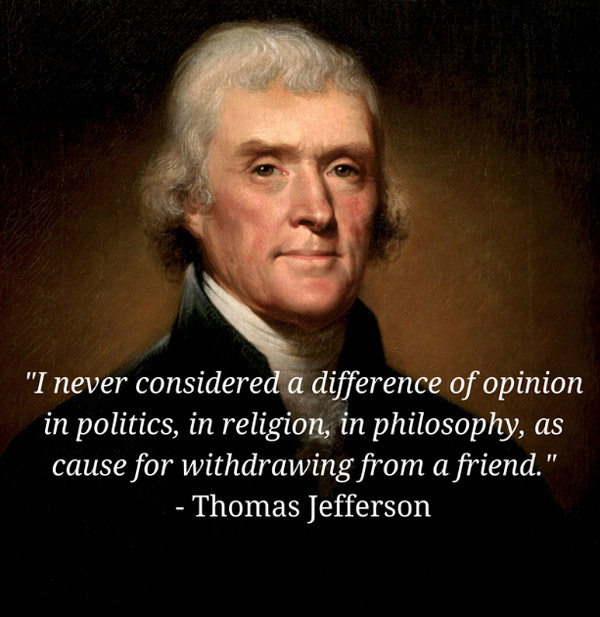
Doing Things Differently DCD is rebranding, and our bottom line is your bottom line. We are striving to create and foster strong relationships with clients and lawmakers, deliver results with strong ethics and class, but above all else, out-hustle and out-smart our competition every day to be the very best. We’re making chess moves while others are playing checkers. Everything we do is with you in mind, we’re doing things we’ve never done before and aggressively pursuing opportunities. The time is now. DCD has taken our firm to the next level and your involvement and investment paired with our knowledge and expertise is going to launch the great state of Michigan forward. |
|||||||
|
|||||||
 House Bill Looks To Trash Local Single-Hauler Waste Contracts
 House GOP Rolls Out Property Tax Cut Proposal with an Eye to Bolstering Vulnerable Members




Contact Us
Address
Phone
©2026 Dunaskiss Consulting and Development Inc. | Website by Finepoint Design