
|
|||||||
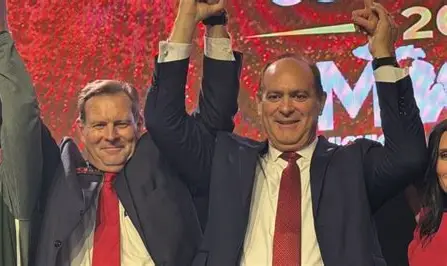
GOP delegates back Lloyd for AG, Forlini for SOS; candidates for Supreme Court, education boards also tapped NOVI – Key convention races that appeared up in the air ahead of Saturday's Michigan Republican Party Convention were sewn up quickly as Eaton County Prosecutor Doug Lloyd secured the attorney general endorsement and Macomb County Clerk Anthony Forlini secured the secretary of state endorsement after one round of voting. Lloyd took the AG endorsement with 1,271 votes and Birmingham attorney Kevin Kijewksi trailing behind with 740 votes. Forlini secured the endorsement with 1,112 votes. It was a strong showing for Forlini in a race many expected to go to a second ballot. His competitors, Oakland County activist Monica Yatooma and Clarkston School Board member Amanda Love received 511 votes and 392 votes, respectively. Lloyd told reporters after the endorsement said the last eight months and messaging about his electability led to the larger gap as well as his heavy stack of endorsements. He said the ballot results proves that today is a good start for securing that Republican base, having the grassroots his campaign needs to move forward. He said he won't have a message for either of his possible Democratic opponents until after their convention, focusing on what he can do for voters "instead of worry what Dana 2.0 might do out there." "It's not about whether you're a Republican or a Democrat when it comes to being the attorney general, it needs to be that you're actually just looking at facts and evidence," Lloyd said. "We need to get back to that." Forlini, the other candidate securing endorsement, told reporters after he was overwhelmed by the 55% vote because he was sure they were going to be voting again. He said he believes his electability as county clerk established him as a leader in the race "I talked about what we've done and how I plan on taking that forward, not necessarily what we're going to do, but I can," Forlini said. "I got the receipts as to what we've actually done and I believe that is a message people are looking for, 'Hey, somebody get in there, just make sense of this and get it done.'" The Michigan Democratic Party is holding its endorsement convention on April 19. Oakland County Prosecutor Karen McDonald and Washtenaw County Prosecutor Eli Savit are running for attorney general. Lt. Gov. Garlin Gilchrist II, Ingham County Clerk Barb Byrum and former Lottery Commissioner Suzanna Shkreli are running for secretary of state. Both parties will formally nominate the candidates after the August primary but the endorsement convention selects candidates sooner so they can focus on the general earlier in the cycle. Lloyd touted over 60 endorsements from state prosecutors and 30 sheriffs heading into the convention, as well as being endorsed and nominated by U.S. Rep. Tom Barrett, R-Charlotte, and pulling in support from former Attorney General Bill Schuette. "When we elect a Republican governor this November, that person is going to need an attorney general who will go to bat with them every single day to restore law and order and our constitutional rights and protections that have been devastated for far too long," Barrett said in his nomination video. His nomination was seconded by Cass County Prosecutor Victor Fitz, who said Lloyd is not driven by politics, but instead results and commitment to public safety. "There's a reason why Doug Lloyd is respected and endorsed by the overwhelming majority of prosecutors," Fitz said in his seconding video. Some of Lloyd's office initiatives shared with Gongwer News Service previously include continuing the pursuit for consumer protection in the face of heavy spam call presence in the state, lowering caseload for local county prosecutors that continue to operate under hiring shortages and putting assistant attorneys general in the Upper Peninsula. He also called for modernization of the information system in attorney general's office for more transparency and efficiency, calling their current methods "archaic." The attorney general race was contentious in its final days, looking close to experts counting delegates and raising questions of electability for both candidates Reports Kijewski was charged with domestic violence in 2020 against his ex-wife circled the last few weeks. Kijewski – who did not respond to requests for comment following the election Saturday – told Gongwer News Service earlier this month there was a "whisper campaign" against him and said it was "really unfortunate how a political opponent would try to do something like this because they don't have any traction." Lloyd faced criticism of his handling of a case connected to Larry Nassar, former doctor for USA Gymnastics and Michigan State University, claiming he had dragged it on and seemingly did not take the complaints seriously, only addressing charges after passing it onto Attorney General Dana Nessel. In response, Lloyd released a statement and posted on X saying he found it "deeply troubling that anyone would attempt to use allegations involving the abuse of young girls as a political weapon" and "Republican delegates deserve better than misinformation built on the suffering of victims." Michigan Democratic Party Chair Curtis Hertel said in a statement that Lloyd was "no different from MAGA Republicans at every level" including not standing up for communities against President Donald Trump's agenda. "Our next attorney general must continue fighting for our rights and working to keep communities safe, but Doug Lloyd would drag Michigan backwards and won't take on big corporations or special interests," Hertel said. "This November, voters will see that Doug Lloyd is the wrong choice to be Michigan's attorney general." Forlini said he was not sure if his headbutting with Secretary of State Jocelyn Benson on non-citizens in his jury pool was a big game changer, but that it was a bigger deal that he thought, wanting to fix it before it went public in his race. Yatooma released a statement after the vote, saying Forlini now has her full and complete endorsement going into the general election, saying she looks forward to helping him and the entire Republican ticket towards victory in November. Love, the third candidate, did not respond to requests for comment on Saturday. Forlini was the only candidate in the race with experience running elections at the county level and maintained a more moderate stance on election integrity than the other two candidates. He previously told Gongwer News Service he knows if the party endorses him, he can win in November because he has already won public office. Endorsements for Forlini include former Secretary of State Candice Miller, Rep. Jay DeBoyer, R-Clay, Rep. Joe Aragona, R-Clinton Township, and former gubernatorial candidate Tudor Dixon. Bruce Rendon, former state representative and chair of the Missaukee County Republican Party nominated Forlini for nomination, saying he doesn't just have ideas, but has executed them. "He is the only county clerk in the state of Michigan to do a forensic audit," Rendon said. "He was the first county clerk to disconnect and remove the modems. He watermarked the ballots. He has removed hundreds of dead people from the voter rolls. He even discovered non-citizens who were self-reporting out of jury duty but remained on the QVF, and he challenged Benson on this issue. He referred people for prosecution who voted more than once in a single election and more. There are two important things for you to consider in this race. Vote for someone who is a demonstrated winner. Vote for someone who can secure Michigan's elections. Anthony is doing both." Hank Choate, one of the defendants in the "false electors" case and a former district chair, seconded the nomination for Forlini, saying "he has earned hundreds of thousands of votes in Macomb County, and Macomb County is going to be a critical county for all Republican candidates" and that "Anthony is a leader and someone who connects with voters." Forlini said in a previous interview with Gongwer that he is ready to take on issues with the Michigan Transparency Network website, the state's new online platform for campaign finance reporting that faced a shaky debut, as he has dealt with the company running the website, Tyler Technologies, in his own county. He also said he would build upon the customer service improvements made in recent years at branch offices and would take inspiration from his own office. The race was evaluated as extremely close by party leaders, being anyone's race to take. However, recently, the race also shored up controversy for his two opponents, Yatooma being called an undercover Democrat and Love facing controversial comments from her sister calling her a "truly evil person" following claims of affairs on the campaign trail and urging delegates to not choose her, as Love has not held a "real job." Hertel also attacked Forlini for being part of the MAGA base, an "extremist who would do Donald Trump's bidding, endanger Michiganders' right to vote, and undo the progress that has been made at the Secretary of State's office in reducing wait times and modernizing services." "Michigan's elections are free, fair, and secure, and yet Forlini has still been peddling debunked claims that have been easily disproven," Hertel said. "If elected, Forlini would put our state's elections at risk at a time when Trump has already threatened to take over Detroit's elections. It's more important than ever that Michiganders have a fighter who will stand up for their rights as Secretary of State—and that's not Forlini." The overall theme of the convention is a move away from the more extreme MAGA base and toward more moderate candidates. Lloyd said he and Forlini bring the ability to show people when you've been elected, you have the experience doing the job. Forlini said he's unsure if he thought the party was dysfunctional, but people are simply looking for a good candidate. Republican Party Chair Jim Runestad told reporters after the vote that he believes the candidates have a good chance of winning, with Forlini beating a Democrat his first run in a race in Macomb County and Lloyd with wins in a purple county and the number of endorsements he has. He said while the convention in the past have favored outsider candidates, he believes Forlini and Lloyd were just focused on winning, and so were the delegates. "There was maybe we like this guy's voting record, or maybe their messaging or their speech is a little bit better, but there was a hyper focus on (that) we want to win the cycle, and that's more than I've heard in the last couple of conventions, so I'm excited about that," Runestad said. In terms of the convention going running smoother this year in terms of no voting drama, Runestad said he ran on the idea that the conventions "were a crash and burn" in the past, and he worked against this by meeting with leaders in the group or people who had issues to address them before instead of letting it "percolate up into a frenzy and then deal with it on the floor."U.S. Education Secretary Linda McMahon opened up the convention by emphasizing Trump's wins on the national scale and the importance of putting up winning candidates for the party. McMahon met with Republican state leaders Friday ahead of the convention to push Gov. Gretchen Whitmer to opt into Trump's new Education Freedom Tax Credit program. House Speaker Matt Hall, R-Richland Township, also spoke at the convention, outlining House Republicans' priorities including cutting more waste from the next state budget and delivering property tax relief. Hall told reporters that he was encouraged to see unity in the Republican Party at the convention like "the unified House Republican caucus." He said they seem motivated to win and looking beyond past distractions. Gov candidates stump Republican gubernatorial candidates U.S. Rep. John James, R-Shelby Township, Perry Johnson and Ralph Rebandt sang their own praises at the convention, announcing some of their platforms and policy priorities. In James' speech, he attacked Democrats on issues at the border as well as his opponents for governor, Benson, for "losing track" of noncitizen voters in the election and Detroit Mayor Mike Duggan for "losing track" of his record of being a lifelong Democrat. But, James said, he has "never lost track of what and who he is fighting for." However, James was also booed by some of the crowd when he came up to the stage. In questions on if he still needs to make inroads with delegates, James said he's going to try to earn 10 million votes and wants to talk policy with every single citizen, trying to prove not just his message but things he has done in terms of cutting taxes. To those who booed him, he said he has to earn every single person's support. Johnson touted his experience as a quality expert at the convention, highlighting his plan for a "MEGA audit" of state spending to get rid of waste and eliminating the state income tax to put $4,747 in the pockets of families and the phasing out of property tax. He also claimed he was "the most conservative guy" at the convention. His stump speech ended with a sing-along of his campaign song "4,747." Ralph Rebandt said he's spent the last 35 years as a pastor watching families do everything right, yet the state's politics fail them. "I will not step back and watch them be lied to by politicians who promise things they will never deliver and nor will I stand back and watch politicians who never show up try to represent those people. Lansing, politicians, friends, you know this, have been bought and sold, and what have we got now, absolutely nothing. Money is never a substitute for real change." He marketed some of his key priorities: challenging state employees that sign non-disclosure agreements, parents being in charge of education and keeping young people in the state. He claimed the establishment doesn't want a conservative Christian pastor on the ballot, saying they didn't want it in 2022 in his first run and they don't want it now and they are doing "everything they can to keep (his) name off of polling (or) off of pictures." Former Attorney General Mike Cox put out a statement after the vote saying delegates clearly stated they want candidates who have beat Democrats before to lead the team in November, proving there's also a spot in the gubernatorial race for him, beating Democrats twice statewide. Uncontested races The convention automatically endorsed the candidates for the Michigan Supreme Court, the State Board of Education , the Michigan State University Board of Trustees and University of Michigan Board of Regents. Judge Michael Warren of the Oakland County Circuit Court, also a former member of the Michigan State Board of Education, and Judge Casandra Morse-Bills of the Oscoda County District Court will move onto the general election in November. The State Board of Education candidates include Bree Moeggenberg, a grassroots leader in the party, and Terence Collins, a Grosse Pointe School Board member. MSU Board of Trustees candidates are Julie Maday, an MSU mother who lost to Mike Balow and Rebecca Bahar-Cook in 2024, and Sen. Roger Victory. The U-M Board of Regents candidates are Lena Epstein, co-owner of Vesco Oil Corporation, and Michael Schostak, district Republican leader and former Bloomfield Township trustee. The Wayne State Board of Governors candidates are Christa Murphy, executive at Meta and Samsung as well as a credit union board member, and Andy Anuzis, president of the Cornerstone Schools Network in Detroit.
Gov. Gretchen Whitmer signed legislation on Thursday to ensure Michigan remains in the Interstate Medical Licensure Compact. HB 5455, sponsored by Rep. Rylee Linting, R-Wyandotte, was signed Thursday morning and is now PA 6 of 2026. The compact is an agreement among states to streamline licensing requirements for physicians who want to practice in multiple states. The intent of the compact is to make it easier for patients to access medical care, particularly through telemedicine and underserved areas. "I'm committed to protecting access to health care and growing small business," Whitmer said in a statement. "Communities across our state, especially in rural areas, are already facing a shortage of health care workers. Historic federal cuts to Medicaid are raising health care costs for everyone. That's why I'm signing a bipartisan bill to ensure 5,000 doctors can continue practicing in Michigan and making a difference in their communities. … Let's keep working together to protect access to health care and make a difference for Michiganders." Michigan became a member of the compact in September 2019. The original law had a sunset in 2022, which was extended to March 28, 2025. The Legislature did not extend the sunset last year, but the state's withdrawal was not official until March 28, 2026. Whitmer signing the bill ensures the state remains in the compact. Physician organizations sounded the alarm in recent weeks about the state exiting the compact, saying thousands could lose their ability to operate in the state. The Legislature stalled on the bills as the House and Senate passed dueling versions that remained untouched by the other chamber for much of 2025. Last week, before the House left on its spring break, House Speaker Matt Hall, R-Richland Township, and Senate Majority Leader Winnie Brinks, D-Grand Rapids, reached an agreement. Along with Linting's bill, the House approved SB 581 , sponsored by Sen. Kevin Hertel, D-Saint Clair Shores. Both Linting and Hertel represent marginal districts. Hertel's SB 581 was also signed Thursday and is now PA 5. The bill would allow downtown development authorities to include one or more separate and distinct geographic areas in a business district if the municipality were located on the mainland and one or more islands and a body of water. Whitmer also signed HB 4044 , now PA 7, which was sponsored by Rep. Alabas Farhat, D-Dearborn. The bill designates the wood duck as the official state duck.
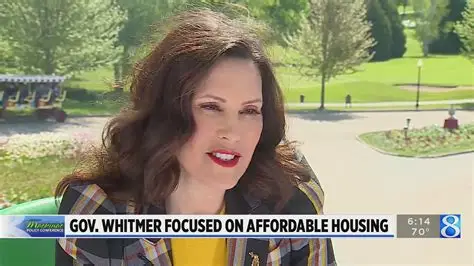
Gov. Gretchen Whitmer and other leaders on affordable housing held a roundtable in Grand Rapids on Monday to discuss policy priorities from Whitmer's State of the State address like zoning changes and new tax credits as solutions for West Michigan. Whitmer, who made the stop as part of her "G-S-D Tour," emphasized the nationwide issue of affordability, in which high prices are driving up the average age of first-time homebuyers to 40 and their average income to $100,000, both of which represent all-time highs. She also highlighted moves toward her "build, baby, build" goal in adding 86,000 units to the housing stock. Even with building efforts though, U.S. Rep. Hillary Scholten, D-Grand Rapids, underscored the reality: the average home price has risen by about 126% in Kent County with a cost of $205,000 for an entry level home. It's not easier for renters, either, who on average are spending $400 more per month than they can afford. r Tim Knolt, COO of the Michigan State Housing Development Authority, also said the cost of housing has increased by about 100% across the state while average income has only increased by 30%. While MSHDA had its most productive year in 59 years in 2025, providing $1 billion in mortgages to more than 6,000 new homebuyers, officials said the work is not done, especially in offering affordable rental housing. Knolt also pointed to the juxtaposition between housing quantity and quality, both of which drive up costs and affect the supply conversation. "We have some communities that actually have enough rooftops," Knolt said. "It's just the quality of that. Housing is subpar, it's not accessible, it's not energy efficient, it has deferred maintenance." Sen. Winnie Brinks, D-Grand Rapids, said if the state cannot offer a reasonable price point to young people in the state, then they will simply go somewhere cheaper and the state will lose them as Michiganders. As she talks to employers, Whitmer said, companies claim they can offer a good paycheck and a great quality of life but not housing. Knolt said the state is creating more jobs than it is units of housing. MSHDA has been able to engage companies on housing more than ever because it has become such a crisis, losing talent because of it. On the national front, Scholten said bills have been passed in the U.S. Senate, the Road to Housing Act, to streamline duplicative processes in development and require private equity to put single-family homes back on the market they have been turning into rental units to "jack up the prices." However, Scholten said the bills are held up on their way to the U.S. House because President Donald Trump has said he will not sign any bill until the SAVE Act, legislation to require documentary proof of citizenship to register to vote, is passed. "There is an urgent demand for affordable housing," Scholten told reporters. "It's an economic imperative. I think it's a public safety imperative, and the president is pushing a deeply unpopular policy objective in vis a vis the SAVE Act, which has less than a 40% approval rating to accomplish his own personal objectives over an immediate demand and need vis a vis affordable housing, so it's really unconscionable." Scholten told reporters she talked to Whitmer about pushing the bills to the House floor Monday as Whitmer seemingly has the ear of the president, saying they need all hands on deck to get this across the finish line. One stateside solution raised was the proposal for a state tax credit for affordable housing development proposed by Whitmer during her State of the State address. There have no bills introduced yet on creating the tax credit while Rep. Joseph Aragona, R-Clinton Township, said he was working on the legislation after Whitmer's address. Brinks said a bill in the Senate would be authored by Sen. Jeff Irwin, D-Ann Arbor, for the credit as well, meant to match some of those federal dollars for more housing units, providing about $42 million more. Irwin told Gongwer News Service the bill should be introduced soon. Ryan VerWys, CEO of ICCF Community Homes, said part of the key to affordable housing may include the "bad word" subsidy, while Whitmer just called it "support." VerWys said the credit would tap into specifically the 4% Low Income Housing Tax Credit, which would mostly cover gaps in the cost of construction, and while the "state tax credit would help (the state) get closer to finished, there would still be some gap financing that would be needed." Most details on the actual plan are still unavailable. Rep. Kristian Grant, D-Grand Rapids, pointed out a lot of starter homes of small lots and tiny neighborhoods like those in Alger Heights in Grand Rapids, where the roundtable was, are not even being built anymore. Grant spoke of her legislation with Aragona, HB 5529 , HB 5530 , HB 5531 and HB 5532 , to alter regulatory requirements in the housing space, including changes to parking space requirements, lot and dwelling size requirements, creating uniform standards for local governments across the state when reviewing development requests and allowing duplexes in single-family residential zones and accessory dwelling units, among other things. VerWys said part of getting back to building smaller houses that are affordable includes this kind of streamlining in "not getting in their own way" in building units. Grant said changing these laws is not just about streamlining but building housing that simply "fits people's needs." The zoning changes proposed raised concerns from local governments claiming it would strip local control of the zoning process and was wary of state preemption overall. Whitmer told reporters after the roundtable she understood the worries of local governments because they're talking about change, and that will always lead to questions, but it is "absolutely undeniable that we need more affordable housing options for people all across the state." Grant also emphasized the policy does not take away local input but just makes sure that they are removing some of the largest barriers to housing. It would still include local zoning board input, she said, but the board couldn't block a project if it includes something like accessory dwelling units. Another issue with affordability is the ability for municipalities to support new housing, including holding back major development due to a lack of infrastructure in roads and water. Whitmer said this will all be part of the policy debate in Lansing, calling it a "chicken and the egg problem" as they confront housing issues that come down to a broader tax-free base or employers taking housing into consideration when deciding where to base their businesses. "I think it's important for us to work together to solve the problems on all of these fronts as opposed to saying this is a complete barrier," Whitmer said. DCD MUNICIPAL MINUTE  New Legislation Aims to Preserve Regulatory Certainty for Michigan Communities and Small Businesses What’s New For municipalities and local businesses, this exemption plays a quiet but important role: it ensures that businesses already regulated by state or federal law—such as contractors, healthcare providers, financial institutions, and licensed trades—are governed by a single, clearly defined set of rules rather than multiple, overlapping standards. What’s at Risk
If the exemption is removed or weakened, the practical effects at the local level could include:
Why It Matters for Local Governments A shift in the MCPA framework could:
Why It Matters for Small Businesses Without it, businesses could face:
Bottom Line DCD will continue to follow HB 5725 and keep our clients and readers updated. DCD OUT & ABOUT
DCD IS A FULL-SERVICE, BI-PARTISAN, MULTI-CLIENT LOBBYING FIRM REMEMBER ALL OF DCD'S SERVICES: ARTICLES OF POLITICAL INTEREST:
Providers face ‘extreme shortage’ of paramedics, EMTs in rural Michigan - Bridge Michigan US Education Secretary Linda McMahon urges Gov. Gretchen Whitmer to join schools tax credit plan Michigan Republicans contend they learned from past missteps and can win How political parties get the final say in the Michigan secretary of state, AG races At least 20 Michigan House members won't seek reelection | Insider Nessel aims to block ICE facility; State House passes kratom ban HAPPY EASTER FROM DCD! 
Doing Things Differently DCD is rebranding, and our bottom line is your bottom line. We are striving to create and foster strong relationships with clients and lawmakers, deliver results with strong ethics and class, but above all else, out-hustle and out-smart our competition every day to be the very best. We’re making chess moves while others are playing checkers. Everything we do is with you in mind, we’re doing things we’ve never done before and aggressively pursuing opportunities. The time is now. DCD has taken our firm to the next level and your involvement and investment paired with our knowledge and expertise is going to launch the great state of Michigan forward. |
|||||||
|
|||||||
 Whitmer signs medical compact bill ahead of deadline
 Whitmer talks housing affordability, property tax reform



Contact Us
Address
Phone
©2026 Dunaskiss Consulting and Development Inc. | Website by Finepoint Design