
|
|||||||
|
Having a smoother budget process and maintaining funding for programs and education that will have a long-term positive effect on residents across Michigan are key goals for Senate Majority Leader Winnie Brinks as she approaches her final year in office. In a year-end interview this week with Gongwer News Service, Brinks, D-Grand Rapids, stressed that momentum on programs for education, health care and housing will strengthen the state for the long haul. During her final year in office, she said a critical priority will be to see passage of a budget that builds on Democrats' legislative wins of recent years, including expanding the Rx Kids program, expanded school meals, programs enabling more people to earn credentials to boost the state's skilled workforce, and funding to build new housing. Funding for various educational programs and science of reading legislation also needs to continue moving forward, she added. "We hear a lot about education and how we need to improve third grade reading scores," Brinks said. "We have to support that with our dollars and with our commitment to teachers and students. It will take a couple of years for us to see those results, so maintaining those commitments is going to be critical." Expanding the Freedom of Information Act to include the Legislature and governor's office is another top priority, she said. "There is no reason we should continue the embarrassment of having Michigan be dead-last in the nation when it comes to ethics and transparency," Brinks said. Brinks took aim at House Speaker Matt Hall, R-Richland Township, over his refusal to take up the FOIA package that passed the Senate earlier this year. The speaker has said the FOIA package is not strong enough for him to support. "For him to flip-flop on that is really nothing short of a travesty," Brinks said. To get FOIA expansion to the governor's desk before she leaves office at the end of 2026 would be a great achievement, Brinks said. To meet many of her goals, Brinks said next year's budget process will need to be more collaborative and transparent than what transpired during 2025 between the Democratic-controlled Senate and Republican-controlled House. The Legislature this year, for the first time since the late 2000s, went beyond midnight on Sept. 30 to complete work on a state budget. A few hours after midnight on Sept. 30, lawmakers passed a seven-day short-term spending measure to keep the state government open while final negotiations were completed. The budget was passed early in the morning on Oct. 3. It included a long-term road funding proposal that was a key part of the holdup between the two chambers. The Senate passed its budget proposal in May, but it took the House until late August to pass their proposal. Both chambers acknowledged they were far apart on many items in the competing proposals, with negotiations proceeding at a glacial pace until late in September. Brinks placed the blame on Hall for this year's budget delays, adding that she would like to see more transparency in the budget process in 2026 to see it completed by the end of June. "Instead, the process was sort of hoarded into the speaker's office, and staff had more to say about budget decisions over there than members did," Brinks said. "Countless times, we heard from their members that they didn't know what was going on or that those decisions were made above them. That's not what legislators are elected to do, to just follow orders from the top." Passing changes to the legislative earmarks process was the only significant procedural improvement Brinks said she saw during the most recent budget cycle. Hall has touted the legislative earmarks legislation, which passed last month and includes a 45-day wait from when an earmark is introduced to when the Legislature can take it up for a vote. After obtaining a Democratic Senate majority for the first time since the 1980s, Brinks said she is optimistic about the party's chances to hold its majority after next year's elections. "We've got candidates that are unmatched in their work ethic and their ability to communicate with the people in their district, so we feel very positive about the prospect of who we will be able to make the case with to voters in the coming months," Brinks said. She said the political environment has favored Democrats in recent months as well, with the party's special election candidates exhibiting strong showings across the country ahead of next year's midterm elections and taking into consideration President Donald Trump's declining approval ratings. "And then you add to that our track record of really being able to get things done, to effectively work together to shepherd legislation, to be the chamber and the party that people could count on to do really good policy work … I think our returning members are really strongly situated to maintain that and to bring in new members to be able to continue that legacy," Brinks said. "I think we have an excellent case to make to voters." Brinks said candidates will need to talki to voters about issues that matter, including cost-of-living issues, education, efforts to improve neighborhoods and communities, and housing affordability and infrastructure needs. "We just have to keep telling our story, and they have to hear that there's somebody who cares enough about what they think, that they're willing to knock on their door and have a conversation with your average voter without the filters of all the political baloney, and make sure that they understand that we have solid candidates who really care about what they think, who are going to bring their voices into the Capitol every day when we go to work," Brinks said. As for the much-anticipated special election to fill the vacant 35th Senate District seat, Brinks said she believes Democrats are well-positioned to hold onto the seat formerly held by U.S. Rep. Kristen McDonald Rivet of Bay City. Brinks said the party has a rich field of candidates and that the district, on paper, has a Democratic lean. "I think you've seen prominent Republicans take a pass here because they know it's going to be really, really tough for them, so we're in a really good position," Brinks said. "I'm very confident that we'll be able to win that. We've tested it and proven it with Kristen McDonald Rivet and that district is really in its new form, solidly Democratic leaning."
House Speaker Matt Hall was critical of data centers and said he would support more oversight of the proposed project in Saline during a television interview on Friday. Hall, R-Richland Township, discussed data centers, along with end of the year priorities on Friday's episode of WKAR's 'Off the Record." "I voted no on the legislation to create the tax incentive for the data centers. We're trying in Michigan to cut the income tax. We're trying to cut property taxes, and when you keep doing these carve-outs on sales tax it makes the job harder," he said. "We put in the legislation that they can't charge higher rates to other people to pay for the data center. But I have concerns because the Whitmer administration and I believe Quentin Messer at the MEDC are the ones that are monitoring and holding that accountable, and I don't trust them." Hall said he supported robust public debate because he didn't believe there would be enough oversight. "I think there's a lot of pressure on the administration to deliver the soundbites on a short-term win," he said. "The governor calls it the biggest economic development project in the history of Michigan, so that's the incentive. The problem is, it's not the governor checked every day on the back end to make sure they perform. It's Quentin Messer, who has a failed record of this. It’s other people in the administration, and then she's going to leave in a year, and there'll be another governor doing it." Data centers also don't create enough jobs beyond the initial construction, Hall said. For real economic development, Hall said the state should focus on the number of jobs a project will create long term and the wages of those jobs. "The goal of this is to get a return on investment for the people of Michigan," he said. "You should be getting more money into the state than what you're paying the companies." Additionally, Hall said he was considering a proposal for health care cost controls, floating a concept of a Public Service Commission -like entity, but for hospitals. Hall also discussed the road funding deal and questions about the legality of the 24% wholesale tax on marijuana. He put the onus on Senate Majority Leader Winnie Brinks, D-Grand Rapids, and the governor's office if the tax didn't stand up in court. "We told Gretchen Whitmer, I sat in a room, looked her in the eye, and said, 'I'll match you dollar for dollar cutting waste, fraud and abuse to do revenue,' and Winne Brinks said, 'well, I don't know what I want, so you tell me what we're going to do.' And I said we're going to do the marijuana tax and the EVs," he said. "If Gretchen Whitmer has done her homework, if her lawyers say it's good. Fine. If it's not, well, we'll cut more." Hall said there was $5 billion that could have been cut from the budget, and the budget passed this year only cut $800 million. He also said that corporate income tax continued to be an option for road funding. Leadership in both chambers has said economic development is a priority for the remaining session days this year. And although, with only six days left on the calendar, it is unlikely anything will make it across the finish line, Hall said he was in conversations with Sen. Sam Singh, D-EastLansing. "If we don't have a deal this year, it'll be because Winnie Brinks backs out," Hall said. "We made a commitment to each other when we did the budget that we were all going to try to do this by the end of the year, and I'm committed to trying to make that happen." Hall said there wouldn't be a deal until he negotiated with Whitmer. The biggest sticking point incurrent conversations is that House Republicans don't want the Michigan Economic Development Corporation to be the arbiter of economic development incentives. Hall touted the low number of public acts signed into law this year. So far, only 35 bills have been signed into law by the governor. The next lowest number of bills signed into law was 89 in 1856. "I want to be under that 89," he said. "There's legislators across the country celebrating what we're doing in Michigan. We just won an award for the best budget proposal in the country with our $5billion of waste, fraud and abuse we cut, and they love that. We're holding the line against the governor and these Democrats in the Senate and protecting the taxpayers of Michigan."
Amending the Michigan Regulation and Taxation of Marihuana Act with a three-fourths vote in the Legislature is not the sole method to create a tax on cannabis, the Court of Claims said on Monday in a ruling that clears the way for the tax to take effect next year. In Holistic Research Group v. State of Michigan and Michigan Cannabis Industry Association v. State of Michigan (Docket Nos. 25-000159-60), Judge Sima Patel ruled mostly for the state, denying cannabis advocates and businesses' requests for a preliminary injunction to block the 24% wholesale tax from being implemented. She left one aspect of the plaintiff's argument open for further discussion. Rose Tantraphol, spokesperson for the MiCIA, said its legal team is reviewing the decision to determine next steps. "We don't believe the Court of Claims made the right call," she said in a statement. "While we are deeply frustrated by this ruling, I can tell you this: The fight is far from over. We remain confident in the strength of our case that this move by the Legislature violated the will of the voters who approved the 2018 citizen ballot initiative. We plan a swift appeal." Cannabis groups argued the move to pass another law to implement the wholesale tax was an unconstitutional one to avoid needing a supermajority vote to amend the initiated law that legalized cannabis in the state. Patel disagreed, writing the Comprehensive Road Funding Tax Act, which created the 24% tax, is consistent with the MRTMA because the law uses the term, "in addition to all other taxes," when outlining what taxes are charged on marijuana purchases. "The CRFTA is consistent with the MRTMA. Plaintiffs contend that the phrase 'all other taxes' in (the MRTMA) refers only to generally applicable taxes, like the 6% sales tax imposed on all retail sales," Patel wrote. "If that were true, however, the initiative could have simply said that. Instead, the initiative stated plainly that the 10% retail excise tax was in addition to 'all other taxes.' And the phrase 'all other' is broad and expansive." Although Patel ruled the 24% wholesale tax on marijuana was not an amendment of the overall law regulating recreational marijuana in the state, she did say more facts are needed to determine if the new tax "interferes and conflicts with the purposes of the MRTMA." "This is not a legal issue, but a question of fact. The court must consider the intentions of the MRTMA drafters and the impact of the new wholesale excise tax on the purposes of the MRTMA," Patel wrote. "The court may not resolve such factual questions at the summary disposition phase. Discovery will be required to develop the evidence needed to support the parties' positions in this regard." Overall, Patel denied the plaintiffs' motions for preliminary injunction and summary disposition. She granted in part the state's motion for summary disposition, but denied it in part when asking for more discovery on the effect of the new tax. Patel ordered a scheduling conference on Jan. 14, 2026, which will be after the new tax takes effect on Jan. 1. She also cited the likelihood that the decision will be appealed DCD OUT & ABOUT 
Each holiday season DCD hand delivers boxes of Christmas cookies to every legislator in the Capitol. This year our holiday cookies were sponsored by the Michigan Green Industry Association and Senator Mat and Beth Makarewicz from our office were happy to play elves and spread some holiday cheer! DCD IS A FULL-SERVICE, BI-PARTISAN, MULTI-CLIENT LOBBYING FIRM REMEMBER ALL OF DCD'S SERVICES: ARTICLES OF POLITICAL INTEREST:
Michigan to use $38M in opioid funds to expand housing for people in recovery Gretchen Whitmer urges speed, critics want slowdown on Michigan data center Michigan fails its students with disabilities, first-ever report finds Court rules against Benson election guidance: Mismatched mail-in-ballots can’t be counted John James staffs up gubernatorial election team ahead of 2026 primary season Marijuana News, Updates, & Articles of Interest
We are here to help you with: municipal lobbying, license application writing and assistance, business plans, state required operations manuals and compliance, facility design, corporate structure, and design and branding. We are experts in both medical and recreational cannabis policy and have been in the space for over ten years. We welcome any opportunity to work with you in the future! ARTICLES OF CANNABIS INTEREST: Court rejects attempt to block Michigan’s 24% marijuana tax 1 in 6 Michigan moms use weed during pregnancy, study finds Collapse of the cannabis industry? Medical cannabis reduces opioid prescriptions, study shows Doing Things Differently DCD is rebranding, and our bottom line is your bottom line. We are striving to create and foster strong relationships with clients and lawmakers, deliver results with strong ethics and class, but above all else, out-hustle and out-smart our competition every day to be the very best. We’re making chess moves while others are playing checkers. Everything we do is with you in mind, we’re doing things we’ve never done before and aggressively pursuing opportunities. The time is now. DCD has taken our firm to the next level and your involvement and investment paired with our knowledge and expertise is going to launch the great state of Michigan forward. |
|||||||
|
|||||||

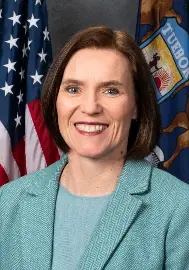 Brinks priorities for final year in office include transparent budget process, FOIA expansion
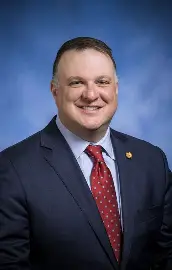 Hall talks data centers, economic development and record low number of public acts
 Marijuana wholesale tax cleared for implementation by Court of Claims
 THE DCD MARIJUANA TEAM: YOUR COMPETITIVE EDGE!




Contact Us
Address
Phone
©2026 Dunaskiss Consulting and Development Inc. | Website by Finepoint Design